Menu
Currency
Ancestry
Y-DNA Haplogroup • Paternal Lineage

R1B1A1B1A1A2A2

Y-DNA Haplogroup R1B1A1B1A1A2A2

~14,000 years ago
West Eurasia
1 subclades
Scroll to explore
Chapter I

The Story

The journey of Y-DNA haplogroup R1B1A1B1A1A2A2

Origins and Evolution

Y-DNA haplogroup R1b1a1b1a1a2a2 is a rare subclade within the broader R1b paternal lineage, one of the most important Y-chromosome lineages in western Eurasia. Based on its position in the phylogenetic tree and the known age of its parent clade, it likely emerged in West Eurasia during the late Upper Paleolithic or early Holocene, roughly 14 thousand years ago.

As an intermediate downstream branch, this lineage is best understood as part of the long diversification of R1b before the major Bronze Age expansions that made other R1b branches, especially R1b-L23 and its descendants, much more common across Europe and parts of western Asia. The rarity of R1b1a1b1a1a2a2 today suggests that it survived through repeated demographic turnovers at low frequency, rather than participating in a broad founder event.

Subclades

Because this haplogroup is an intermediate branch, its direct descendant structure is important for reconstructing how ancestral paternal lines diversified over time. In general, rare subclades of R1b in this position may include geographically localized terminal branches found in western Europe, the Caucasus, Anatolia, the Levant, and parts of Central Asia.

Its phylogenetic placement indicates that it is related to lineages associated with the wider spread of R1b across Eurasia, but it is not one of the dominant branches responsible for the high frequencies of R1b seen in western Europe today. Instead, it likely represents a deep residual lineage preserved in small populations through isolation, continuity, and drift.

Geographical Distribution

Modern carriers of R1b1a1b1a1a2a2 are expected to be rare and unevenly distributed. Available population-genetic patterns for its parent clade suggest presence in:

  • Ireland and Britain, where low-frequency deep R1b lineages can persist alongside much more common later R1b expansions
  • France, Iberia, and the Low Countries, regions shaped by repeated prehistoric and historic admixture
  • Italy and the Balkans, where multiple ancient paternal layers coexist
  • Anatolia and the Caucasus, key crossroads for western Eurasian lineages
  • The Levant and North Africa, where western Eurasian Y lineages entered through ancient gene flow and later historical movements
  • Parts of Central Asia and steppe-related populations, usually at very low frequency

The distribution pattern is patchy, which is typical for an old lineage that did not undergo a major demographic expansion in the historical record.

Historical and Cultural Significance

Although no single archaeological culture can be securely assigned to R1b1a1b1a1a2a2 without ancient DNA evidence from specific individuals, its deep age places it in the broader context of post-LGM western Eurasian hunter-gatherer persistence and the subsequent Neolithic and Bronze Age population restructuring.

Possible broader associations include:

  • Mesolithic and Neolithic West Eurasian populations, as ancestral R1b diversity likely existed before the major farming expansions
  • Steppe and forest-steppe interaction zones, where R1b lineages diversified and recombined through migration and local continuity
  • Bronze Age and Iron Age population networks, which redistributed many paternal lineages across Europe and western Asia

Because this lineage is rare, its significance lies less in any single culture and more in what it reveals about deep paternal continuity. It may represent the survival of an early branch that was later overshadowed by more successful descendant clades.

Population Genetics Interpretation

From a population genetics perspective, R1b1a1b1a1a2a2 likely reflects genetic drift, bottlenecks, and regional founder effects. Such lineages often survive in small, endogamous, or geographically isolated populations where older paternal lines are not completely replaced by later expansions.

Its presence across a broad but sparse set of regions suggests that it is not a marker of a single ethnolinguistic group. Instead, it is an example of how ancient Y-chromosome diversity can persist at low levels beneath the dominant paternal signatures of later prehistoric migrations.

Conclusion

R1b1a1b1a1a2a2 is a rare and ancient subclade of western Eurasian R1b with a likely origin in West Eurasia around 14 kya. Its present-day patchy distribution across Europe, western Asia, and adjacent regions reflects deep ancestry, long-term persistence, and demographic drift rather than a major expansion event.

Key Points

  • Origins and Evolution
  • Subclades
  • Geographical Distribution
  • Historical and Cultural Significance
  • Population Genetics Interpretation
Chapter II

Tree & Relationships

Phylogenetic context and subclades

Evolution Path

This haplogroup's evolutionary journey from its earliest ancestor to the present.

Steps Haplogroup Age Estimate Archaeology Era Time Passed Immediate Descendants Tested Modern Descendants Ancient Connections
1 R1B1A1B1A1A2A2 Current ~14,000 years ago ?? Mesolithic 14,000 years 1 0 0
2 R1B1A1B1A1A2A ~14,000 years ago ?? Mesolithic 14,000 years 4 6 29
3 R1B1A1B1A1A2 ~14,000 years ago ?? Mesolithic 14,000 years 6 916 0
4 R1B1A1B1A1A ~14,000 years ago ?? Mesolithic 14,000 years 4 1,254 70
5 R1B1A1B1A1 ~14,000 years ago ?? Mesolithic 14,000 years 1 1,292 0
6 R1B1A1B1A ~14,000 years ago ?? Mesolithic 14,000 years 2 1,295 15
7 R1B1A1B1 ~18,000 years ago ?? Mesolithic 18,000 years 2 1,529 0
8 R1B1A1B ~18,000 years ago ?? Mesolithic 18,000 years 2 1,655 31
9 R1B1A1 ~18,000 years ago ?? Mesolithic 18,000 years 2 1,657 0
10 R1B1A ~18,000 years ago ?? Mesolithic 18,000 years 2 3,825 39
11 R1B1 ~18,000 years ago ?? Mesolithic 18,000 years 2 3,967 0
12 R1b ~20,000 years ago ?? Mesolithic 20,000 years 2 4,036 126

Siblings (3)

Other branches from the same parent haplogroup

Chapter III

Where in the World

Geographic distribution and modern presence

Place of Origin

West Eurasia

Modern Distribution

The populations where Y-DNA haplogroup R1b1a1b1a1a2a2 is found include:

  1. Irish and British populations
  2. French, Iberian, and Low Countries populations
  3. Italian and Balkan populations
  4. Caucasus and Anatolian populations
  5. Levantine and North African populations
  6. Some Central Asian and steppe-related populations

Regional Presence

British Isles High
Western France High
Northern Iberia Moderate
Central Europe Low
Coastal North Africa Low
Near East / Caucasus Low
North America (diaspora) Low
Southern Europe Low
Eastern Europe Low
Western Asia Low
North Africa Low
Central Asia Low
CHAPTER IV

When in Time

Your haplogroup in the context of human history

~20k years ago

Last Glacial Maximum

Peak of the last ice age, populations isolated

~14k years ago

Haplogroup R1B1A1B1A1A2A2

Your Y-DNA haplogroup emerged in West Eurasia

West Eurasia
~10k years ago

Neolithic Revolution

Agriculture begins, settled communities form

~5k years ago

Bronze Age

Metalworking, writing, and early civilizations

~3k years ago

Iron Age

Iron tools, expanded trade networks

~2k years ago

Classical Antiquity

Greek and Roman civilizations flourish

Present

Present Day

Modern era

Your Haplogroup
Historical Era
Chapter IV-B

Linked Cultures

Ancient cultures associated with Y-DNA haplogroup R1B1A1B1A1A2A2

Cultural Heritage

These ancient cultures have been linked to haplogroup R1B1A1B1A1A2A2 based on matching ancient DNA samples from archaeological excavations. The presence of this haplogroup in these cultures provides insights into the migrations and population movements of populations carrying this haplogroup.

British Middle Bronze Age Danish Late Neolithic Early Bronze Age Iberian El Argar England_Cambridgeshire_Medieval France_Bucy_le_Long_IA_LaTene Hasanlu Culture Iberian Bronze Age Iberian Middle Bronze Medieval French Menorcan Late Bronze Provence Paleolithic Romano-British
Culture assignments are based on archaeological context of ancient DNA samples and may represent regional associations during specific time periods.
Chapter V

Sample Catalog

1 subclade carrier of haplogroup R1B1A1B1A1A2A2 (no exact R1B1A1B1A1A2A2 samples sequenced yet)

1 / 1 samples
Portrait Sample Country Era Date Culture Y-DNA Match
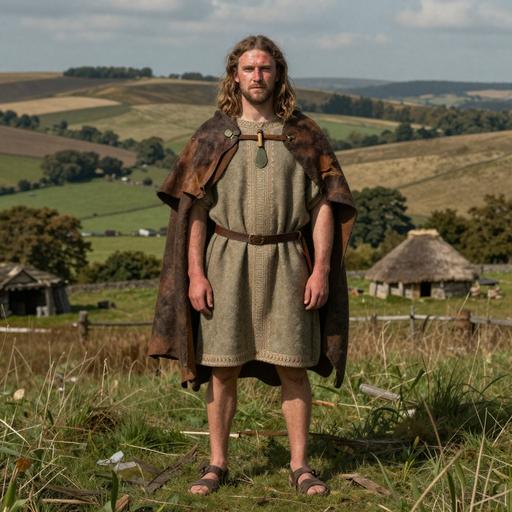
Reconstructed portrait of England MBA individual, England. Wiltshire. Rowbarrow, United Kingdom (1,518-1,425 BCE)
England MBA individual, United Kingdom
United Kingdom England MBA 1518-1425 calBCE (3213±28 BP, SUERC-41692) British Middle Bronze Age R1b1a1b1a1a2a2a Downstream
Chapter VI

Carrier Distribution Map

Geographic distribution of 1 ancient DNA sample (direct and subclade carriers of R1B1A1B1A1A2A2)

Subclade carrier
Time Period Filter
All Time Periods
Showing all samples
Chapter VII

Temporal Distribution

Distribution of carriers across archaeological periods

Chapter VIII

Geographic Distribution

Distribution by country of origin (direct and subclade carriers shown by default)

Chapter IX

Country × Era Distribution

Cross-tabulation of carrier countries and archaeological periods (direct and subclade carriers shown by default)

Data

Data & Provenance

Source information and data quality

Last Updated 2026-06-17
Confidence Score 50/100
Coverage Low
Data Source

We use the latest phylotree for YDNA haplogroup classification and data.