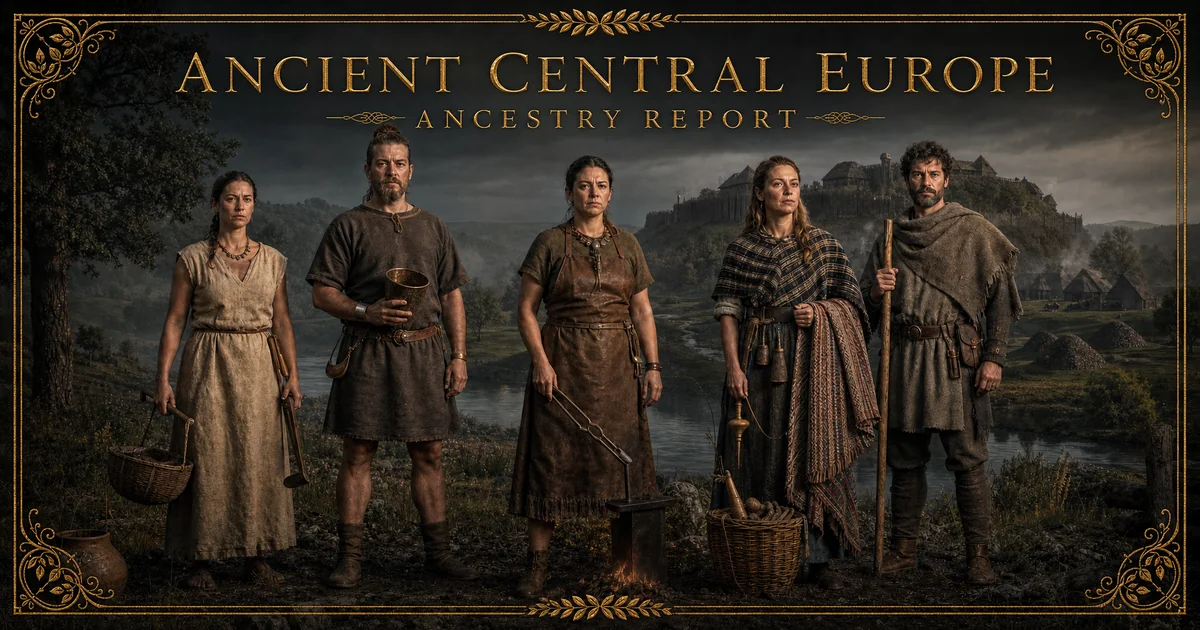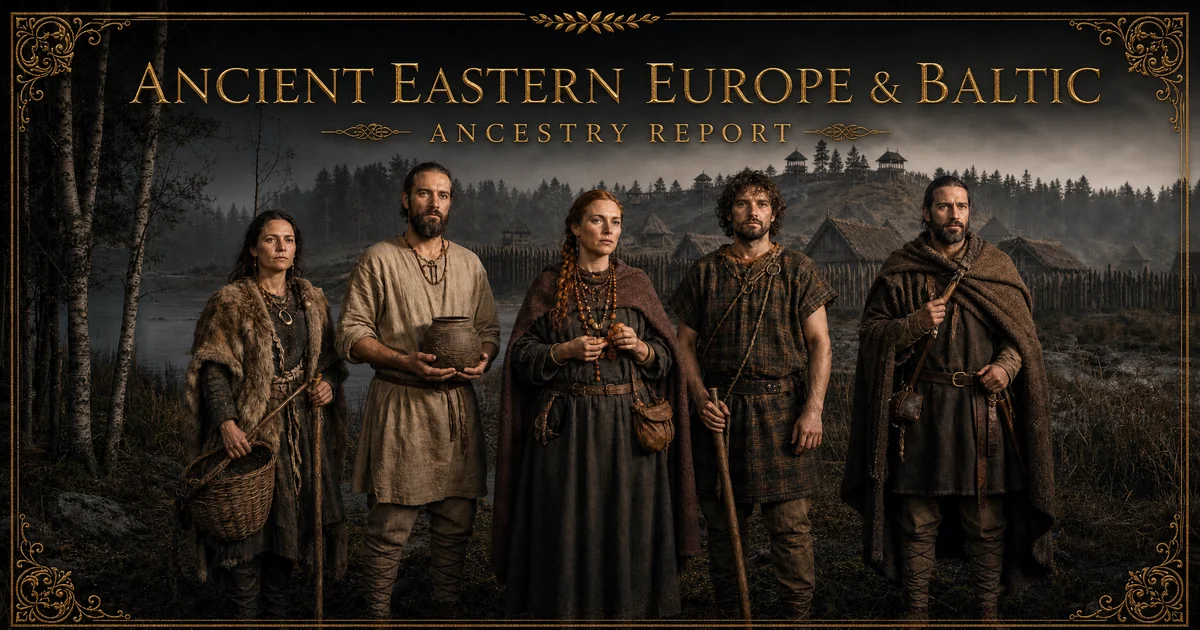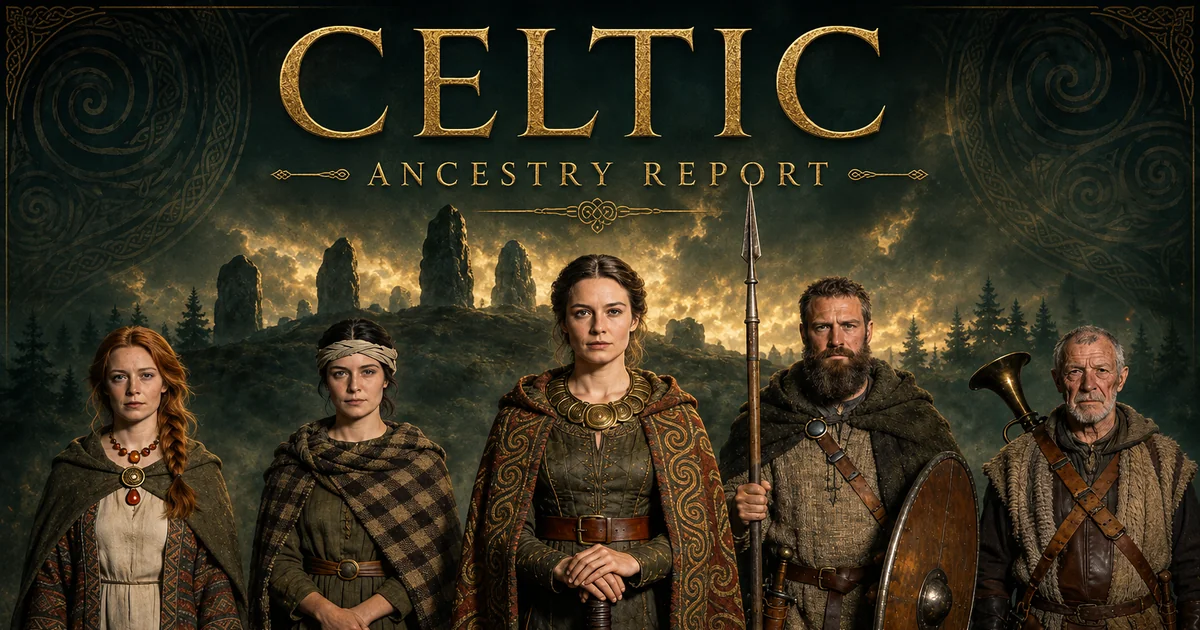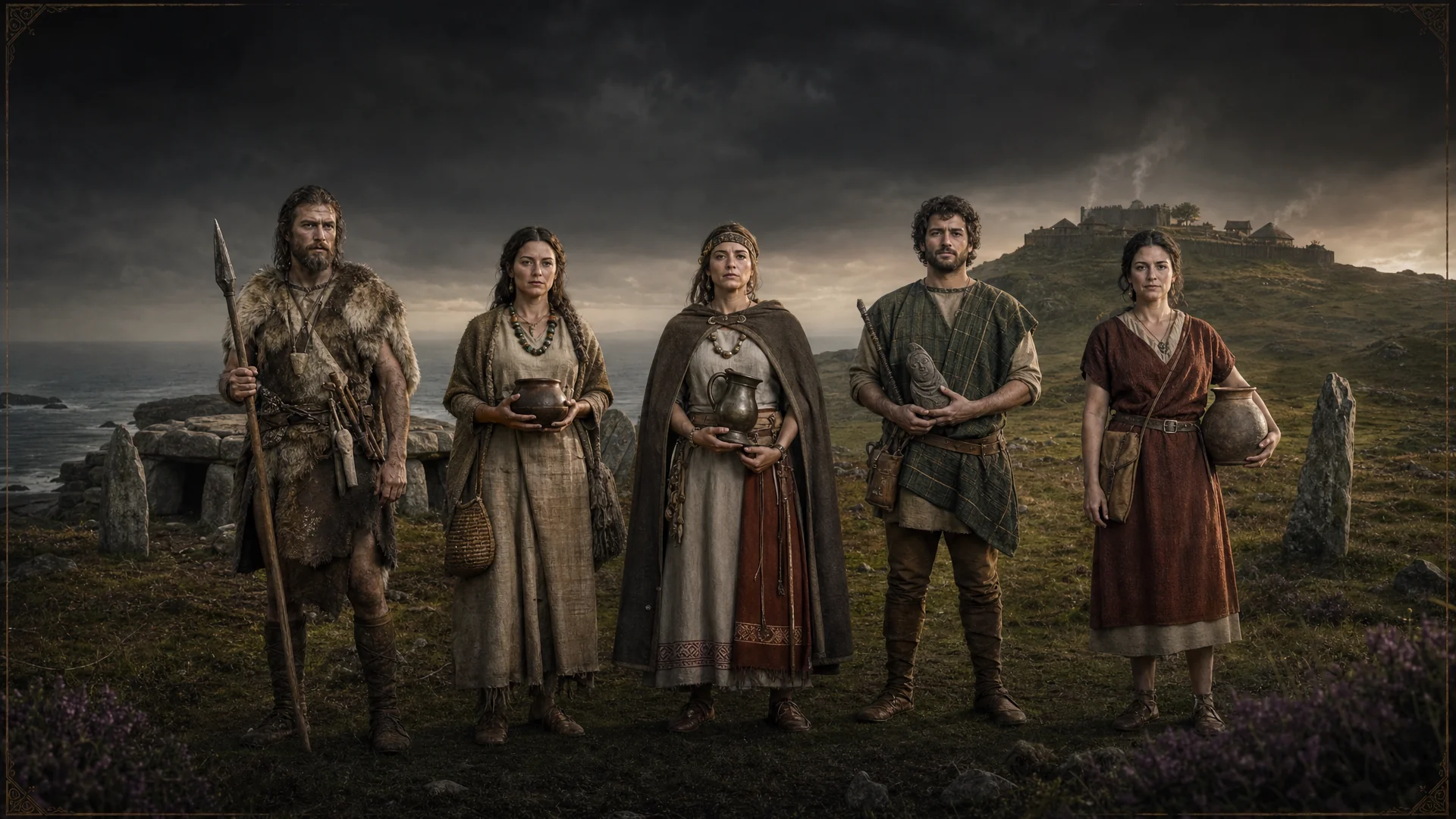
The Story of Ancient Western Europe
Some of the oldest known European forager genomes come from cave sites in France and Belgium, giving the Atlantic facade unusually deep time coverage stretching back to the Upper Palaeolithic and Mesolithic.
Around 5,000 BCE, the first Neolithic farmers reached the Paris Basin and the Cardial coast, and within a few centuries a Middle Neolithic community on the Yonne river at Gurgy left one of the largest multi-generational family trees ever reconstructed from ancient DNA. Elsewhere, communities at Fleury-sur-Orne in Normandy built monumental earthen mounds that rank among the largest Neolithic structures known in Europe, while megalithic dolmen builders raised the tomb fields of the Jura and Brittany.
Bell Beaker groups and Atlantic Bronze Age networks connected the coastlines of France and the Low Countries by sea and river. Iron Age Gaulish and Belgic communities, whose La Tene cemeteries are richly documented in the Champagne chalk plains, gave way to Gallo-Roman provincial life once Rome's frontier reached the Rhine, garrisoning forts like Valkenburg near the mouth of the river.
After Rome's authority receded, Merovingian and Frankish communities reshaped the region, leaving burial grounds beneath towns like Sint-Truiden that stayed in continuous use from the early medieval period into the late Middle Ages. From Atlantic foragers to Frankish settlers, the genetic legacy of France and the Low Countries endures in their descendants today.
"The coastline remembers. The stones remember. The rivers remember. The story continues in you."
Atlantic Mesolithic
10,000 to 5,000 BCEAtlantic and inland hunter-gatherer communities, including some of Europe's oldest sequenced forager genomes.
Paris Basin Farmers
5,000 to 3,000 BCEEarly farmers of the Paris Basin and Atlantic coast, including the Gurgy family-tree community on the Yonne.
Megalithic & Bell Beaker
3,000 to 2,200 BCEBell Beaker and megalithic societies who raised the dolmen fields of the Jura and the tomb complexes of Brittany.
Atlantic Bronze Age
2,200 to 800 BCEBronze Age networks linking the Atlantic coastlines of France and the Low Countries by sea and river.
Gaulish & Belgic
800 to 50 BCEIron Age Gaulish and Belgic populations, documented in the richly furnished La Tene cemeteries of Champagne.
Gallo-Roman
50 BCE to 500 CEProvincial communities along the Rhine frontier, garrisoning forts such as Valkenburg near the river mouth.
Merovingian & Frankish
500 to 1500 CEMerovingian, Frankish, and later medieval communities, from Sint-Truiden's abbey precinct to Saxon Groningen.