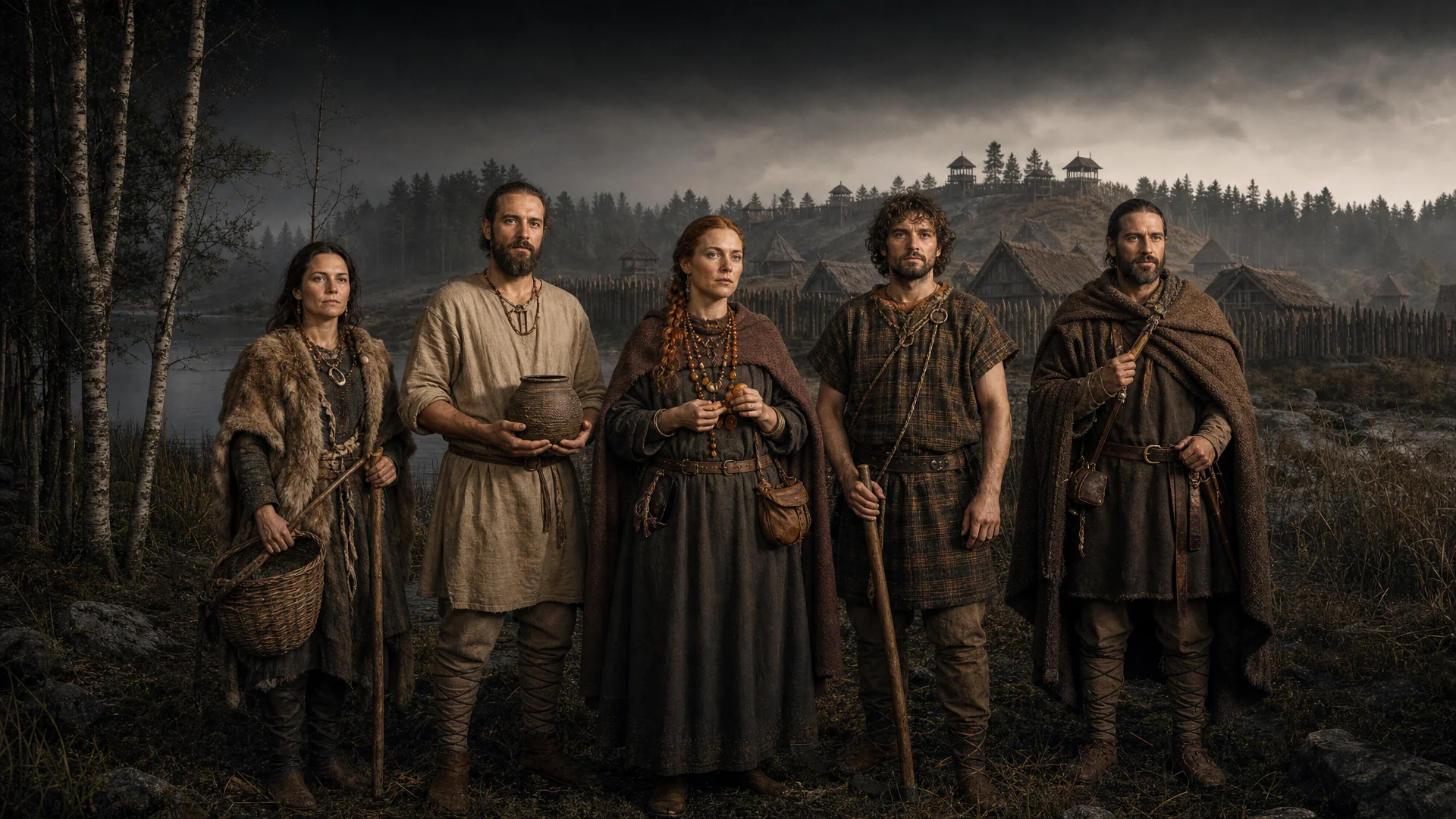
The Story of Ancient Eastern Europe and the Baltic
On the shores of Lake Onega in Russian Karelia, one of northeastern Europe's most important Mesolithic cemeteries preserved burials that still shape how scientists understand Eastern European hunter-gatherer ancestry, a genetic component still detectable across the region today.
In the eastern Baltic, the cemetery at Zvejnieki in Latvia stayed in continuous use for millennia, spanning the Mesolithic through the Neolithic and into the Corded Ware period, making it a cornerstone site for the region's deep population history. On the Dnieper river in Ukraine, the Sredny Stog culture at Dereivka connects the Copper Age steppe to debates over early horse domestication, while Bronze Age communities on the Daugava at Kivutkalns developed distinctive Baltic metalworking traditions.
Iron Age river-confluence strongholds like Santok in Poland controlled strategic trade routes for centuries, and the amber that moved along Baltic trade corridors reportedly travelled as far as Mycenaean Greece and Egypt. In the early Viking Age, the ship burials at Salme on the Estonian island of Saaremaa reshaped understanding of raiding networks on the Baltic Sea before the conventional start of the Viking Age.
By the 8th and 9th centuries, Norse settlers and traders founded river towns like Staraya Ladoga and Gnezdovo, linking the Baltic to Byzantium along the Volkhov and Dnieper trade routes that gave rise to the Rus' state, while island strongholds such as Ostrów Lednicki anchored the early Polish state. From forest-zone foragers to medieval Rus traders, the genetic legacy of Eastern Europe and the Baltic endures in their descendants today.
"The forest remembers. The amber remembers. The rivers remember. The story continues in you."
Forest-Zone & Baltic Foragers
10,000 to 5,000 BCEHunter-gatherer communities of the boreal forest and Baltic lake country, including the Lake Onega cemetery of Yuzhny Oleniy Ostrov.
Comb Ware Farmers
5,000 to 3,000 BCEEarly farming and Comb Ceramic communities across the eastern Baltic, documented at the long-used Zvejnieki cemetery.
Corded Ware
3,000 to 2,200 BCECopper Age steppe and forest-edge herders, connected to the Sredny Stog culture debates on early horse domestication at Dereivka.
Trzciniec & Amber Networks
2,200 to 800 BCEBronze Age Baltic-speaking communities, including the Daugava valley metalworkers of Kivutkalns and the wider amber trade routes.
Iron Age Baltic
800 BCE to 400 CEIron Age forest-zone and Baltic populations who controlled strategic river-confluence strongholds like Santok.
Migration & Early Slavic
400 to 800 CEMigration Period and early Slavic communities, alongside the early Viking Age ship burials at Salme on Saaremaa.
Baltic & Rus
800 to 1500 CEMedieval river-trade centres like Staraya Ladoga and Gnezdovo, and early state strongholds such as Ostrów Lednicki.