Menu
Currency
Ancestry
Y-DNA Haplogroup • Paternal Lineage

I2A1B1A1A1B

Y-DNA Haplogroup I2A1B1A1A1B

~8,000 years ago
Southeastern Europe
1 subclades
8 ancient samples
Scroll to explore
Chapter I

The Story

The journey of Y-DNA haplogroup I2A1B1A1A1B

Origins and Evolution

Y-DNA haplogroup I2A1B1A1A1B is a finer downstream branch within the broader I2 paternal lineage, one of the major European Y-chromosome clades ultimately associated with prehistoric European hunter-gatherer ancestry. Its ancestral roots likely trace back to southeastern Europe, where postglacial populations survived and expanded after the Last Glacial Maximum.

As a subclade of a young Holocene European branch, I2A1B1A1A1B most likely emerged during the early to middle Holocene, when demographic growth, local founder effects, and regional isolation created numerous internal sub-branches within I2. Its exact age is not always directly dated in public literature, but by phylogenetic position it is best interpreted as a regional European lineage that diversified after the initial postglacial recolonization of the Balkans and surrounding areas.

Subclades

I2A1B1A1A1B is itself a terminal or near-terminal derivative of I2A1B1A1A1, meaning it represents a further step in a lineage already concentrated in Europe. In practical genealogical terms, such downstream branches often arise from:

  • Local founder events
  • Patrilineal drift in small populations
  • Regional expansion during prehistoric and historic periods
  • Sociopolitical mobility in later European history

Because it is a deep European subclade rather than a globally expanded lineage, its distribution is expected to be patchy, with clusters in some regions and low-frequency occurrences elsewhere.

Geographical Distribution

Available population-genetic context suggests this lineage is found most often in Balkan-related populations, with additional occurrences across broader Europe due to later migrations and historical mobility. It can appear in:

  • Balkan populations, especially in southeastern Europe where many I2 subclades are most diverse
  • East Slavic populations, reflecting later movement and admixture across eastern Europe
  • Central European populations, including Germanic- and Slavic-influenced regions
  • Scandinavian populations, usually at low to moderate frequencies for rare I2 branches
  • German and Austrian populations, where diverse European Y-lineages persist at low levels
  • British and Irish populations, likely through historical migration and medieval-era gene flow
  • Baltic populations, consistent with broad northward and eastward spread of some I2 subclades
  • Diaspora populations in the Americas and Australia, carried by modern migration

Historical and Cultural Significance

Haplogroup I2 and its subclades are frequently discussed in relation to European Mesolithic and post-Mesolithic continuity, especially among lineages associated with indigenous European hunter-gatherers. While I2A1B1A1A1B itself is too downstream to be linked securely to a single prehistoric archaeological culture, its broader phylogenetic context fits with the long persistence of pre-agrarian paternal lineages in Europe.

This lineage may have been shaped by successive demographic layers, including:

  • Neolithic interactions between hunter-gatherers and incoming farmers
  • Bronze Age and Iron Age regional restructuring in southeastern and central Europe
  • Medieval population movements across Slavic, Germanic, and Balkan zones
  • Modern diaspora dispersal through global migration

Because it is a subclade of a lineage with strong European antiquity, I2A1B1A1A1B is of interest for reconstructing the paternal history of southeastern Europe and adjacent regions, especially where deep local continuity and later expansions intersect.

Conclusion

Y-DNA haplogroup I2A1B1A1A1B is a rare, downstream European paternal lineage rooted in the ancient postglacial history of southeastern Europe. Its distribution across multiple parts of Europe reflects a combination of early Holocene diversification, regional founder effects, and later historical migrations, making it a useful marker for studying the deep and layered paternal ancestry of Europe.

Key Points

  • Origins and Evolution
  • Subclades
  • Geographical Distribution
  • Historical and Cultural Significance
  • Conclusion
Chapter II

Tree & Relationships

Phylogenetic context and subclades

Evolution Path

This haplogroup's evolutionary journey from its earliest ancestor to the present.

Steps Haplogroup Age Estimate Archaeology Era Time Passed Immediate Descendants Tested Modern Descendants Ancient Connections
1 I2A1B1A1A1B Current ~8,000 years ago ?? Neolithic 8,000 years 1 0 8
2 I2A1B1A1A1 ~8,000 years ago ?? Neolithic 8,000 years 1 0 0
3 I2A1B1A1A ~10,000 years ago ?? Neolithic 10,000 years 2 0 33
4 I2A1B1A1 ~12,000 years ago ?? Neolithic 12,000 years 2 3 0
5 I2A1B1A ~12,000 years ago ?? Neolithic 12,000 years 2 85 5
6 I2A1B1 ~12,000 years ago ?? Neolithic 12,000 years 2 96 0
7 I2A1B ~14,000 years ago ?? Mesolithic 14,000 years 2 209 22
8 I2A1 ~16,000 years ago ?? Mesolithic 16,000 years 2 831 0
9 I2A ~18,000 years ago ?? Mesolithic 18,000 years 2 1,507 24
10 I2 ~20,000 years ago ?? Mesolithic 20,000 years 2 1,737 10
11 I ~25,000 years ago ?? Paleolithic 25,000 years 4 3,404 79
Chapter III

Where in the World

Geographic distribution and modern presence

Place of Origin

Southeastern Europe

Modern Distribution

The populations where Y-DNA haplogroup I2A1B1A1A1B is found include:

  1. Balkan populations
  2. East Slavic populations
  3. Central European populations
  4. Scandinavian populations
  5. German and Austrian populations
  6. British and Irish populations
  7. Baltic populations
  8. Recent diaspora populations in the Americas and Australia

Regional Presence

Southern Europe (Balkans) High
Central Europe (border regions) Low
Eastern Europe Low
Southern Italy / Mediterranean islands Low
Southeastern Europe High
Northern Europe Low
CHAPTER IV

When in Time

Your haplogroup in the context of human history

~10k years ago

Neolithic Revolution

Agriculture begins, settled communities form

~8k years ago

Haplogroup I2A1B1A1A1B

Your Y-DNA haplogroup emerged in Southeastern Europe

Southeastern Europe
~5k years ago

Bronze Age

Metalworking, writing, and early civilizations

~3k years ago

Iron Age

Iron tools, expanded trade networks

~2k years ago

Classical Antiquity

Greek and Roman civilizations flourish

Present

Present Day

Modern era

Your Haplogroup
Historical Era
Chapter IV-B

Linked Cultures

Ancient cultures associated with Y-DNA haplogroup I2A1B1A1A1B

Cultural Heritage

These ancient cultures have been linked to haplogroup I2A1B1A1A1B based on matching ancient DNA samples from archaeological excavations. The presence of this haplogroup in these cultures provides insights into the migrations and population movements of populations carrying this haplogroup.

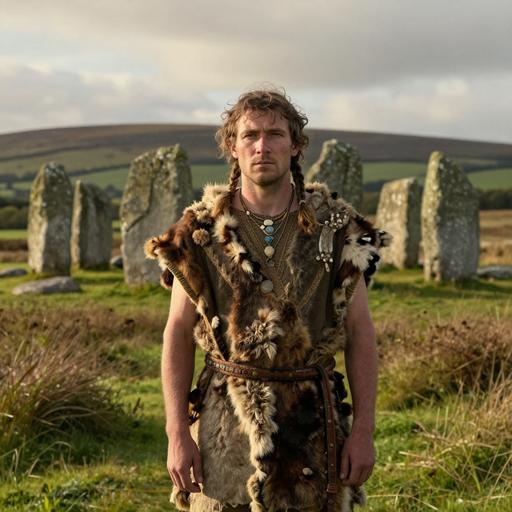
British Megalithic British Neolithic Irish Neolithic
Culture assignments are based on archaeological context of ancient DNA samples and may represent regional associations during specific time periods.
Chapter V

Sample Catalog

8 direct carriers of haplogroup I2A1B1A1A1B

8 / 8 samples
Portrait Sample Country Era Date Culture Y-DNA Match
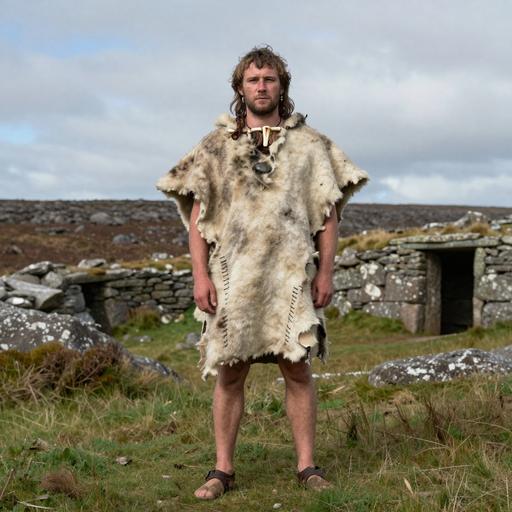
Reconstructed portrait of Scotland N individual, Scotland. Orkney. Isbister, United Kingdom (3,011-2,884 BCE)
Scotland N individual, United Kingdom
United Kingdom Scotland N 3011-2884 calBCE (4309±29 BP, SUERC-68722) Scottish Neolithic I2a1b1a1a1b Direct
Reconstructed portrait of MN individual, Ireland. Clare. Parknabinnia, Ireland (3,626-3,356 BCE)
MN individual, Ireland
Ireland Ireland MN 3626-3356 calBCE (4667±54 BP, UBA-39195) Irish Middle Neolithic I2a1b1a1a1b Direct
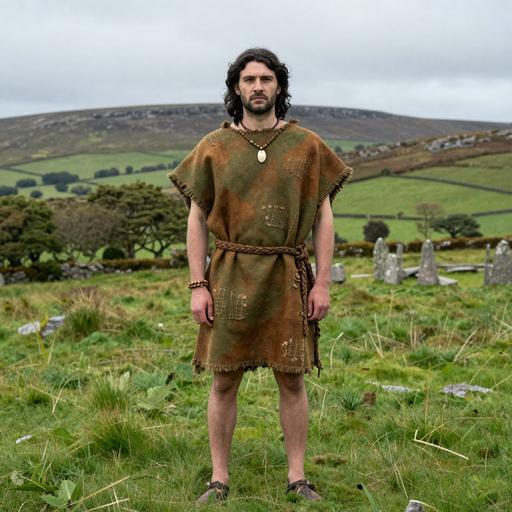
Reconstructed portrait of MN individual, Ireland. Limerick. Annagh, Ireland (3,637-3,191 BCE)
MN individual, Ireland
Ireland Ireland MN 3637-3191 calBCE (4670±70 BP, GrA-1703) Irish Middle Neolithic I2a1b1a1a1b Direct
Reconstructed portrait of Celtic individual, Scotland. Argyll and Bute. Oban. Raschoille Cave, United Kingdom (3,638-3,386 BCE)
Celtic individual, United Kingdom
United Kingdom Scotland N 3638 BCE - 3386 BCE Scottish Neolithic I2a1b1a1a1b Direct
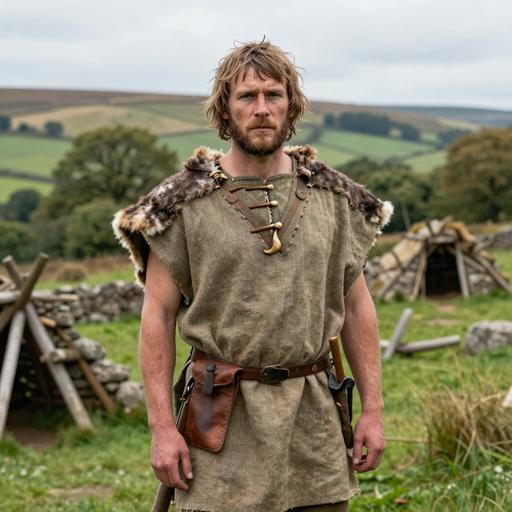
Reconstructed portrait of MN individual, Ireland. Tipperary. Ashleypark, Ireland (3,640-3,380 BCE)
MN individual, Ireland
Ireland Ireland MN 3640-3380 calBCE (4765±40 BP, GrN-11036) Irish Middle Neolithic I2a1b1a1a1b Direct
Reconstructed portrait of Celtic individual, England. Derbyshire. Brassington. Carsington Pasture Cave, United Kingdom (3,648-3,528 BCE)
Celtic individual, United Kingdom
United Kingdom England N 3648 BCE - 3528 BCE British Neolithic I2a1b1a1a1b Direct
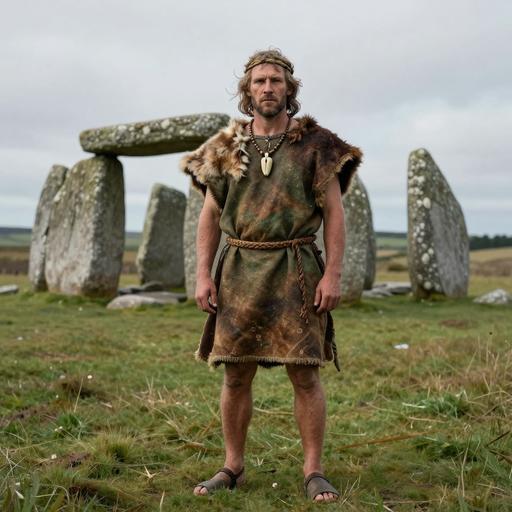
Reconstructed portrait of EN MN individual, Ireland. Clare. Poulnabrone, Ireland (3,706-3,521 BCE)
EN MN individual, Ireland
Ireland Ireland EN MN 3706-3521 calBCE (4834±45 BP, UBA-38313) Irish Neolithic I2a1b1a1a1b Direct
Reconstructed portrait of EN individual, Ireland. Clare. Poulnabrone, Ireland (3,944-3,651 BCE)
EN individual, Ireland
Ireland Ireland EN 3944-3651 calBCE (4992±40 BP, UBA-38308) Irish Neolithic I2a1b1a1a1b Direct
Chapter VI

Carrier Distribution Map

Geographic distribution of 8 ancient DNA samples (direct and subclade carriers of I2A1B1A1A1B)

Direct carrier
Time Period Filter
All Time Periods
Showing all samples
Chapter VII

Temporal Distribution

Distribution of carriers across archaeological periods

Chapter VIII

Geographic Distribution

Distribution by country of origin (direct and subclade carriers shown by default)

Chapter IX

Country × Era Distribution

Cross-tabulation of carrier countries and archaeological periods (direct and subclade carriers shown by default)

Data

Data & Provenance

Source information and data quality

Last Updated 2026-06-17
Confidence Score 50/100
Coverage Low
Data Source

We use the latest phylotree for YDNA haplogroup classification and data.