Menu
Currency
Ancestry
Y-DNA Haplogroup • Paternal Lineage

I2A1B

Y-DNA Haplogroup I2A1B

~14,000 years ago
Southeastern Europe
2 subclades
22 ancient samples
Scroll to explore
Chapter I

The Story

The journey of Y-DNA haplogroup I2A1B

Origins and Evolution

Y-DNA haplogroup I2a1b is a subclade within I2a1, itself part of the broader haplogroup I2 lineage that is widely interpreted as one of Europe’s oldest surviving paternal branches. Because it sits several steps downstream from the parent clade, I2a1b likely reflects a later diversification event within a postglacial European hunter-gatherer lineage rather than a very ancient, pan-European root lineage.

The most plausible origin for this subclade is Southeastern Europe, where the deeper I2 lineages appear to have persisted through the Late Glacial and Early Holocene. A time depth of roughly 14 kya is a reasonable estimate for the emergence of I2a1b, though the exact age depends on the current phylogenetic resolution and sampling of ancient and modern DNA.

Subclades

As an intermediate-to-downstream branch, I2a1b serves as a connector between broader I2a1 ancestry and more localized regional descendant lineages. In many Y-DNA phylogenies, clades at this level accumulate geographic signal quickly, so descendant branches may be strongly associated with particular Balkan, Carpathian, or Central European populations.

Because the tree is still being refined, the precise internal structure of I2a1b may vary by database and naming system. The important genetic pattern is that this lineage belongs to the European hunter-gatherer-associated I2 continuum, with later demographic growth likely shaped by Neolithic, Bronze Age, and historic-era population movements.

Geographical Distribution

I2a1b is found at low to moderate frequencies across a broad swath of Europe, with its strongest associations generally in Southeastern Europe and neighboring regions. It is especially consistent with populations in the Balkans, but it also appears in Central Europe, Eastern Europe, and in lower frequencies in Northern and Western Europe due to later dispersals.

In modern data, this haplogroup can appear in:

  • Balkan populations with deep regional continuity
  • East Slavic and neighboring Eastern European populations
  • Central European groups, including German- and Austrian-speaking populations
  • Scandinavian and Baltic populations at lower levels
  • British and Irish populations at low levels, often reflecting historic migration
  • Diaspora populations in the Americas and Australia

Historical and Cultural Significance

The broader I2 paternal lineage is often linked to European Mesolithic hunter-gatherers, making I2a1b part of a genetic legacy that predates the spread of agriculture in Europe. While direct one-to-one associations with specific archaeological cultures should be treated cautiously, this lineage is broadly compatible with populations that maintained continuity through the transition from foraging to mixed subsistence systems in Southeastern Europe.

Later expansions of I2-derived lineages may have been influenced by Neolithic demographic restructuring, Bronze Age mobility, and the formation of regional populations in the Balkans and Carpathian Basin. In more recent periods, the spread of I2a1b into northwestern and overseas populations likely reflects historical migrations, state formation, and modern diaspora movements rather than original deep-time origin outside Southeastern Europe.

Conclusion

I2a1b is a geographically informative subclade of haplogroup I2, representing a branch of Europe’s ancient paternal heritage that likely diversified in Southeastern Europe after the last Ice Age. Its modern distribution reflects both deep regional continuity in the Balkans and later dispersal into much of Europe, making it an important lineage for studies of European population history.

Key Points

  • Origins and Evolution
  • Subclades
  • Geographical Distribution
  • Historical and Cultural Significance
  • Conclusion
Chapter II

Tree & Relationships

Phylogenetic context and subclades

Evolution Path

This haplogroup's evolutionary journey from its earliest ancestor to the present.

Steps Haplogroup Age Estimate Archaeology Era Time Passed Immediate Descendants Tested Modern Descendants Ancient Connections
1 I2A1B Current ~14,000 years ago ?? Mesolithic 14,000 years 2 209 22
2 I2A1 ~16,000 years ago ?? Mesolithic 16,000 years 2 831 0
3 I2A ~18,000 years ago ?? Mesolithic 18,000 years 2 1,507 24
4 I2 ~20,000 years ago ?? Mesolithic 20,000 years 2 1,737 10
5 I ~25,000 years ago ?? Paleolithic 25,000 years 4 3,404 79

Siblings (1)

Other branches from the same parent haplogroup

Chapter III

Where in the World

Geographic distribution and modern presence

Place of Origin

Southeastern Europe

Modern Distribution

The populations where Y-DNA haplogroup I2a1b haplogroup I2A1B is found include:

  1. Balkan populations
  2. East Slavic populations
  3. Central European populations
  4. Scandinavian populations
  5. German and Austrian populations
  6. British and Irish populations
  7. Baltic populations
  8. Recent diaspora populations in the Americas and Australia

Regional Presence

Southeast Europe (Balkans) High
Southern Europe (Italy, Sardinia, Adriatic coast) Moderate
Central Europe Moderate
Western Europe Low
Northern Europe Low
Southeastern Europe High
Eastern Europe Moderate
CHAPTER IV

When in Time

Your haplogroup in the context of human history

~20k years ago

Last Glacial Maximum

Peak of the last ice age, populations isolated

~14k years ago

Haplogroup I2A1B

Your Y-DNA haplogroup emerged in Southeastern Europe

Southeastern Europe
~10k years ago

Neolithic Revolution

Agriculture begins, settled communities form

~5k years ago

Bronze Age

Metalworking, writing, and early civilizations

~3k years ago

Iron Age

Iron tools, expanded trade networks

~2k years ago

Classical Antiquity

Greek and Roman civilizations flourish

Present

Present Day

Modern era

Your Haplogroup
Historical Era
Chapter IV-B

Linked Cultures

Ancient cultures associated with Y-DNA haplogroup I2A1B

Cultural Heritage

These ancient cultures have been linked to haplogroup I2A1B based on matching ancient DNA samples from archaeological excavations. The presence of this haplogroup in these cultures provides insights into the migrations and population movements of populations carrying this haplogroup.

Alföld Linear Pottery Cardial Culture Castelnovian Culture Iberian Neolithic Linear Pottery Culture Maglemosian Motala Culture Scottish Neolithic Sicilian Epigravettian Tagliente Culture Ukrainian Neolithic
Culture assignments are based on archaeological context of ancient DNA samples and may represent regional associations during specific time periods.
Chapter V

Sample Catalog

12 direct carriers and 10 subclade carriers of haplogroup I2A1B

22 / 22 samples
Portrait Sample Country Era Date Culture Y-DNA Match
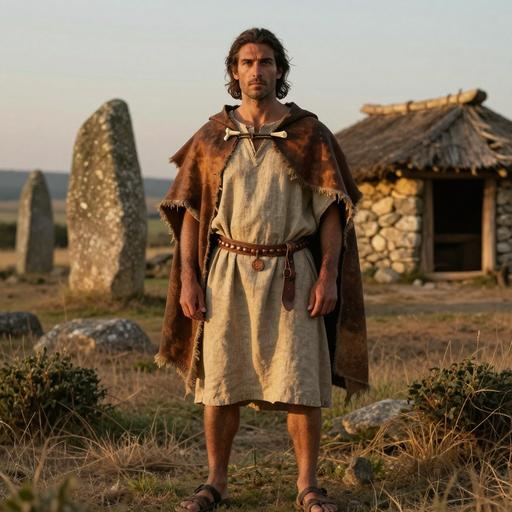
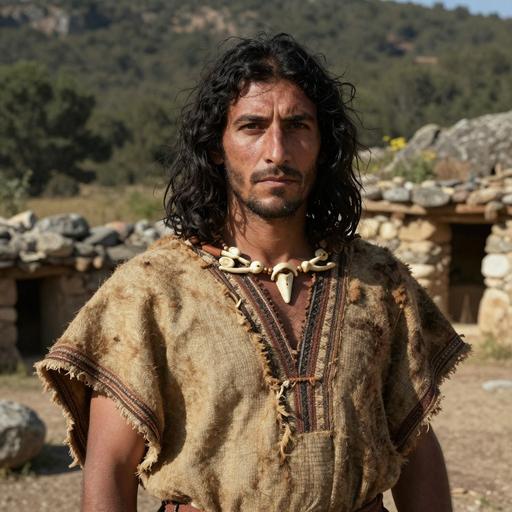
Reconstructed portrait of Early Medieval individual, Roscommon. Kilteasheen, Ireland (700-1,300 CE)
Early Medieval individual, Ireland
Ireland Anglo-Saxon Early Medieval Kilteasheen, Ireland 700-1300 CE Kilteasheen I2a1b Direct
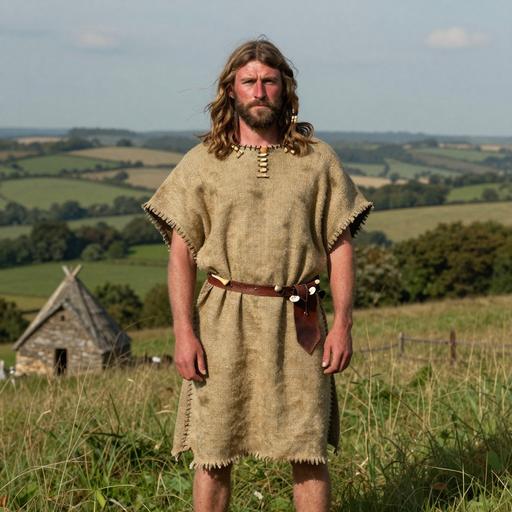
Reconstructed portrait of Medieval individual, Ahlgade 15-17 (Holbæk), Denmark (1,000-1,800 CE)
Medieval individual, Denmark
Denmark Denmark Medieval 1000-1800 CE Danish Medieval I2a1b Direct
Reconstructed portrait of Danish Kingdom individual, Tjærby (Randers Municipality), Denmark (1,300-1,400 CE)
Danish Kingdom individual, Denmark
Denmark Denmark Medieval 1300 CE - 1400 CE Danish Medieval I2a1b Direct
Reconstructed portrait of Western European Megalithic Culture individual, Cova da Moura, Portugal (2,500-2,000 BCE)
Western European Megalithic Culture individual, Portugal
Portugal Portugal LN C 2500 BCE - 2000 BCE Portuguese Chalcolithic I2a1b Direct
Reconstructed portrait of Iberian Chalcolithic individual, Lisbon. Torres Vedras. Cabeço da Arruda I, Portugal (3,350-2,850 BCE)
Iberian Chalcolithic individual, Portugal
Portugal Portugal C 3350 BCE - 2850 BCE Portuguese Chalcolithic I2a1b Direct
Reconstructed portrait of England N individual, England. Northampton. Banbury Lane, United Kingdom (3,360-3,100 BCE)
England N individual, United Kingdom
United Kingdom England N 3400-3100 BCE British Neolithic I2a1b Direct
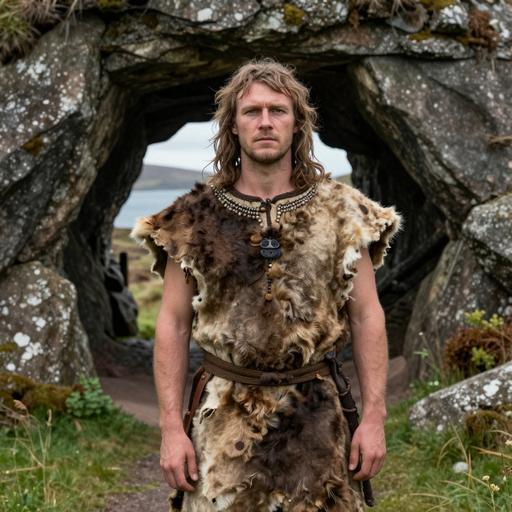
Reconstructed portrait of Scotland N-olow EEF individual, Scotland. Argyll and Bute. Isle of Ulva. Ulva Cave, United Kingdom (3,751-3,636 BCE)
Scotland N-olow EEF individual, United Kingdom
United Kingdom Scotland N 3751-3636 calBCE (4895±25 BP, PSUAMS-5771) Scottish Neolithic I2a1b Direct
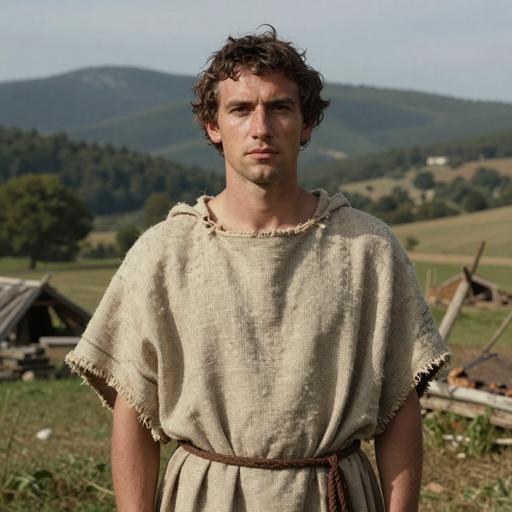
Reconstructed portrait of EN MN-o individual, Alpes-Maritimes. Les Bréguières, France (5,216-4,953 BCE)
EN MN-o individual, France
France France EN MN 5216-4953 calBCE (6151±45 BP, LTL-13784A) Linear Pottery Culture I2a1b Direct
Reconstructed portrait of EN individual, Cueva de Chaves, Spain (5,302-4,991 BCE)
EN individual, Spain
Spain Spain EN 5302-4991 calBCE (6180±54 BP, D-AMS-015821) Cardial Culture I2a1b Direct
Reconstructed portrait of EN individual, Cueva de Chaves, Spain (5,308-5,051 BCE)
EN individual, Spain
Spain Spain EN 5308-5051 calBCE (6230±45 BP, GrA-26912) Cardial Culture I2a1b Direct
Chapter VI

Carrier Distribution Map

Geographic distribution of 22 ancient DNA samples (direct and subclade carriers of I2A1B)

Direct carrier Subclade carrier
Time Period Filter
All Time Periods
Showing all samples
Chapter VII

Temporal Distribution

Distribution of carriers across archaeological periods

Chapter VIII

Geographic Distribution

Distribution by country of origin (direct and subclade carriers shown by default)

Chapter IX

Country × Era Distribution

Cross-tabulation of carrier countries and archaeological periods (direct and subclade carriers shown by default)

Data

Data & Provenance

Source information and data quality

Last Updated 2026-06-17
Confidence Score 50/100
Coverage Low
Data Source

We use the latest phylotree for YDNA haplogroup classification and data.