Menu
Currency
Ancestry
mtDNA Haplogroup • Maternal Lineage

A12

mtDNA Haplogroup A12

~12,000 years ago
Northeast Asia / Siberia
1 subclades
Scroll to explore
Chapter I

The Story

The journey of mtDNA haplogroup A12

Origins and Evolution

mtDNA haplogroup A12 sits within the broader haplogroup A branch, which is an established maternal lineage of northern and eastern Eurasia. As an intermediate subclade beneath the provisional parent clade AA1B, A12 likely arose in Northeast Asia or southern Siberia in the post-Last Glacial Maximum period, during the late Paleolithic to early Holocene (plausibly on the order of ~10–15 kya). The dating is inferred from its phylogenetic depth relative to other A subclades and from population expansions known to have occurred in northern Asia after the LGM.

Because AA1B and its descendant lineages remain incompletely sampled in modern and ancient datasets, the internal branching order and exact time estimate for A12 remain provisional and should be refined as more whole-mitochondrial genomes from under-sampled Eurasian regions become available.

Subclades

At present A12 is treated as a discrete subclade within the AA1B lineage. Published and public phylogenies indicate limited downstream diversification sampled so far, which suggests either (a) A12 experienced a modest demographic expansion followed by drift and localization, or (b) A12 is undersampled and may harbour further substructure not yet captured in reference databases. Researchers should prioritize complete mitogenome sequencing of candidate carriers to resolve subclades and internal coalescence times.

Geographical Distribution

Empirical data and reasonable phylogeographic inference place A12 predominantly in northern and northeastern Asia. Reported occurrences are rare and patchy; frequencies are generally low where detected, consistent with a regional maternal lineage that did not undergo the large-scale dispersals seen in some other A subclades. The pattern is concordant with postglacial recolonization of northern Asia and local continuity among Siberian and Northeast Asian hunter-gatherer and early-farming groups.

Historical and Cultural Significance

Because A12 is rare and geographically restricted, its main significance lies in population-history reconstructions of Northeast Asia rather than as a marker of wide archaeological cultures. It can contribute to understanding:

  • Post-LGM re-peopling and local continuity in the Amur/Okhotsk/adjacent Siberian regions.
  • Maternal ancestry in Tungusic-, Mongolic- and some North Asian communities, where it occurs at low frequencies and thus may reflect ancient substrate lineages.

Associations with specific archaeological cultures are tentative: A12 could plausibly be present among lineages contributing to the Neolithic Amur/Okhotsk-associated populations and Siberian hunter-gatherer groups, but more ancient DNA targeting these clades is needed to confirm cultural links.

Conclusion

mtDNA A12 is a diagnostically useful but currently rare maternal lineage that helps refine the fine-scale phylogeography of haplogroup A in northern Eurasia. Current evidence points to a Northeast Asian/Siberian origin in the early Holocene, limited downstream diversification, and low-frequency persistence in modern northern Asian populations. Future dense mitogenome sampling and ancient DNA studies across the Amur basin, eastern Siberia, and adjacent regions are the best avenues to clarify its age, internal structure, and archaeological associations.

Key Points

  • Origins and Evolution
  • Subclades
  • Geographical Distribution
  • Historical and Cultural Significance
  • Conclusion
Chapter II

Tree & Relationships

Phylogenetic context and subclades

Evolution Path

This haplogroup's evolutionary journey from its earliest ancestor to the present.

Steps Haplogroup Age Estimate Archaeology Era Time Passed Immediate Descendants Tested Modern Descendants Ancient Connections
1 A12 Current ~12,000 years ago ?? Neolithic 12,000 years 1 3 0
2 AA1B - - - 2 3 0
3 AA1 - - - 14 828 0
4 AA - - - 4 832 0
5 A ~30,000 years ago ?? Paleolithic 30,000 years 4 874 192
6 N ~60,000 years ago ?? Paleolithic 60,000 years 16 20,371 13
7 L3 ~70,000 years ago ?? Paleolithic 70,000 years 7 23,542 6
8 L3'4 - - - 2 23,581 0
9 L3'4'6 - - - 2 23,584 0
10 L2'3'4'6 - - - 2 24,475 0
11 L2'3'4'5'6'7 - - - 2 24,488 0
12 L1'2'3'4'5'6'7 - - - 2 24,903 0
13 L ~160,000 years ago ?? Paleolithic 160,000 years 2 25,205 5

Siblings (1)

Other branches from the same parent haplogroup

Chapter III

Where in the World

Geographic distribution and modern presence

Place of Origin

Northeast Asia / Siberia

Modern Distribution

The populations where mtDNA haplogroup A12 is found include:

  1. Tungusic-speaking groups (e.g., Evenks, Evens, Oroqen)
  2. Yakut (Sakha) and other northern Siberian populations
  3. Northeastern Chinese populations (Manchuria)
  4. Korean Peninsula populations (low-frequency reports)
  5. Northern Japanese / Ainu-admixed groups (reported at very low frequency in some studies)
CHAPTER IV

When in Time

Your haplogroup in the context of human history

~12k years ago

Haplogroup A12

Your mtDNA haplogroup emerged in Northeast Asia / Siberia

Northeast Asia / Siberia
~10k years ago

Neolithic Revolution

Agriculture begins, settled communities form

~5k years ago

Bronze Age

Metalworking, writing, and early civilizations

~3k years ago

Iron Age

Iron tools, expanded trade networks

~2k years ago

Classical Antiquity

Greek and Roman civilizations flourish

Present

Present Day

Modern era

Your Haplogroup
Historical Era
Chapter IV-B

Linked Cultures

Ancient cultures associated with mtDNA haplogroup A12

Cultural Heritage

These ancient cultures have been linked to haplogroup A12 based on matching ancient DNA samples from archaeological excavations. The presence of this haplogroup in these cultures provides insights into the migrations and population movements of populations carrying this haplogroup.

Chemurcheck Culture Hungary_Conqueror Pre-Bronze Mongolia Russia_AltaiKrai_N Russia_Chelyabinsk_Karayakupovo_Kushnarenkovo Russia_Irkutsk_EBA_Glazkovo Russia_Sakha_BA_Yakutia Russia_Tatarstan_EarlyMedieval_Karayakupovo Russia_Tyumen_HanMan Russia_Udmurtia_Medieval_LateChiyalik Santok Culture Viking Culture Yakutian Neolithic
Culture assignments are based on archaeological context of ancient DNA samples and may represent regional associations during specific time periods.
Chapter V

Sample Catalog

3 direct carriers and 13 subclade carriers of haplogroup A12

16 / 16 samples
Portrait Sample Country Era Date Culture mtDNA Match
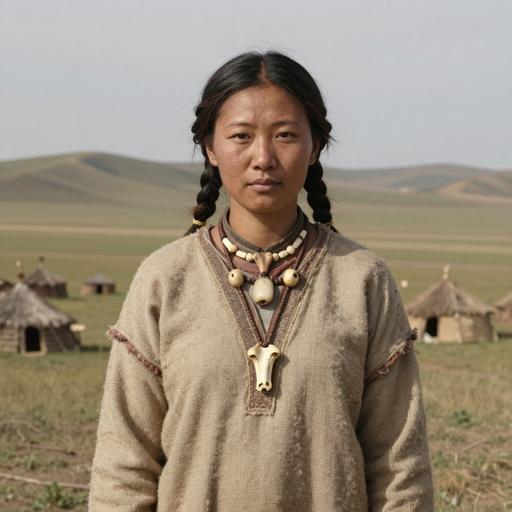
Reconstructed portrait of Early Medieval Slav individual, Santok (Lubusz Province, Gorzów Wielkopolski, Santok), Poland (1,000-1,200 CE)
Early Medieval Slav individual, Poland
Poland Iron Age Santok Culture 1000-1200 CE Santok Culture A12 Direct
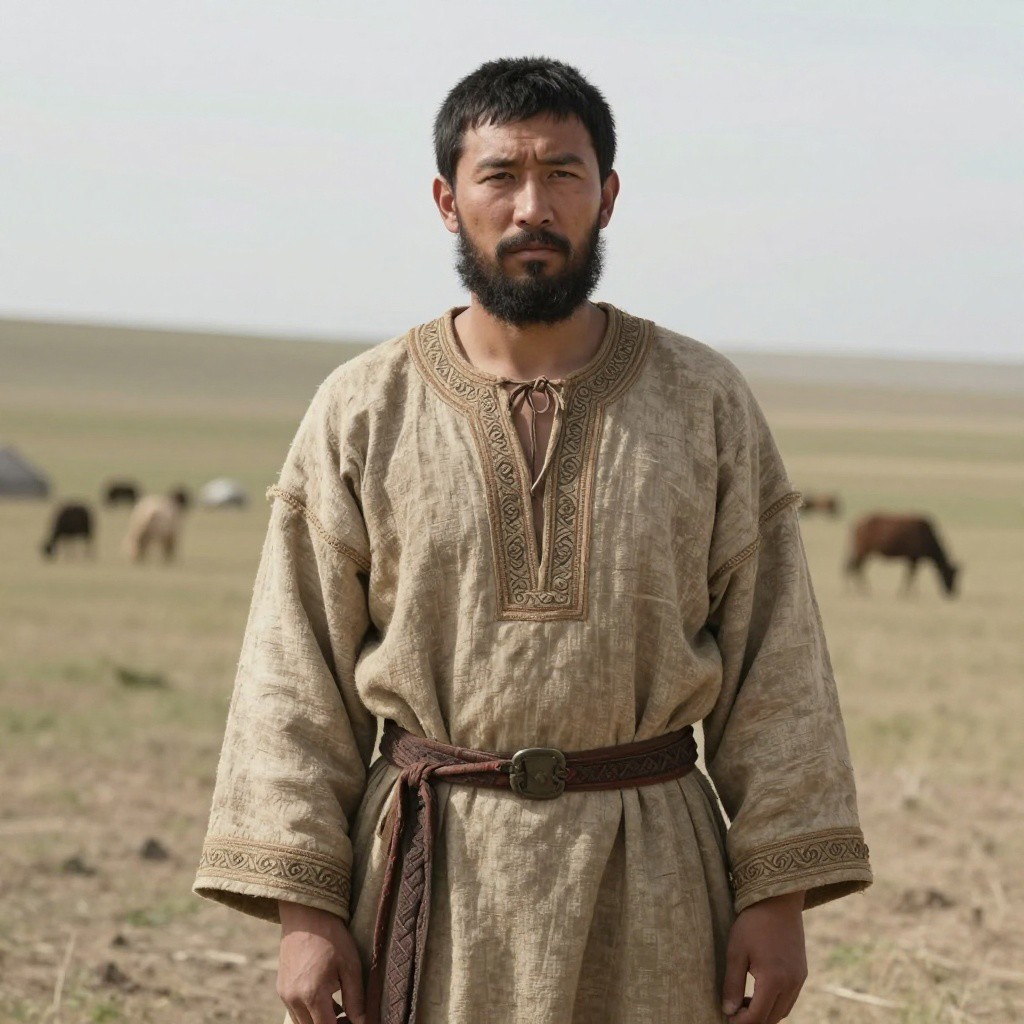
Reconstructed portrait of Xinjiang Chaganguole Chagangole BA Chemurcheck individual, Xinjiang. Aletai Region. Qinghe County. Chaganguole, China (2,571-1,977 BCE)
Xinjiang Chaganguole Chagangole BA Chemurcheck individual, China
China The Bronze Age Chemurcheck culture 2600-1950 BCE Chemurcheck Culture A12 Direct
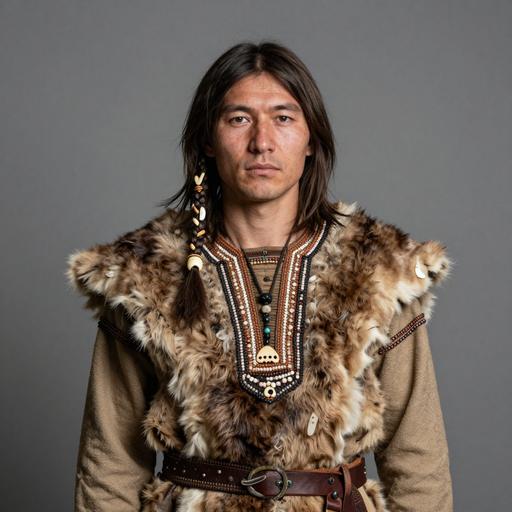
Reconstructed portrait of Arkhangai Pre Bronze individual, Arkhangai. Erdenemandal, Mongolia (3,782-3,639 BCE)
Arkhangai Pre Bronze individual, Mongolia
Mongolia Mongolia Arkhangai PreBronze 3782-3639 calBCE (4923±40 BP, COL5477.1.1) Pre-Bronze Mongolia A12 Direct
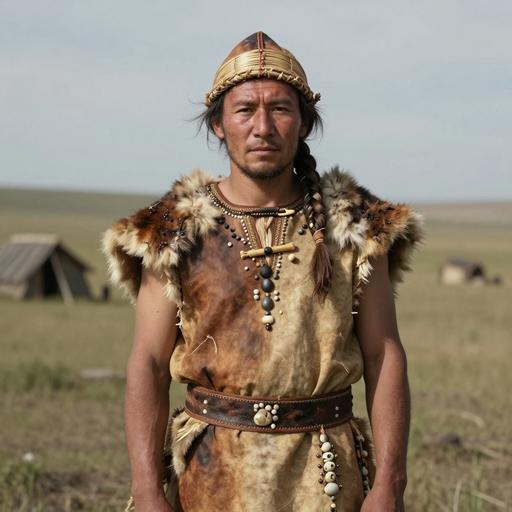
Reconstructed portrait of Conqueror individual, Harta-Freifelt (Bács-Kiskun County, Kalocsa), Hungary (784-1,016 CE)
Conqueror individual, Hungary
Hungary Hungary Conqueror 800-1000 CE Hungary_Conqueror A12a Downstream
Reconstructed portrait of Tatarstan Early Medieval Karayakupovo individual, Bolshie-Tigany (Tatarstan, Alexeyevsky District, Bolshie Tigany Village), Russia (784-1,016 CE)
Tatarstan Early Medieval Karayakupovo individual, Russia
Russia Russia Tatarstan EarlyMedieval Karayakupovo 800-1000 CE Russia_Tatarstan_EarlyMedieval_Karayakupovo A12a Downstream
Reconstructed portrait of Tyumen Han Man individual, Vikulovo (Tyumen Oblast, Vikulovsky District, Vikulovo Village), Russia (792-908 CE)
Tyumen Han Man individual, Russia
Russia Russia Tyumen HanMan 800-900 CE Russia_Tyumen_HanMan A12a Downstream
Reconstructed portrait of Norse individual, Nor Mid. Nord-Trondelag, Norway (800-900 CE)
Norse individual, Norway
Norway Norway Viking 800 CE - 900 CE Viking Culture A12a Downstream
Reconstructed portrait of Viking individual, Nor Mid. Nord-Trondelag, Norway (800-900 CE)
Viking individual, Norway
Norway The Viking Age 800 CE - 900 CE A12a Downstream
Reconstructed portrait of Chelyabinsk Karayakupovo Kushnarenkovo individual, Uelgi (Chelyabinsk Oblast, Kunashaksky District, Kanzafarovo Village), Russia (884-1,116 CE)
Chelyabinsk Karayakupovo Kushnarenkovo individual, Russia
Russia Russia Chelyabinsk Karayakupovo Kushnarenkovo 900-1100 CE Russia_Chelyabinsk_Karayakupovo_Kushnarenkovo A12a Downstream
Reconstructed portrait of Udmurtia Medieval Late Chiyalik individual, Zuevy-Klyuchi-2 (Udmurtia, Karakulinsky District, Zuyevy Klyuchi Village), Russia (1,280-1,412 CE)
Udmurtia Medieval Late Chiyalik individual, Russia
Russia Russia Udmurtia Medieval LateChiyalik 1292-1395 calCE (635±20 BP, PSUAMS-13158) Russia_Udmurtia_Medieval_LateChiyalik A12a Downstream
Chapter VI

Carrier Distribution Map

Geographic distribution of 16 ancient DNA samples (direct and subclade carriers of A12)

Direct carrier Subclade carrier
Time Period Filter
All Time Periods
Showing all samples
Chapter VII

Temporal Distribution

Distribution of carriers across archaeological periods

Chapter VIII

Geographic Distribution

Distribution by country of origin (direct and subclade carriers shown by default)

Chapter IX

Country × Era Distribution

Cross-tabulation of carrier countries and archaeological periods (direct and subclade carriers shown by default)

Data

Data & Provenance

Source information and data quality

Last Updated 2026-06-14
Confidence Score 50/100
Coverage Low
Data Source

We use the latest phylotree for MTDNA haplogroup classification and data.