Menu
Currency
Ancestry
Y-DNA Haplogroup • Paternal Lineage

N1A1A1A1

Y-DNA Haplogroup N1A1A1A1

~4,000 years ago
North Eurasia
1 subclades
Scroll to explore
Chapter I

The Story

The journey of Y-DNA haplogroup N1A1A1A1

Origins and Evolution

Y-DNA haplogroup N1A1A1A1 is a subclade of haplogroup N, one of the major paternal lineages that expanded across northern Eurasia. As a downstream branch of N1A1A1A, it belongs to a deeper forest-zone lineage complex that is strongly associated with populations of northeastern Europe, the Volga-Ural region, and western Siberia. Because it is a fine-scale subclade, its exact prehistoric origin is less well resolved than that of its parent clades, but the most likely scenario is an emergence within North Eurasia during the late Neolithic to early Bronze Age, followed by localized expansion and drift.

This branch likely reflects a history shaped by small effective population sizes, founder effects, and regional mobility among hunting-fishing and early pastoralist groups in the boreal zone. Like other subclades of haplogroup N, it may have diversified in association with the spread of Uralic-related population networks, although direct one-to-one linguistic attribution is often uncertain and should be treated cautiously.

Subclades

As an intermediate-to-terminal branch within haplogroup N1A1A1A, this haplogroup sits close to the finer structure of the phylogeny. In general, subclades within this part of haplogroup N are important for tracing regional paternal continuity in the eastern Baltic, Fennoscandia, and western Siberia. Because this is a narrowly defined branch, it may have limited ancient DNA sampling compared with broader upstream clades.

Geographical Distribution

Haplogroup N1A1A1A1 is expected to be found at low to moderate frequencies in populations with historical ties to the northern Eurasian forest zone. Its strongest associations are likely in Finnish, Baltic-Finnic, Sámi, and Uralic-speaking groups, with additional presence in some northern Russian and western Siberian populations. Due to founder effects and population structure, frequencies can vary widely between neighboring communities.

The haplogroup may also appear sporadically in other Eurasian populations as a result of historical migration, admixture, and drift. Modern distribution is likely patchy rather than continuous, which is typical for many terminal Y-chromosome branches.

Historical and Cultural Significance

Haplogroup N1A1A1A1 is best understood in the context of the broader history of northern Eurasian hunter-fisher societies, early forest-zone expansions, and later Uralic ethnogenesis. The lineage is relevant to studies of the circum-Baltic region, where paternal lineages of haplogroup N are common among Finns, Estonians, Saami, and some neighboring populations.

It may also be informative for understanding the demographic history of western Siberia, where related branches of haplogroup N are present among groups such as the Khanty, Mansi, Nenets, and Komi. While this specific subclade cannot be assigned to a single archaeological culture with confidence, its broader phylogenetic neighborhood overlaps with Comb Ceramic, Textile Ceramic, and later Corded Ware-related population processes in northern Eurasia.

Population Genetics Context

From a population-genetic perspective, haplogroup N1A1A1A1 likely represents a relatively young and geographically restricted paternal branch within a much older lineage. Its distribution is probably driven more by regional founder effects and local demographic expansions than by a single continent-wide migration.

Because Y-chromosome phylogenies often retain strong geographic signatures, this lineage is useful for reconstructing male-mediated continuity in the north Eurasian forest belt. However, interpretation should remain cautious: Y-DNA captures only one paternal line and does not by itself define language, culture, or ethnic identity.

Conclusion

Y-DNA haplogroup N1A1A1A1 is a fine-scale branch of haplogroup N with probable roots in North Eurasia and strongest relevance to the population history of the eastern Baltic, Fennoscandia, and western Siberia. Its significance lies in illuminating the paternal structure of northern Eurasian populations, especially those linked to Uralic-speaking and Baltic-Finnic communities.

As with many terminal Y-DNA subclades, its importance is primarily genealogical and historical: it helps identify localized male-line descent, demographic bottlenecks, and regional continuity across the forest zone of Eurasia.

Key Points

  • Origins and Evolution
  • Subclades
  • Geographical Distribution
  • Historical and Cultural Significance
  • Population Genetics Context

Chapter II

Tree & Relationships

Phylogenetic context and subclades

Evolution Path

This haplogroup's evolutionary journey from its earliest ancestor to the present.

Steps Haplogroup Age Estimate Archaeology Era Time Passed Immediate Descendants Tested Modern Descendants Ancient Connections
1 N1A1A1A1 Current ~4,000 years ago ?? Bronze Age 4,500 years 1 29 0
2 N1A1A1A ~8,000 years ago ?? Neolithic 8,000 years 1 29 0
3 N1A1A1 ~12,000 years ago ?? Neolithic 12,000 years 1 29 0
4 N1A1A ~20,000 years ago ?? Mesolithic 20,000 years 2 29 1
5 N1A1 ~20,000 years ago ?? Mesolithic 20,000 years 1 29 0
6 N1A ~20,000 years ago ?? Mesolithic 20,000 years 2 41 0
7 N1 ~25,000 years ago ?? Paleolithic 25,000 years 2 56 14
8 N ~45,000 years ago ?? Paleolithic 45,000 years 2 147 17
9 NO ~45,000 years ago ?? Paleolithic 45,000 years 4 770 12
Chapter III

Where in the World

Geographic distribution and modern presence

Place of Origin

North Eurasia

Modern Distribution

The populations where Y-DNA haplogroup N1A1A1A1 is found include:

  1. Finnish and other Baltic-Finnic populations
  2. Estonian, Latvian, and Lithuanian populations
  3. Sámi populations of northern Fennoscandia
  4. Uralic-speaking populations such as the Khanty, Mansi, Nenets, and Komi
  5. Siberian populations including Yakuts and other northern Asian groups
  6. Ancient and modern populations of northern and northeastern Europe
  7. Some East Asian and Central Asian populations through deeper and downstream branches

Regional Presence

Northern Europe (Fennoscandia) High
Baltic Littoral Moderate
Northern Russia / Volga‑Ural fringe Moderate
Northern Asia / Siberia Moderate
Northeast Asia (adjacent regions) Low
Central Asia Low
CHAPTER IV

When in Time

Your haplogroup in the context of human history

~10k years ago

Neolithic Revolution

Agriculture begins, settled communities form

~5k years ago

Bronze Age

Metalworking, writing, and early civilizations

~4k years ago

Haplogroup N1A1A1A1

Your Y-DNA haplogroup emerged in North Eurasia

North Eurasia
~3k years ago

Iron Age

Iron tools, expanded trade networks

~2k years ago

Classical Antiquity

Greek and Roman civilizations flourish

Present

Present Day

Modern era

Your Haplogroup
Historical Era
Chapter IV-B

Linked Cultures

Ancient cultures associated with Y-DNA haplogroup N1A1A1A1

Cultural Heritage

These ancient cultures have been linked to haplogroup N1A1A1A1 based on matching ancient DNA samples from archaeological excavations. The presence of this haplogroup in these cultures provides insights into the migrations and population movements of populations carrying this haplogroup.

Bolshoy Oleni Ostrov Brailita French Bronze Age Irkutsk Culture Russia_KrasnoyarskKrai_EMBA_Samuskaya Sargat Culture Yakutian Neolithic
Culture assignments are based on archaeological context of ancient DNA samples and may represent regional associations during specific time periods.
Chapter V

Sample Catalog

31 subclade carriers of haplogroup N1A1A1A1 (no exact N1A1A1A1 samples sequenced yet)

31 / 31 samples
Portrait Sample Country Era Date Culture Y-DNA Match
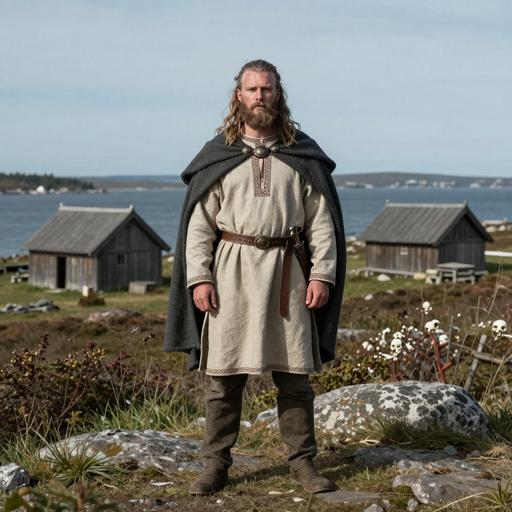
Reconstructed portrait of Norse individual, Oland, Sweden (200-400 CE)
Norse individual, Sweden
Sweden Sweden IA 200 CE - 400 CE Nordic Iron Age N1a1a1a1a Downstream
Reconstructed portrait of Norse individual, Nor North. Nordland, Norway (500-1,000 CE)
Norse individual, Norway
Norway Norway Viking 500 CE - 1000 CE Viking Culture N1a1a1a1a1a1a Downstream
Reconstructed portrait of Early Avar-o High East Asia individual, Danube-Tisza Interfluve. Szalkszentmárton - Táborállás, Hungary (600-640 CE)
Early Avar-o High East Asia individual, Hungary
Hungary Early Avar Period Danube-Tisza, Hungary 600-650 CE Early Avar N1a1a1a1a Downstream
Reconstructed portrait of Late Avar-o High East Asia individual, Danube-Tisza Interfluve. Kunszállás-Fülöpjakab, Hungary (600-800 CE)
Late Avar-o High East Asia individual, Hungary
Hungary Late Avar Period Danube-Tisza, Hungary 600-800 CE Late Avar N1a1a1a1a3a Downstream
Reconstructed portrait of Early Avar-o High East Asia individual, Danube-Tisza Interfluve. Budapest-Csepel-Kavicsbánya, Hungary (630-670 CE)
Early Avar-o High East Asia individual, Hungary
Hungary Early Avar Period Danube-Tisza, Hungary 600-700 CE Early Avar N1a1a1a1a3a2 Downstream
Reconstructed portrait of Early Avar-o High East Asia individual, Danube-Tisza Interfluve. Kunbábony, Hungary (630-670 CE)
Early Avar-o High East Asia individual, Hungary
Hungary Early Avar Period Danube-Tisza, Hungary 600-700 CE Early Avar N1a1a1a1a3a Downstream
Reconstructed portrait of Middle Avar-o High East Asia individual, Danube-Tisza Interfluve. Kunszállás-Fülöpjakab, Hungary (630-670 CE)
Middle Avar-o High East Asia individual, Hungary
Hungary Middle Avar Period Danube-Tisza, Hungary 600-700 CE Middle Avar N1a1a1a1a3a Downstream
Reconstructed portrait of Early Avar-o Low East Asia individual, Danube-Tisza Interfluve. Kunpeszér - Felsőpeszéri út, Hungary (630-670 CE)
Early Avar-o Low East Asia individual, Hungary
Hungary Early Avar Period Danube-Tisza, Hungary 600-700 CE Early Avar N1a1a1a1a3a Downstream
Reconstructed portrait of Early Avar-o High East Asia individual, Danube-Tisza Interfluve. Petőfiszállás, Hungary (630-670 CE)
Early Avar-o High East Asia individual, Hungary
Hungary Early Avar Period Danube-Tisza, Hungary 600-700 CE Early Avar N1a1a1a1a3a Downstream
Reconstructed portrait of Early Avar individual, Danube-Tisza Interfluve. Kunpeszér - Felsőpeszéri út, Hungary (630-670 CE)
Early Avar individual, Hungary
Hungary Early Avar Period Danube-Tisza, Hungary 600-700 CE Early Avar N1a1a1a1a Downstream
Chapter VI

Carrier Distribution Map

Geographic distribution of 31 ancient DNA samples (direct and subclade carriers of N1A1A1A1)

Subclade carrier
Time Period Filter
All Time Periods
Showing all samples
Chapter VII

Temporal Distribution

Distribution of carriers across archaeological periods

Chapter VIII

Geographic Distribution

Distribution by country of origin (direct and subclade carriers shown by default)

Chapter IX

Country × Era Distribution

Cross-tabulation of carrier countries and archaeological periods (direct and subclade carriers shown by default)

Data

Data & Provenance

Source information and data quality

Last Updated 2026-06-17
Confidence Score 50/100
Coverage Low
Data Source

We use the latest phylotree for YDNA haplogroup classification and data.