Menu
Currency
Ancestry
mtDNA Haplogroup • Maternal Lineage

X2D

mtDNA Haplogroup X2D

~11,000 years ago
Near East / Anatolia / Caucasus
2 subclades
15 ancient samples
Scroll to explore
Chapter I

The Story

The journey of mtDNA haplogroup X2D

Origins and Evolution

mtDNA haplogroup X2D sits within the broader haplogroup X2, a West Eurasian maternal lineage with deep roots in the Upper Paleolithic and a well-documented presence across Europe, the Near East, the Caucasus and North Africa. X2D is nested under the intermediate clade X2B'D, making it an internal subclade that likely diversified after the Last Glacial Maximum as populations re-expanded and as early Holocene demographic processes unfolded. Based on its phylogenetic position and comparison with the coalescence times of neighboring X2 subclades, a plausible time depth for X2D's origin is in the early Holocene (roughly 9–13 kya), coinciding with the spread of post-glacial and early farming populations in West Eurasia.

Subclades (if applicable)

X2D is itself an internal branch of X2 and may contain downstream branches (variously labeled in different phylogenies) that require further resolution by whole-mitochondrial sequencing. Because X2B'D is an intermediate node connecting several X2 sublineages, X2D's immediate sister clades (for example X2B in some phylogenies) and downstream derivatives help map fine-scale maternal relationships across neighboring regions. As with many mtDNA subclades, additional sampling and high-resolution sequencing often reveal further substructure and regional subclades.

Geographical Distribution

Empirical sampling and reasonable phylogeographic inference place X2D predominantly in the following regions:

  • Near East and Anatolia: highest relative representation and likely area of origin or early diversification.\
  • Caucasus (Armenia, Georgia, Azerbaijan): moderate presence reflecting regional continuity and migration corridors between Anatolia and the Pontic–Caspian region.\
  • Southern Europe / Mediterranean (Greece, Italy, parts of the Balkans): scattered occurrences consistent with Neolithic farmer dispersals and later historical contacts.\
  • North Africa (Maghreb, coastal areas): low-frequency occurrences plausibly reflecting Mediterranean gene flow.\

Frequencies for X2D are generally low to moderate compared with common West Eurasian mtDNA haplogroups (H, J, T, U), but its presence is informative for reconstructing maternal lineages tied to early Holocene demographic expansions.

Historical and Cultural Significance

While X2D is not associated with a single distinctive archaeological culture in the same way as some high-frequency haplogroups, its geographic and temporal profile aligns it with Neolithic farmer dispersals from Anatolia and the Near East into adjacent regions. X2 subclades more broadly have been detected in samples tied to Neolithic and post-Neolithic contexts, so X2D can serve as a marker for early Holocene population movements, including the spread of agriculture around the Mediterranean and into southeastern Europe. Later Bronze Age and historic-era movements likely redistributed X2D lineages at low frequencies through trade, migration and cultural exchange across West Eurasia and the Mediterranean basin.

Conclusion

mtDNA haplogroup X2D represents a moderately deep maternal lineage within the X2 family that likely emerged in the Near East/Anatolia–Caucasus region in the early Holocene. Its relatively low but geographically informative frequency makes it useful for fine-scale studies of Neolithic and post-Neolithic maternal ancestry in West Eurasia; however, fuller resolution of its phylogeny and distribution requires broader population sampling and high-resolution whole-mtDNA sequencing.

Key Points

  • Origins and Evolution
  • Subclades (if applicable)
  • Geographical Distribution
  • Historical and Cultural Significance
  • Conclusion
Chapter II

Tree & Relationships

Phylogenetic context and subclades

Evolution Path

This haplogroup's evolutionary journey from its earliest ancestor to the present.

Steps Haplogroup Age Estimate Archaeology Era Time Passed Immediate Descendants Tested Modern Descendants Ancient Connections
1 X2D Current ~11,000 years ago ?? Neolithic 11,000 years 2 3 15
2 X2B'D - - - 2 103 0
3 X2a ~13,000 years ago ?? Mesolithic 13,000 years 6 127 4
4 X2 ~22,000 years ago ?? Mesolithic 22,000 years 5 152 48
5 X1'2'3 - - - 3 170 0
6 X ~10,000 years ago ?? Neolithic 10,000 years 3 180 28
7 N ~60,000 years ago ?? Paleolithic 60,000 years 16 20,371 13
8 L3 ~70,000 years ago ?? Paleolithic 70,000 years 7 23,542 6
9 L3'4 - - - 2 23,581 0
10 L3'4'6 - - - 2 23,584 0
11 L2'3'4'6 - - - 2 24,475 0
12 L2'3'4'5'6'7 - - - 2 24,488 0
13 L1'2'3'4'5'6'7 - - - 2 24,903 0
14 L ~160,000 years ago ?? Paleolithic 160,000 years 2 25,205 5

Siblings (1)

Other branches from the same parent haplogroup

Chapter III

Where in the World

Geographic distribution and modern presence

Place of Origin

Near East / Anatolia / Caucasus

Modern Distribution

The populations where mtDNA haplogroup X2D is found include:

  1. Populations of the Near East and Anatolia (Turkey, Levant)
  2. Caucasus populations (Armenia, Georgia, Azerbaijan)
  3. Southern European and Mediterranean populations (Greece, Italy, Balkans)
  4. North African coastal populations (low frequency, likely Mediterranean contacts)
  5. Modern diaspora populations in Europe and the Americas (sporadic occurrences)
CHAPTER IV

When in Time

Your haplogroup in the context of human history

~11k years ago

Haplogroup X2D

Your mtDNA haplogroup emerged in Near East / Anatolia / Caucasus

Near East / Anatolia / Caucasus
~10k years ago

Neolithic Revolution

Agriculture begins, settled communities form

~5k years ago

Bronze Age

Metalworking, writing, and early civilizations

~3k years ago

Iron Age

Iron tools, expanded trade networks

~2k years ago

Classical Antiquity

Greek and Roman civilizations flourish

Present

Present Day

Modern era

Your Haplogroup
Historical Era
Chapter IV-B

Linked Cultures

Ancient cultures associated with mtDNA haplogroup X2D

Cultural Heritage

These ancient cultures have been linked to haplogroup X2D based on matching ancient DNA samples from archaeological excavations. The presence of this haplogroup in these cultures provides insights into the migrations and population movements of populations carrying this haplogroup.

Anatolian Bronze Age Anatolian Neolithic Early Avar Hasanlu Culture Hungary_C_Bodrogkeresztur Lengyel Culture Linear Pottery Culture Middle Iron Age British Mycenaean Roopkund B Group Starčevo Culture Tell Atchana Tisza Culture Ukraine_Odesa_Eneolithic-oCaucasus
Culture assignments are based on archaeological context of ancient DNA samples and may represent regional associations during specific time periods.
Chapter V

Sample Catalog

8 direct carriers and 7 subclade carriers of haplogroup X2D

15 / 15 samples
Portrait Sample Country Era Date Culture mtDNA Match
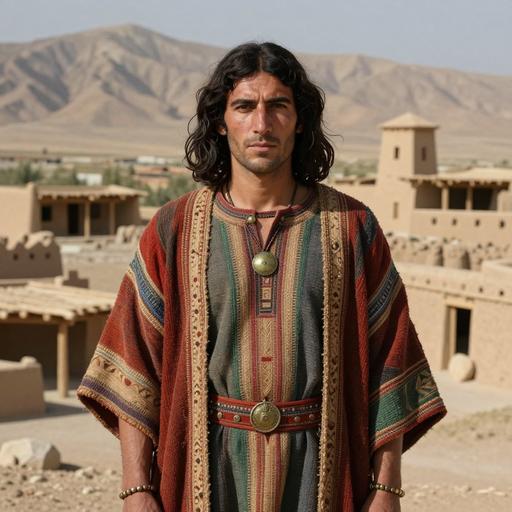
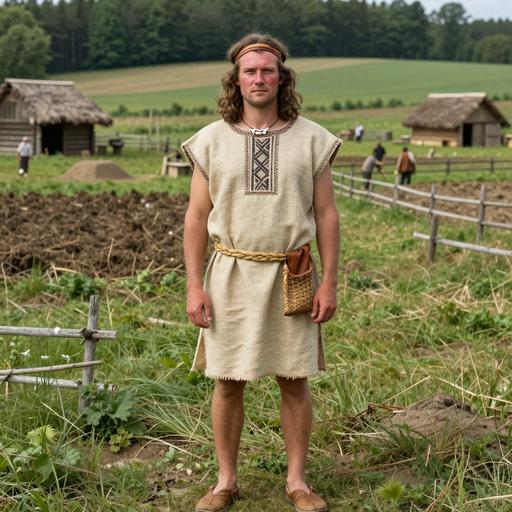
Reconstructed portrait of England MIA individual, England. Oxfordshire. Thame, United Kingdom (393-206 BCE)
England MIA individual, United Kingdom
United Kingdom England MIA 393-206 calBCE (2256±30 BP, SUERC-95010) Middle Iron Age British X2d Direct
Reconstructed portrait of Early Avar individual, Csongrád-Csanád County. Szeged-FehértóA, Hungary (651-773 CE)
Early Avar individual, Hungary
Hungary Hungary EarlyAvar 651-773 calCE (1338±16 BP, DeA-26579) Early Avar X2d Direct
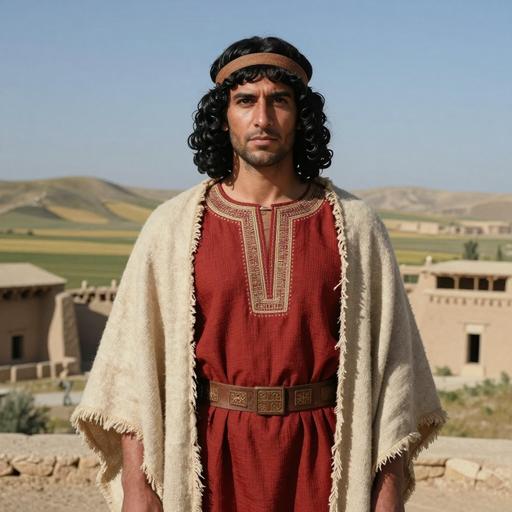
Reconstructed portrait of Hasanlu IA individual, Hasanlu, Iran (805-773 BCE)
Hasanlu IA individual, Iran
Iran Iran Hasanlu IA 805-773 calBCE (2590±20 BP, PSUAMS-3003) Hasanlu Culture X2d Direct
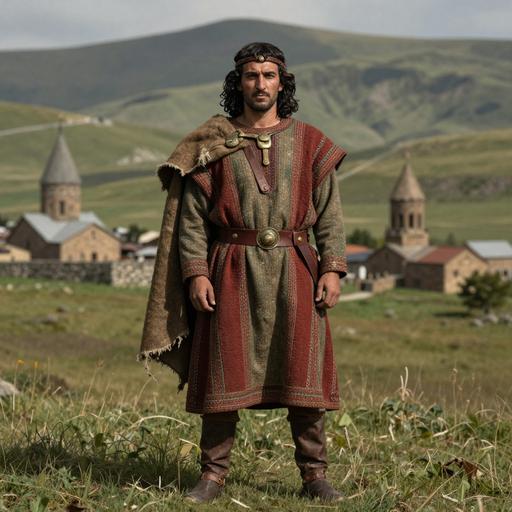
Reconstructed portrait of Salamis BA individual, Agia Kyriaki. Salamis, Greece (1,413-1,261 BCE)
Salamis BA individual, Greece
Greece Mycenaean Greece 1413-1261 calBCE (3067±25 BP, DEM-2905, MAMS-25209) Mycenaean X2d Direct
Reconstructed portrait of Roopkund- B individual, Uttaranchal. Himalaya. Roopkund, India (1,694-1,918 CE)
Roopkund- B individual, India
India India Roopkund B 1694-1918 calCE (105±15 BP, PSUAMS-5435) Roopkund B Group X2d Direct
Reconstructed portrait of MLBA individual, Hatay Province. Tell Atchana/Alalakh, Turkey (1,743-1,614 BCE)
MLBA individual, Turkey
Turkey Middle to Late Bronze Age Turkey 1743-1614 calBCE (3382±23 BP, MAMS-33680) Anatolian Bronze Age X2d Direct
Reconstructed portrait of MLBA individual, Hatay. Tell Atchana (Alalakh), Turkey (2,000-1,200 BCE)
MLBA individual, Turkey
Turkey Middle to Late Bronze Age Tell Atchana, Turkey 1800-1550 BCE Tell Atchana X2d Direct
Reconstructed portrait of N LBK individual, Asparn Schletz (Niederösterreich, Mistelbach), Austria (5,300-5,000 BCE)
N LBK individual, Austria
Austria Austria N LBK 5300-5000 BCE Linear Pottery Culture X2d Direct
Reconstructed portrait of Keti Antiquity individual, Keti, Armenia (394-208 BCE)
Keti Antiquity individual, Armenia
Armenia Iron Age Armenia 394-208 calBCE (2260±20 BP, PSUAMS-9003) Iron Age Armenian X2d1 Downstream
Reconstructed portrait of Khovsgol Late Medieval individual, Khuvsgul. Uushigiin Uver, Mongolia (1,292-1,396 CE)
Khovsgol Late Medieval individual, Mongolia
Mongolia Middle to Late Bronze Age to Late Medieval Khuvsgul, Mongolia 1292-1396 calCE (634±23 BP, MAMS-41131) Khuvsgul Multi-Period X2d1 Downstream
Chapter VI

Carrier Distribution Map

Geographic distribution of 15 ancient DNA samples (direct and subclade carriers of X2D)

Direct carrier Subclade carrier
Time Period Filter
All Time Periods
Showing all samples
Chapter VII

Temporal Distribution

Distribution of carriers across archaeological periods

Chapter VIII

Geographic Distribution

Distribution by country of origin (direct and subclade carriers shown by default)

Chapter IX

Country × Era Distribution

Cross-tabulation of carrier countries and archaeological periods (direct and subclade carriers shown by default)

Data

Data & Provenance

Source information and data quality

Last Updated 2026-06-14
Confidence Score 50/100
Coverage Low
Data Source

We use the latest phylotree for MTDNA haplogroup classification and data.