Menu
Currency
Ancestry
mtDNA Haplogroup • Maternal Lineage

U1B

mtDNA Haplogroup U1B

~20,000 years ago
Near East (Western Asia)
2 subclades
10 ancient samples
Scroll to explore
Chapter I

The Story

The journey of mtDNA haplogroup U1B

Origins and Evolution

Haplogroup U1B is a subclade of mtDNA haplogroup U1, itself a member of the wider haplogroup U family. U1 likely diversified in West Asia after the Last Glacial Maximum; U1B represents one of the downstream branches that differentiated within that West Asian context during the Late Pleistocene/early Holocene (estimated here at roughly ~20 kya, although confidence intervals in the literature can be broad). Its position in the phylogenetic tree places it as an intermediate lineage connecting the deeper U1 node to more localized, younger maternal lineages found in the Caucasus, Iran, Anatolia and adjoining regions.

Ancient DNA studies have documented members of haplogroup U and some U1-related lineages across the Near East and adjacent regions in Holocene contexts, supporting a scenario in which U1 subclades persisted in West Asian refugia through the Late Pleistocene and contributed to later Neolithic and post-Neolithic population formations.

Subclades (if applicable)

U1B itself can contain further internal diversity (individual named sub-branches defined by private mutations in control-region and coding-region markers). Where sampled, these subbranches often show geographic clustering (for example, lineages confined to parts of the Caucasus or southern Iran). Because sampling density and complete mitogenome sequencing vary between studies, some internal branches of U1B remain poorly resolved; ongoing mitogenome surveys and targeted ancient DNA recovery are progressively clarifying the internal topology.

Geographical Distribution

The contemporary distribution of U1B mirrors the broader U1 pattern but is typically more localized and uneven. Highest relative frequencies and diversity are observed in the Caucasus and adjacent parts of Iran and eastern Anatolia, consistent with a long-term regional presence. Lower but detectable frequencies occur across the Levant, southern Turkey, parts of South Asia (India/Pakistan), and sporadically in North Africa and southern/eastern Europe. The presence of U1B in diasporic or historically mobile communities (including some Jewish groups of Middle Eastern origin) reflects both ancient regional continuity and historical population movements.

Historical and Cultural Significance

U1B should be seen primarily as a marker of maternal continuity in West Asia and neighboring regions rather than a direct fingerprint of any single archaeological culture. However, its deep time depth and regional concentration link it to demographic processes spanning the Late Pleistocene, the Neolithic transitions of the Near East, and subsequent Bronze Age and historic population movements. In particular:

  • Neolithic/Sedentary transitions: U1 and derived lineages (including U1B) were part of the maternal gene pool of West Asian groups that contributed to early farming populations and later regional demography.
  • Regional continuity: In the Caucasus and parts of Iran and Anatolia, the relatively high diversity of U1 subclades suggests long-term local continuity rather than only recent introductions.
  • Historic dispersals: Low-frequency occurrences in South Asia, North Africa, and Europe likely reflect a mixture of ancient east–west gene flow, trade, and later historical migrations.

Conclusion

mtDNA haplogroup U1B is a West Asian-rooted maternal lineage that provides useful resolution within the broader U1 clade for studies of population history in the Near East, the Caucasus and adjacent regions. While not typically common outside its core area, its phylogeographic pattern—moderate diversity in the Caucasus and Iran with scattered occurrences elsewhere—supports a model of deep regional persistence combined with episodic outward gene flow during the Holocene. Continued high-coverage mitogenome sequencing and targeted ancient DNA sampling will refine the internal structure and timing of expansion events for U1B.

Key Points

  • Origins and Evolution
  • Subclades (if applicable)
  • Geographical Distribution
  • Historical and Cultural Significance
  • Conclusion
Chapter II

Tree & Relationships

Phylogenetic context and subclades

Evolution Path

This haplogroup's evolutionary journey from its earliest ancestor to the present.

Steps Haplogroup Age Estimate Archaeology Era Time Passed Immediate Descendants Tested Modern Descendants Ancient Connections
1 U1B Current ~20,000 years ago ?? Mesolithic 20,000 years 2 6 10
2 U1 ~28,000 years ago ?? Paleolithic 28,000 years 3 82 0
3 U ~46,000 years ago ?? Paleolithic 46,000 years 5 4,314 110
4 R ~55,000 years ago ?? Paleolithic 55,000 years 17 17,854 57
5 NA - - - 1 17,854 0
6 N ~60,000 years ago ?? Paleolithic 60,000 years 16 20,371 13
7 L3 ~70,000 years ago ?? Paleolithic 70,000 years 7 23,542 6
8 L3'4 - - - 2 23,581 0
9 L3'4'6 - - - 2 23,584 0
10 L2'3'4'6 - - - 2 24,475 0
11 L2'3'4'5'6'7 - - - 2 24,488 0
12 L1'2'3'4'5'6'7 - - - 2 24,903 0
13 L ~160,000 years ago ?? Paleolithic 160,000 years 2 25,205 5

Siblings (2)

Other branches from the same parent haplogroup

Chapter III

Where in the World

Geographic distribution and modern presence

Place of Origin

Near East (Western Asia)

Modern Distribution

The populations where mtDNA haplogroup U1B is found include:

  1. Populations of the Near East (e.g., Iran, Levant, Turkey)
  2. Caucasus populations (e.g., Armenians, Georgians, neighboring groups)
  3. South Asian populations (India and Pakistan, at low-to-moderate frequencies)
  4. North African groups (sporadic presence, including some Berber populations)
  5. Southern and Eastern European populations (low-frequency, often reflecting westward gene flow)
  6. Jewish populations (sporadic presence in some community studies)
  7. Small/localized West Asian groups showing regional continuity
CHAPTER IV

When in Time

Your haplogroup in the context of human history

~20k years ago

Last Glacial Maximum

Peak of the last ice age, populations isolated

~20k years ago

Haplogroup U1B

Your mtDNA haplogroup emerged in Near East (Western Asia)

Near East (Western Asia)
~10k years ago

Neolithic Revolution

Agriculture begins, settled communities form

~5k years ago

Bronze Age

Metalworking, writing, and early civilizations

~3k years ago

Iron Age

Iron tools, expanded trade networks

~2k years ago

Classical Antiquity

Greek and Roman civilizations flourish

Present

Present Day

Modern era

Your Haplogroup
Historical Era
Chapter IV-B

Linked Cultures

Ancient cultures associated with mtDNA haplogroup U1B

Cultural Heritage

These ancient cultures have been linked to haplogroup U1B based on matching ancient DNA samples from archaeological excavations. The presence of this haplogroup in these cultures provides insights into the migrations and population movements of populations carrying this haplogroup.

Avar Culture Buran-Kaya Cioclovina Ganj Dareh Culture German Jewish Ikiztepe Culture Israel_Phoenician Kazakh Iron Age Maikop-Novosvobodnaya Roman Empire Srubnaya-Alakul
Culture assignments are based on archaeological context of ancient DNA samples and may represent regional associations during specific time periods.
Chapter V

Sample Catalog

10 subclade carriers of haplogroup U1B (no exact U1B samples sequenced yet)

10 / 10 samples
Portrait Sample Country Era Date Culture mtDNA Match
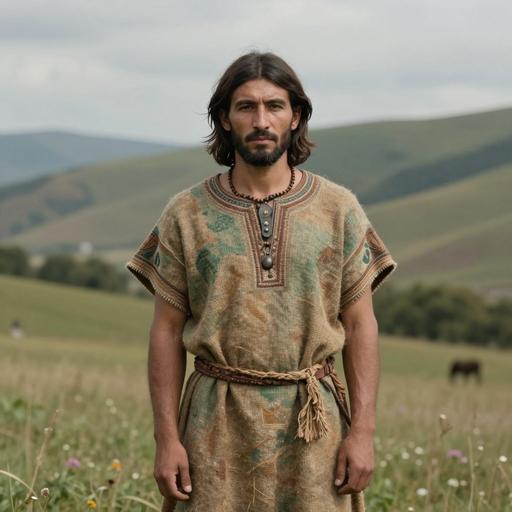
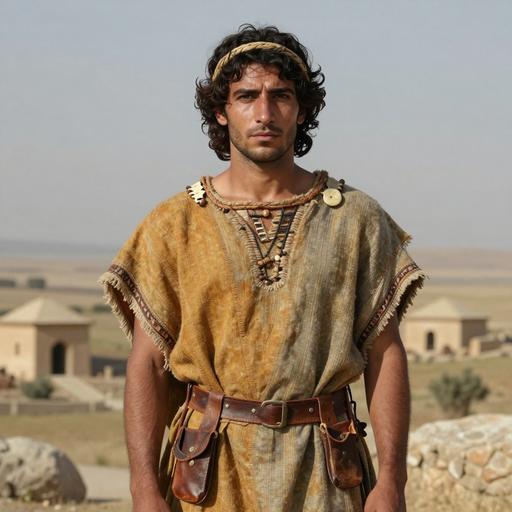
Reconstructed portrait of Lazio Imperial Roman Roman individual, Via Paisiello (Necropoli Salaria), Italy (1-200 CE)
Lazio Imperial Roman Roman individual, Italy
Italy Imperial Rome 1-200 CE Roman Empire U1b1 Downstream
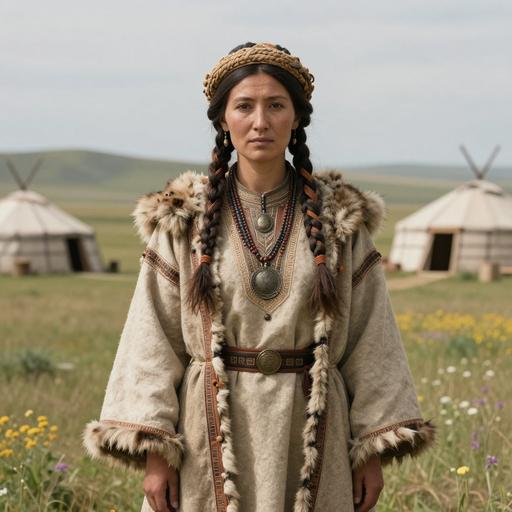
Reconstructed portrait of IA individual, Central Kazakhstan. Berel Necropolis. object 67A, Kazakhstan (400 BCE-100 CE)
IA individual, Kazakhstan
Kazakhstan Iron Age Kazakhstan 150-450 CE Kazakh Iron Age U1b2 Downstream
Reconstructed portrait of Middle Avar-o Low East Asia individual, Hajdú-Bihar County. Kaba-Dögös, Hungary (700-800 CE)
Middle Avar-o Low East Asia individual, Hungary
Hungary Middle Avar Period Hungary 700-800 CE Avar Culture U1b2 Downstream
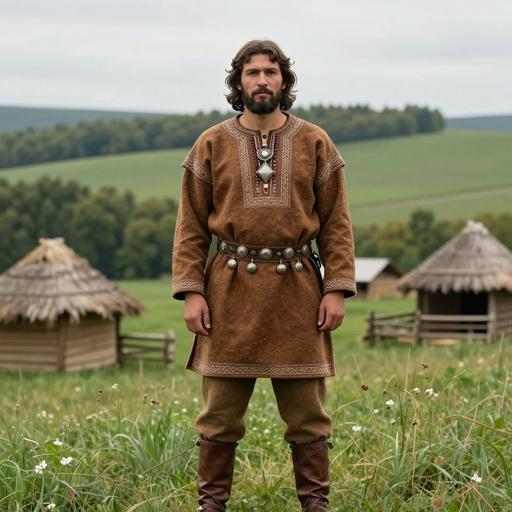
Reconstructed portrait of Medieval Jewish-high East EU individual, Ackerhof (Thüringen, Thüringen, Erfurt-Kreisfreie Stadt), Germany (1,282-1,389 CE)
Medieval Jewish-high East EU individual, Germany
Germany Germany Medieval Jewish 1282-1389 calCE (665±20 BP, PSUAMS-9125) German Jewish U1b1 Downstream
Reconstructed portrait of Medieval Jewish-high East EU individual, Ackerhof (Thüringen, Thüringen, Erfurt-Kreisfreie Stadt), Germany (1,288-1,389 CE)
Medieval Jewish-high East EU individual, Germany
Germany Germany Medieval Jewish 1288-1389 calCE (655±15 BP, PSUAMS-7676) German Jewish U1b1 Downstream
Reconstructed portrait of Medieval Jewish-high East EU individual, Ackerhof (Thüringen, Thüringen, Erfurt-Kreisfreie Stadt), Germany (1,297-1,395 CE)
Medieval Jewish-high East EU individual, Germany
Germany Germany Medieval Jewish 1297-1395 calCE (630±15 BP, PSUAMS-9124) German Jewish U1b1 Downstream
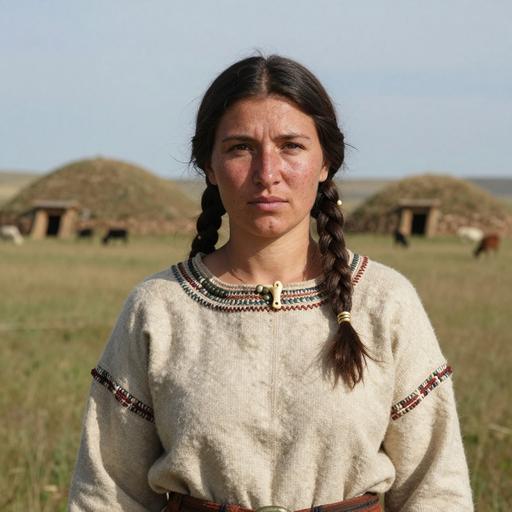
Reconstructed portrait of Chelyabinsk BA individual, Nepluyevsky Barrow Necropolis (Chelyabinsk Oblast, Kartaly district, Nepluyevka), Russia (1,873-1,641 BCE)
Chelyabinsk BA individual, Russia
Russia Srubnaya-Alakul Culture 1873-1641 calBCE Srubnaya-Alakul U1b2 Downstream
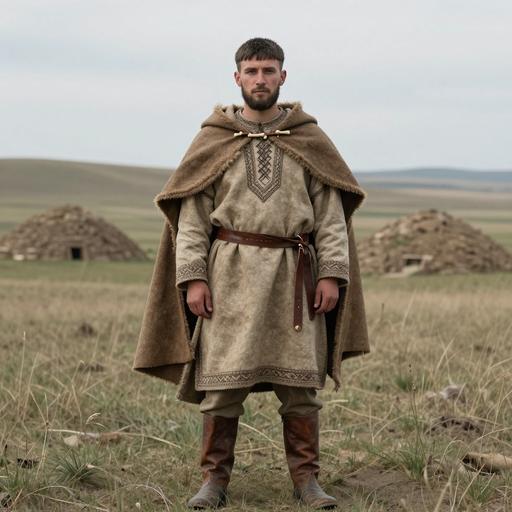
Reconstructed portrait of Chelyabinsk BA individual, Nepluyevsky Barrow Necropolis (Chelyabinsk Oblast, Kartaly district, Nepluyevka), Russia (1,880-1,694 BCE)
Chelyabinsk BA individual, Russia
Russia Srubnaya-Alakul Culture 1880-1694 calBCE Srubnaya-Alakul U1b2 Downstream
Reconstructed portrait of Adygea Maikop Novosvobodnaya individual, Klady. Dlinnaya Polyana, Russia (3,318-2,934 BCE)
Adygea Maikop Novosvobodnaya individual, Russia
Russia Maikop-Novosvobodnaya Culture, Caucasus, Russia 3318-2934 calBCE (4432±17 BP) [R_combine: (4460±30 BP, PSUAMS-3905), (4420±20 BP, PSUAMS-4251)] Maikop-Novosvobodnaya U1b1 Downstream
Reconstructed portrait of Anatolian Chalcolithic individual, Samsun Province. İkiztepe, Turkey (3,959-3,797 BCE)
Anatolian Chalcolithic individual, Turkey
Turkey Late Chalcolithic Ikiztepe, Turkey 3959-3797 calBCE (5080±27 BP, MAMS-40678) Ikiztepe Culture U1b1 Downstream
Chapter VI

Carrier Distribution Map

Geographic distribution of 10 ancient DNA samples (direct and subclade carriers of U1B)

Subclade carrier
Time Period Filter
All Time Periods
Showing all samples
Chapter VII

Temporal Distribution

Distribution of carriers across archaeological periods

Chapter VIII

Geographic Distribution

Distribution by country of origin (direct and subclade carriers shown by default)

Chapter IX

Country × Era Distribution

Cross-tabulation of carrier countries and archaeological periods (direct and subclade carriers shown by default)

Data

Data & Provenance

Source information and data quality

Last Updated 2026-02-16
Confidence Score 50/100
Coverage Low
Data Source

We use the latest phylotree for MTDNA haplogroup classification and data.