Menu
Currency
Ancestry
mtDNA Haplogroup • Maternal Lineage

M7B1A1

mtDNA Haplogroup M7B1A1

~4,000 years ago
Southern China / East Asia (coastal region)
1 subclades
Scroll to explore
Chapter I

The Story

The journey of mtDNA haplogroup M7B1A1

Origins and Evolution

mtDNA haplogroup M7B1A1 is a downstream subclade of M7b1a (parent haplogroup M7B1A) and therefore sits within the broader East Asian clade M7. Based on the time depth of its parent and the observed phylogeographic pattern, M7B1A1 most likely formed in the later Neolithic to early Bronze Age (roughly 4–5 kya) in southern China or adjacent coastal East Asia. It is defined by additional derived mutations that place it as a terminal branch beneath M7b1a; like many regional mtDNA lineages, its history reflects a mix of localized diversification and movement with expanding coastal and agricultural populations.

Subclades (if applicable)

As a subclade of M7b1a, M7B1A1 may itself contain further downstream branches detectable with high-resolution full mitogenomes; many published studies and databases identify substructure within M7b1a that corresponds to island and mainland populations. Where full mitogenome data are available, fine-scale splits within M7B1A1 can reveal recent founder events in island settings (for example, Ryukyuan, Taiwanese, or Philippine island groups). Ongoing aDNA and mitogenome surveys continue to refine internal branching and coalescence estimates.

Geographical Distribution

M7B1A1 shows a coastal and island‑oriented distribution consistent with post‑Neolithic population movements out of southern China and along maritime routes. It is observed at moderate frequencies in southern and eastern Han Chinese populations, moderate or locally high frequencies in some Japanese island groups (including Ryukyuan and populations with Jomon admixture), and low to moderate frequencies across Austronesian‑speaking populations in Taiwan, the Philippines, and parts of Island Southeast Asia. It is present at lower frequencies in mainland Southeast Asian groups (Vietnamese, Thai, Lao) and in Korea. Ancient DNA occurrences (multiple instances in curated aDNA databases) corroborate a Holocene presence in coastal East Asia and island archaeological contexts.

Historical and Cultural Significance

The geographic and temporal profile of M7B1A1 links it to several important processes in Holocene East Asian prehistory: the spread of Neolithic coastal foragers and early rice/agricultural communities, the expansion of Austronesian‑linked populations out of Taiwan and southern China, and localized demographic events in island environments (founder effects and drift). In the Japanese archipelago the haplogroup's presence in both modern populations and limited ancient samples suggests contributions from both Jomon‑derived maternal lines and later mainland arrivals (Yayoi and subsequent movements). In Austronesian contexts, M7B1A1 behaves as one of several maternal markers that track maritime dispersals and island colonization.

Conclusion

M7B1A1 is a regionally important East and Southeast Asian maternal lineage that exemplifies how a Holocene‑aged mtDNA subclade diversified and spread via coastal and island networks. Its pattern—moderate regional frequencies, higher representation in some island populations, and detection in aDNA—makes it a useful marker for studies of Austronesian expansion, Ryukyuan/Japanese population history, and southern Chinese coastal population dynamics. Continued full mitogenome sequencing and ancient DNA sampling will refine its internal topology and migration times further.

Key Points

  • Origins and Evolution
  • Subclades (if applicable)
  • Geographical Distribution
  • Historical and Cultural Significance
  • Conclusion
Chapter II

Tree & Relationships

Phylogenetic context and subclades

Evolution Path

This haplogroup's evolutionary journey from its earliest ancestor to the present.

Steps Haplogroup Age Estimate Archaeology Era Time Passed Immediate Descendants Tested Modern Descendants Ancient Connections
1 M7B1A1 Current ~4,000 years ago ?? Bronze Age 4,500 years 1 25 0
2 M7B1A ~6,000 years ago ?? Chalcolithic 6,000 years 2 49 14
3 M7B1 ~8,000 years ago ?? Neolithic 8,000 years 2 50 0
4 M7B ~20,000 years ago ?? Mesolithic 20,000 years 1 50 1
5 M7B'C - - - 2 104 0
6 M7 ~30,000 years ago ?? Paleolithic 30,000 years 2 104 0
7 M ~60,000 years ago ?? Paleolithic 60,000 years 42 2,162 41
8 L3 ~70,000 years ago ?? Paleolithic 70,000 years 7 23,542 6
9 L3'4 - - - 2 23,581 0
10 L3'4'6 - - - 2 23,584 0
11 L2'3'4'6 - - - 2 24,475 0
12 L2'3'4'5'6'7 - - - 2 24,488 0
13 L1'2'3'4'5'6'7 - - - 2 24,903 0
14 L ~160,000 years ago ?? Paleolithic 160,000 years 2 25,205 5

Siblings (1)

Other branches from the same parent haplogroup

Chapter III

Where in the World

Geographic distribution and modern presence

Place of Origin

Southern China / East Asia (coastal region)

Modern Distribution

The populations where mitochondrial (mtDNA) haplogroup M7B1A1 is found include:

  1. Han Chinese (southern and eastern regions)
  2. Japanese populations (including groups with Jomon ancestry and island populations)
  3. Koreans (low to moderate frequency)
  4. Ryukyuan and other Japanese island populations
  5. Indigenous Taiwanese (Austronesian-speaking groups)
  6. Filipino and other Austronesian-speaking populations
  7. Vietnamese and other mainland Southeast Asian populations (Thai, Lao, Khmer)
  8. Malay populations (Peninsular and some island groups)
  9. Southern Chinese minority groups (e.g., Zhuang, Dai)
  10. Low-frequency occurrences in some Tibeto-Burman and inland East Asian groups
CHAPTER IV

When in Time

Your haplogroup in the context of human history

~10k years ago

Neolithic Revolution

Agriculture begins, settled communities form

~5k years ago

Bronze Age

Metalworking, writing, and early civilizations

~4k years ago

Haplogroup M7B1A1

Your mtDNA haplogroup emerged in Southern China / East Asia (coastal region)

Southern China / East Asia (coastal region)
~3k years ago

Iron Age

Iron tools, expanded trade networks

~2k years ago

Classical Antiquity

Greek and Roman civilizations flourish

Present

Present Day

Modern era

Your Haplogroup
Historical Era
Chapter IV-B

Linked Cultures

Ancient cultures associated with mtDNA haplogroup M7B1A1

Cultural Heritage

These ancient cultures have been linked to haplogroup M7B1A1 based on matching ancient DNA samples from archaeological excavations. The presence of this haplogroup in these cultures provides insights into the migrations and population movements of populations carrying this haplogroup.

Balong Culture Dong Son Huatuyan Culture Tang Culture Vietnamese Neolithic Yappa Nhae Yinwang Culture
Culture assignments are based on archaeological context of ancient DNA samples and may represent regional associations during specific time periods.
Chapter V

Sample Catalog

14 direct carriers and 7 subclade carriers of haplogroup M7B1A1

21 / 21 samples
Portrait Sample Country Era Date Culture mtDNA Match
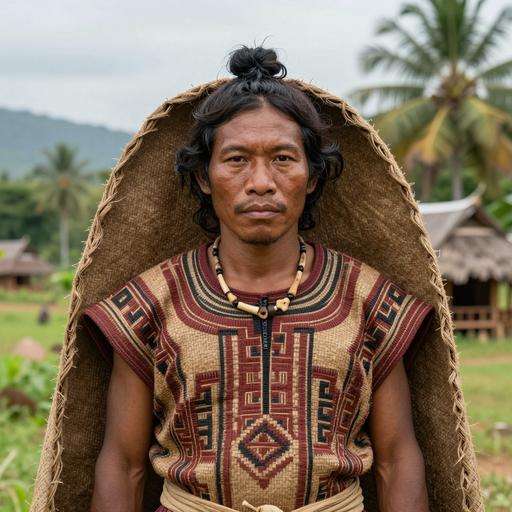
Reconstructed portrait of IA Log Coffin individual, Yappa Nhae 2 (Mae Hong Son Province), Thailand (200-450 CE)
IA Log Coffin individual, Thailand
Thailand Yappa Nhae Log Coffin Culture Iron Age 200-450 CE Yappa Nhae M7b1a1 Direct
Reconstructed portrait of IA Log Coffin individual, Yappa Nhae 2 (Mae Hong Son Province), Thailand (200-450 CE)
IA Log Coffin individual, Thailand
Thailand Yappa Nhae Log Coffin Culture Iron Age 200-450 CE Yappa Nhae M7b1a1 Direct
Reconstructed portrait of IA Log Coffin individual, Yappa Nhae 2 (Mae Hong Son Province), Thailand (200-450 CE)
IA Log Coffin individual, Thailand
Thailand Yappa Nhae Log Coffin Culture Iron Age 200-450 CE Yappa Nhae M7b1a1 Direct
Reconstructed portrait of Guangxi Balong Cave Northern And Southern Dynasties individual, Guangxi. Hechi City. Dahua Yao Autonomous County. Beijing Town. Balong Cave, China (250-550 CE)
Guangxi Balong Cave Northern And Southern Dynasties individual, China
China Balong Jin Period China 250-550 CE Balong Culture M7b1a1 Direct
Reconstructed portrait of Guangxi Balong Cave Northern And Southern Dynasties individual, Guangxi. Hechi City. Dahua Yao Autonomous County. Beijing Town. Balong Cave, China (382-541 CE)
Guangxi Balong Cave Northern And Southern Dynasties individual, China
China Balong Jin Period China 382-541 calCE (1630±30 BP) Balong Culture M7b1a1 Direct
Reconstructed portrait of Southeast Asian Civilizations individual, Northern Thanh Noa. Nui Nap, Vietnam (391-208 BCE)
Southeast Asian Civilizations individual, Vietnam
Vietnam Bronze Age Dong Son Culture, Vietnam 391 BCE - 208 BCE Dong Son M7b1a1 Direct
Reconstructed portrait of Vietnam Ia individual, Northern Thanh Noa. Nui Nap, Vietnam (391-208 BCE)
Vietnam Ia individual, Vietnam
Vietnam Iron Age Vietnam 391 BCE - 208 BCE M7b1a1 Direct
Reconstructed portrait of Guangxi Cenxun Cave individual, Guangxi. Baise City. Pingguo County. Taiping Town. Cenxun Cave, China (484-644 CE)
Guangxi Cenxun Cave individual, China
China Tang Dynasty China 450-650 CE Tang Culture M7b1a1 Direct
Reconstructed portrait of Guangxi Huatuyan Cave Ming Dynasty individual, Guangxi. Hechi City. Nandan County. Lihu Yaozu Town. Huatu Village. Huatuyan Cave, China (1,474-1,638 CE)
Guangxi Huatuyan Cave Ming Dynasty individual, China
China China Guangxi Huatuyan Ming 1474-1638 calCE (340±30 BP) Huatuyan Culture M7b1a1 Direct
Reconstructed portrait of N individual, Man Bac, Vietnam (1,876-1,687 BCE)
N individual, Vietnam
Vietnam Vietnam N 1876-1687 calBCE (3445±20 BP, PSUAMS-2409) Vietnamese Neolithic M7b1a1 Direct
Chapter VI

Carrier Distribution Map

Geographic distribution of 21 ancient DNA samples (direct and subclade carriers of M7B1A1)

Direct carrier Subclade carrier
Time Period Filter
All Time Periods
Showing all samples
Chapter VII

Temporal Distribution

Distribution of carriers across archaeological periods

Chapter VIII

Geographic Distribution

Distribution by country of origin (direct and subclade carriers shown by default)

Chapter IX

Country × Era Distribution

Cross-tabulation of carrier countries and archaeological periods (direct and subclade carriers shown by default)

Data

Data & Provenance

Source information and data quality

Last Updated 2026-02-16
Confidence Score 50/100
Coverage Low
Data Source

We use the latest phylotree for MTDNA haplogroup classification and data.