Menu
Currency
Ancestry
mtDNA Haplogroup • Maternal Lineage

M5A

mtDNA Haplogroup M5A

~22,000 years ago
South Asia (Indian subcontinent)
1 subclades
8 ancient samples
Scroll to explore
Chapter I

The Story

The journey of mtDNA haplogroup M5A

Origins and Evolution

mtDNA haplogroup M5A is a descendant branch of haplogroup M5, itself a lineage within macro-haplogroup M that diversified soon after the initial settlement of Eurasia by modern humans. Macro-haplogroup M likely arose ~50–60 kya in Asia; downstream clades such as M5 show a deeper history in the Indian subcontinent. Based on relative phylogenetic position and coalescence estimates for sibling clades, M5A likely arose during the Late Pleistocene to early Holocene (roughly ~20–25 kya) as local populations on the subcontinent fragmented and expanded in response to climatic shifts and ecological changes.

Subclades

M5A includes several downstream lineages that have been recognized in mtDNA phylogenies (for example, M5a1 and other minor subbranches described in Phylotree and in regional studies). Many of these subclades are geographically restricted and show low-to-moderate internal diversity, consistent with localized diversification in South Asia. Because M5A is an intermediate clade in the M5 tree, continued dense sampling and complete mitogenomes from understudied populations are required to resolve its full internal structure and to date specific subclades with higher precision.

Geographical Distribution

M5A is predominantly a South Asian maternal lineage. Published population surveys and mitogenome studies that characterize M5 and its subclades report the highest frequencies and diversity within the Indian subcontinent, including both tribal (Adivasi) and non-tribal caste groups. Low-frequency occurrences have been reported or are plausible in neighboring regions (Bangladesh, Nepal, Sri Lanka, and parts of mainland Southeast Asia) consistent with historical gene flow and recent migration. Overall, the distribution pattern points to a long-standing presence and local differentiation within South Asia rather than a broad, transcontinental expansion.

Historical and Cultural Significance

While M5A predates documented archaeological cultures such as the early farming and urban centers, its persistence in modern South Asian populations indicates maternal continuity from Late Pleistocene and early Holocene forager and early food-producing communities into later cultural horizons. The haplogroup is therefore informative for studies that aim to reconstruct South Asian population structure across the Mesolithic, Neolithic and later periods (including interactions that shaped the genetic landscape of the Indus Valley and neighboring regions). M5A lineages in particular can help identify local demographic expansions, founder events, and matrilineal continuity versus replacement in regional population histories.

Conclusion

mtDNA haplogroup M5A is best understood as a South Asian-specific branch of M5 that reflects deep maternal ancestry on the Indian subcontinent with origins in the Late Pleistocene/early Holocene. Its primary value to researchers lies in tracing regional maternal continuity and local demographic processes; however, fuller resolution of its subclades and precise dating will depend on expanded whole-mitogenome sampling across diverse South Asian populations and neighboring regions.

Key Points

  • Origins and Evolution
  • Subclades
  • Geographical Distribution
  • Historical and Cultural Significance
  • Conclusion
Chapter II

Tree & Relationships

Phylogenetic context and subclades

Evolution Path

This haplogroup's evolutionary journey from its earliest ancestor to the present.

Steps Haplogroup Age Estimate Archaeology Era Time Passed Immediate Descendants Tested Modern Descendants Ancient Connections
1 M5A Current ~22,000 years ago ?? Mesolithic 22,000 years 1 0 8
2 M5A'D - - - 2 7 0
3 M5 ~35,000 years ago ?? Paleolithic 35,000 years 2 11 1
4 M ~60,000 years ago ?? Paleolithic 60,000 years 42 2,162 41
5 L3 ~70,000 years ago ?? Paleolithic 70,000 years 7 23,542 6
6 L3'4 - - - 2 23,581 0
7 L3'4'6 - - - 2 23,584 0
8 L2'3'4'6 - - - 2 24,475 0
9 L2'3'4'5'6'7 - - - 2 24,488 0
10 L1'2'3'4'5'6'7 - - - 2 24,903 0
11 L ~160,000 years ago ?? Paleolithic 160,000 years 2 25,205 5

Siblings (1)

Other branches from the same parent haplogroup

Chapter III

Where in the World

Geographic distribution and modern presence

Place of Origin

South Asia (Indian subcontinent)

Modern Distribution

The populations where mtDNA haplogroup M5A is found include:

  1. Diverse populations of the Indian subcontinent (including both tribal/Adivasi groups and caste communities)
  2. Eastern South Asian populations (Bangladesh, eastern India — Bengal, Odisha) with sporadic reports
  3. Neighboring populations in Nepal and Sri Lanka (low-frequency, sporadic occurrences)
CHAPTER IV

When in Time

Your haplogroup in the context of human history

~22k years ago

Haplogroup M5A

Your mtDNA haplogroup emerged in South Asia (Indian subcontinent)

South Asia (Indian subcontinent)
~20k years ago

Last Glacial Maximum

Peak of the last ice age, populations isolated

~10k years ago

Neolithic Revolution

Agriculture begins, settled communities form

~5k years ago

Bronze Age

Metalworking, writing, and early civilizations

~3k years ago

Iron Age

Iron tools, expanded trade networks

~2k years ago

Classical Antiquity

Greek and Roman civilizations flourish

Present

Present Day

Modern era

Your Haplogroup
Historical Era
Chapter IV-B

Linked Cultures

Ancient cultures associated with mtDNA haplogroup M5A

Cultural Heritage

These ancient cultures have been linked to haplogroup M5A based on matching ancient DNA samples from archaeological excavations. The presence of this haplogroup in these cultures provides insights into the migrations and population movements of populations carrying this haplogroup.

Goyet Cave Gravettian Hoabinhian Loebanr Culture Ostuni Culture Roopkund Culture Serkharakat Culture Spanish Gravettian Udegram
Culture assignments are based on archaeological context of ancient DNA samples and may represent regional associations during specific time periods.
Chapter V

Sample Catalog

7 direct carriers and 1 subclade carrier of haplogroup M5A

8 / 8 samples
Portrait Sample Country Era Date Culture mtDNA Match
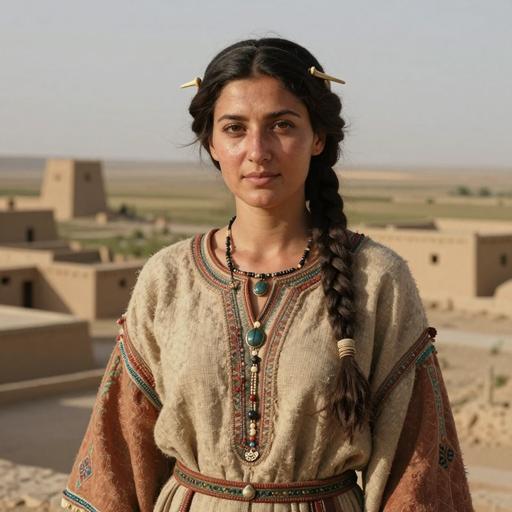
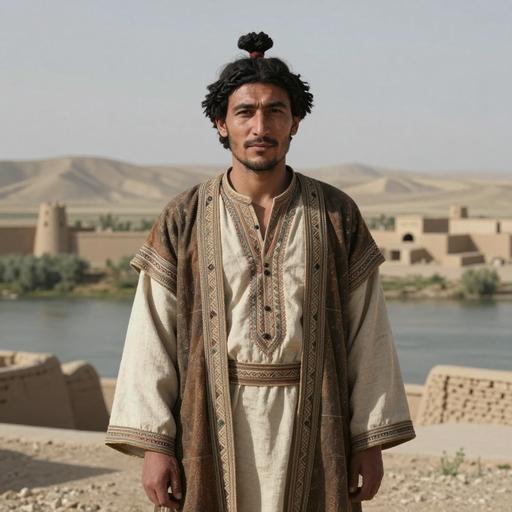
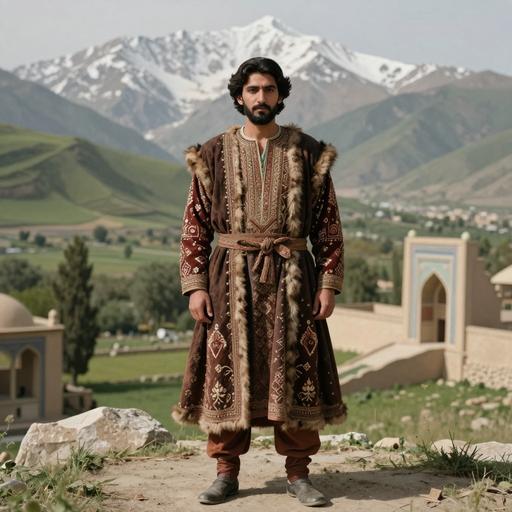
Reconstructed portrait of Hephthalite Period individual, Serkharakat (Surxondaryo Region, Uzun), Uzbekistan (150 BCE-50 CE)
Hephthalite Period individual, Uzbekistan
Uzbekistan Iron Age Serkharakat Culture of Surkhandaryo 350-700 CE Serkharakat Culture M5a Direct
Reconstructed portrait of Hephthalite Period individual, Serkharakat (Surxondaryo Region, Uzun), Uzbekistan (432-639 CE)
Hephthalite Period individual, Uzbekistan
Uzbekistan Iron Age Serkharakat Culture of Surkhandaryo 400-650 BCE Serkharakat Culture M5a Direct
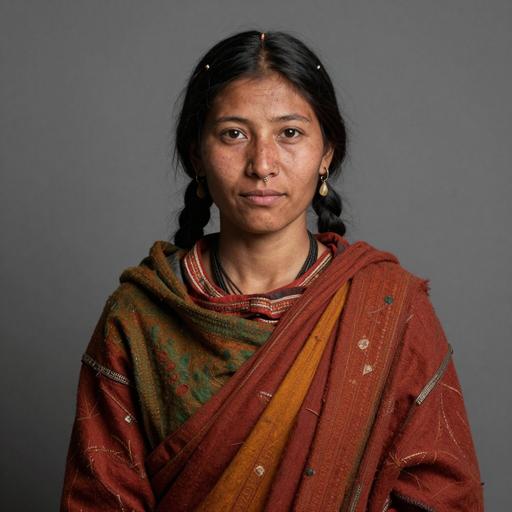
Reconstructed portrait of Roopkund- A individual, Uttaranchal. Himalaya. Roopkund, India (772-950 CE)
Roopkund- A individual, India
India India Roopkund A 772-950 calCE (1180±25 BP, PSUAMS-5463) Roopkund Culture M5a Direct
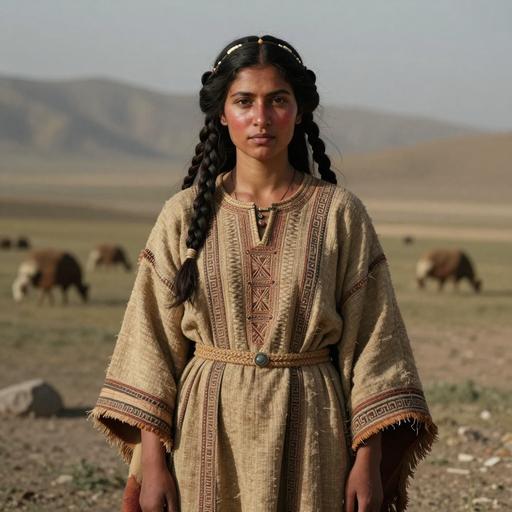
Reconstructed portrait of IA individual, Swat Valley. Loebanr, Pakistan (928-827 BCE)
IA individual, Pakistan
Pakistan The Loebanr Iron Age Culture of Pakistan 928-827 calBCE (2745±20 BP, PSUAMS-2793) Loebanr Culture M5a Direct
Reconstructed portrait of IA individual, Swat Valley. Loebanr, Pakistan (1,000-800 BCE)
IA individual, Pakistan
Pakistan The Loebanr Iron Age Culture of Pakistan 1000-800 BCE Loebanr Culture M5a Direct
Reconstructed portrait of IA individual, Swat Valley. Loebanr, Pakistan (1,000-800 BCE)
IA individual, Pakistan
Pakistan The Loebanr Iron Age Culture of Pakistan 1000-800 BCE Loebanr Culture M5a Direct
Reconstructed portrait of IA individual, Swat Valley. Loebanr, Pakistan (1,000-800 BCE)
IA individual, Pakistan
Pakistan The Loebanr Iron Age Culture of Pakistan 1000-800 BCE Loebanr Culture M5a Direct
Reconstructed portrait of Medieval Ghaznavid individual, Swat Valley. Udegram, Pakistan (1,041-1,217 CE)
Medieval Ghaznavid individual, Pakistan
Pakistan Ghaznavid Udegram 1041-1217 calCE (905±30 BP, Poz-83508) Udegram M5a1 Downstream
Chapter VI

Carrier Distribution Map

Geographic distribution of 8 ancient DNA samples (direct and subclade carriers of M5A)

Direct carrier Subclade carrier
Time Period Filter
All Time Periods
Showing all samples
Chapter VII

Temporal Distribution

Distribution of carriers across archaeological periods

Chapter VIII

Geographic Distribution

Distribution by country of origin (direct and subclade carriers shown by default)

Chapter IX

Country × Era Distribution

Cross-tabulation of carrier countries and archaeological periods (direct and subclade carriers shown by default)

Data

Data & Provenance

Source information and data quality

Last Updated 2026-06-14
Confidence Score 50/100
Coverage Low
Data Source

We use the latest phylotree for MTDNA haplogroup classification and data.