Menu
Currency
Ancestry
mtDNA Haplogroup • Maternal Lineage

HVB

mtDNA Haplogroup HVB

Unknown
To be determined
10 subclades
Scroll to explore
Chapter I

The Story

The journey of mtDNA haplogroup HVB

mtDNA haplogroup HVB is a maternal lineage from the Phylotree reference tree. This record was auto-created to restore missing intermediate structure between existing clades. It is a subclade of HV.

Editorial status

This is a structural placeholder with low coverage. Enrich or reprocess for full narrative content.

Key Points

  • Editorial status
Chapter II

Tree & Relationships

Phylogenetic context and subclades

Evolution Path

This haplogroup's evolutionary journey from its earliest ancestor to the present.

Steps Haplogroup Age Estimate Archaeology Era Time Passed Immediate Descendants Tested Modern Descendants Ancient Connections
1 HVB Current - - - 10 107 0
2 HV ~30,000 years ago ?? Paleolithic 30,000 years 14 8,468 228
3 R0 ~15,000 years ago ?? Mesolithic 15,000 years 2 8,603 4
4 R ~55,000 years ago ?? Paleolithic 55,000 years 17 17,854 57
5 NA - - - 1 17,854 0
6 N ~60,000 years ago ?? Paleolithic 60,000 years 16 20,371 13
7 L3 ~70,000 years ago ?? Paleolithic 70,000 years 7 23,542 6
8 L3'4 - - - 2 23,581 0
9 L3'4'6 - - - 2 23,584 0
10 L2'3'4'6 - - - 2 24,475 0
11 L2'3'4'5'6'7 - - - 2 24,488 0
12 L1'2'3'4'5'6'7 - - - 2 24,903 0
13 L ~160,000 years ago ?? Paleolithic 160,000 years 2 25,205 5

Siblings (13)

Other branches from the same parent haplogroup

Chapter III

Where in the World

Geographic distribution and modern presence

Place of Origin

To be determined

Modern Distribution

The populations where mtDNA haplogroup HVB is found require further characterization through genetic studies.

CHAPTER IV

When in Time

Your haplogroup in the context of human history

~10k years ago

Neolithic Revolution

Agriculture begins, settled communities form

~5k years ago

Bronze Age

Metalworking, writing, and early civilizations

~3k years ago

Iron Age

Iron tools, expanded trade networks

~2k years ago

Classical Antiquity

Greek and Roman civilizations flourish

Present

Present Day

Modern era

Present

Haplogroup HVB

Your mtDNA haplogroup emerged in To be determined

To be determined
Your Haplogroup
Historical Era
Chapter IV-B

Linked Cultures

Ancient cultures associated with mtDNA haplogroup HVB

Cultural Heritage

These ancient cultures have been linked to haplogroup HVB based on matching ancient DNA samples from archaeological excavations. The presence of this haplogroup in these cultures provides insights into the migrations and population movements of populations carrying this haplogroup.

Ganj Dareh Culture Hajji Firuz Iron Gates Culture Pottery Neolithic PPNA Anatolia Starčevo Starčevo Culture Szatmár Group
Culture assignments are based on archaeological context of ancient DNA samples and may represent regional associations during specific time periods.
Chapter V

Sample Catalog

14 direct carriers and 3 subclade carriers of haplogroup HVB

17 / 17 samples
Portrait Sample Country Era Date Culture mtDNA Match
Reconstructed portrait of Lazio Late Antiquity Imperial Roman Roman individual, Casale del dolce, Italy (1-400 CE)
Lazio Late Antiquity Imperial Roman Roman individual, Italy
Italy Imperial Rome 1-400 CE Roman Empire HV-b Direct
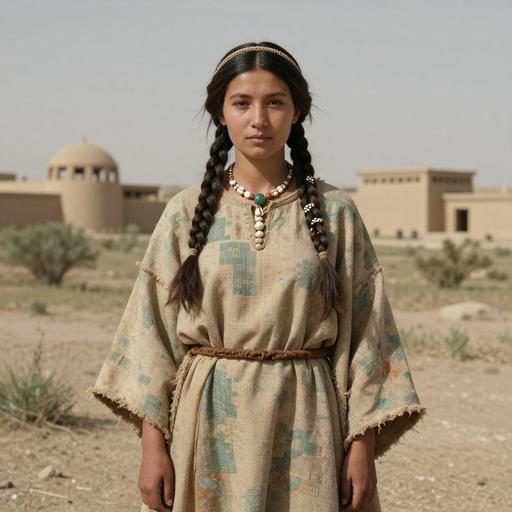
Reconstructed portrait of Early Historic H individual, Swat Valley. Butkara IV, Pakistan (200 BCE-100 CE)
Early Historic H individual, Pakistan
Pakistan Butkara: Iron Age Religious and Cultural Center in Swat Valley, Pakistan 200 BCE - 100 CE Butkara Culture HV-b Direct
Reconstructed portrait of Scythian individual, Hungary (772-423 BCE)
Scythian individual, Hungary
Hungary Hungary IA Scythian 772 BCE - 423 BCE Scythian Culture HV-b Direct
Reconstructed portrait of Scythian individual, Hungary (772-423 BCE)
Scythian individual, Hungary
Hungary The Scythian Culture 772 BCE - 423 BCE HV-b Direct
Reconstructed portrait of Western European individual, Tivoli Palazzo Cianti, Italy (1,600-1,700 CE)
Western European individual, Italy
Italy Medieval to Early Modern Italy 1600 CE - 1700 CE Medieval Italian HV-b Direct
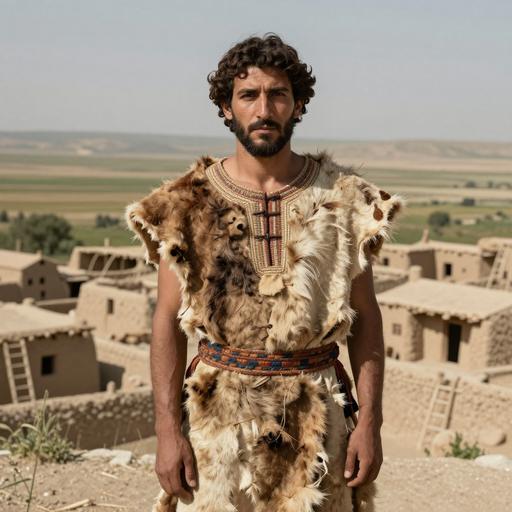
Reconstructed portrait of BA3-3 individual, Dzharkutan, Uzbekistan (1,748-1,624 BCE)
BA3-3 individual, Uzbekistan
Uzbekistan Bronze Age Dzharkutan 1748-1624 calBCE (3405±20 BP, PSUAMS-3228) Dzharkutan HV-b Direct
Reconstructed portrait of BA1-1 individual, Dzharkutan, Uzbekistan (2,100-1,800 BCE)
BA1-1 individual, Uzbekistan
Uzbekistan Bronze Age Dzharkutan 2100-1800 BCE Dzharkutan HV-b Direct
Reconstructed portrait of Crete Moni Odigitria BA individual, Crete. Heraklion. Moni Odigitria, Greece (2,210-1,680 BCE)
Crete Moni Odigitria BA individual, Greece
Greece Minoan Odigitria, Greece 2250-1650 BCE Odigitria Culture HV-b Direct
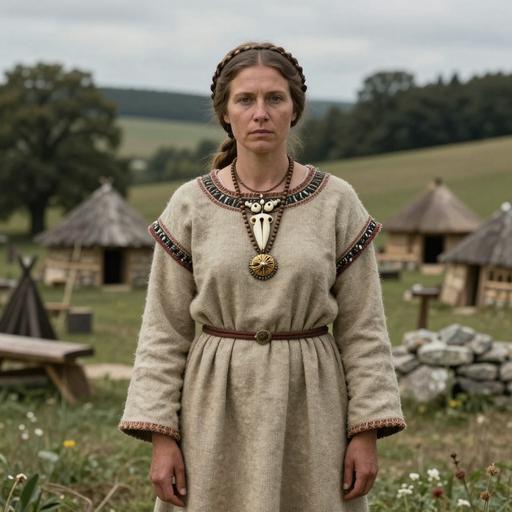
Reconstructed portrait of Bell Beaker individual, Osterhofen-Altenmarkt, Germany (2,500-2,000 BCE)
Bell Beaker individual, Germany
Germany The Bell Beaker Culture 2500 BCE - 2000 BCE ANATOLIAN_BRONZE_AGE HV-b Direct
Reconstructed portrait of Bell Beaker individual, Osterhofen-Altenmarkt, Germany (2,500-2,000 BCE)
Bell Beaker individual, Germany
Germany The Bell Beaker Culture 2500 BCE - 2000 BCE ANATOLIAN_BRONZE_AGE HV-b Direct
Chapter VI

Carrier Distribution Map

Geographic distribution of 17 ancient DNA samples (direct and subclade carriers of HVB)

Direct carrier Subclade carrier
Time Period Filter
All Time Periods
Showing all samples
Chapter VII

Temporal Distribution

Distribution of carriers across archaeological periods

Chapter VIII

Geographic Distribution

Distribution by country of origin (direct and subclade carriers shown by default)

Chapter IX

Country × Era Distribution

Cross-tabulation of carrier countries and archaeological periods (direct and subclade carriers shown by default)

Data

Data & Provenance

Source information and data quality

Last Updated 2026-06-14
Confidence Score 50/100
Coverage Low
Data Source

We use the latest phylotree for MTDNA haplogroup classification and data.