Menu
Currency
Ancestry
mtDNA Haplogroup • Maternal Lineage

H5

mtDNA Haplogroup H5

~12,000 years ago
Western Eurasia (Europe / Near East)
14 subclades
23 ancient samples
Scroll to explore
Chapter I

The Story

The journey of mtDNA haplogroup H5

Origins and Evolution

mtDNA haplogroup H5 is a defined subclade within the broader macro-haplogroup H, which dominates the maternal gene pool of modern Europe. Based on phylogenetic position relative to other H subclades and published coalescence estimates for H lineages, H5 most likely originated in Western Eurasia in the Late Glacial to early Holocene period (roughly ~12–14 kya), after the Last Glacial Maximum. H5 derives from an intermediate node often annotated as H5'36 in PhyloTree; that intermediate clade helps connect upstream haplogroup H to the radiating H5 sublineages.

Like other H lineages, H5 reflects a mix of deep postglacial re-expansion within Europe and subsequent interactions with Near Eastern populations during the Neolithic and later periods. The lineage diversified into several subclades during the early Holocene and later prehistory, some of which show evidence of regional founder events.

Subclades

H5 has multiple downstream branches (commonly labeled H5a, H5b, H5c, etc., in different revisions of PhyloTree). These subclades vary in geographic distribution and time depth:

  • H5a: A notable subclade that has been reported at elevated frequencies in some Ashkenazi Jewish maternal lineages and in parts of southern Europe; evidence points to at least one regional founder event for H5a in the Holocene.
  • H5b / H5c: Other sublineages are observed more sporadically across southern and eastern Europe and the Near East, sometimes concentrated in Mediterranean or Balkan samples.

Subclade discovery and nomenclature continue to refine as full mitogenomes accumulate; some internal branches are still being characterized and may be catalogued under intermediate nodes such as H5'36 in phylogenetic compilations.

Geographical Distribution

H5 is primarily a Western Eurasian maternal lineage. Present-day and ancient DNA studies report H5 at low-to-moderate frequencies across Europe, with pockets of higher frequency in parts of the Mediterranean basin, the Balkans, and certain Near Eastern and Caucasus populations. Lower frequencies appear in North Africa and Central Asia, consistent with secondary dispersals and historical gene flow.

  • Highest relative concentrations: Iberian Peninsula, Italy, Balkans, parts of the Caucasus and Near East (variable by subclade).
  • Present but rarer: Northern and Eastern Europe, North Africa, and Central Asia.

Historical and Cultural Significance

H5 is informative for reconstructing post‑glacial recolonization and Holocene population dynamics in Europe. Because it predates or overlaps the early Neolithic, H5 lineages may have been part of indigenous postglacial hunter‑gatherer groups that later admixed with incoming Neolithic farmers from the Near East, as well as later Bronze Age and historical migrations.

  • In some archaeological contexts, mtDNA H (including H5 and related subclades) occurs in Neolithic and Bronze Age samples, indicating continuity and admixture rather than strict replacement.
  • Specific subclades (e.g., H5a) show evidence of founder effects in certain modern populations (notably some Jewish mitochondrial founder lineages and localized Mediterranean groups), making them useful for fine-scale maternal ancestry and demographic inference.

Conclusion

mtDNA H5 is a Western Eurasian maternal lineage that likely arose in the Late Glacial to early Holocene and subsequently diversified across Europe and the Near East. Its distribution and subclade structure reflect a combination of postglacial expansion, Neolithic interactions, and later regional founder effects. Ongoing mitogenome sequencing and ancient DNA studies continue to refine the internal branching of H5 and its precise demographic history.

Key Points

  • Origins and Evolution
  • Subclades
  • Geographical Distribution
  • Historical and Cultural Significance
  • Conclusion
Chapter II

Tree & Relationships

Phylogenetic context and subclades

Evolution Path

This haplogroup's evolutionary journey from its earliest ancestor to the present.

Steps Haplogroup Age Estimate Archaeology Era Time Passed Immediate Descendants Tested Modern Descendants Ancient Connections
1 H5 Current ~12,000 years ago ?? Mesolithic 12,500 years 14 411 23
2 H5'36 - - - 2 411 0
3 H ~25,000 years ago ?? Paleolithic 25,000 years 78 7,089 991
4 HV ~30,000 years ago ?? Paleolithic 30,000 years 14 8,468 228
5 R0 ~15,000 years ago ?? Mesolithic 15,000 years 2 8,603 4
6 R ~55,000 years ago ?? Paleolithic 55,000 years 17 17,854 57
7 NA - - - 1 17,854 0
8 N ~60,000 years ago ?? Paleolithic 60,000 years 16 20,371 13
9 L3 ~70,000 years ago ?? Paleolithic 70,000 years 7 23,542 6
10 L3'4 - - - 2 23,581 0
11 L3'4'6 - - - 2 23,584 0
12 L2'3'4'6 - - - 2 24,475 0
13 L2'3'4'5'6'7 - - - 2 24,488 0
14 L1'2'3'4'5'6'7 - - - 2 24,903 0
15 L ~160,000 years ago ?? Paleolithic 160,000 years 2 25,205 5

Siblings (1)

Other branches from the same parent haplogroup

Chapter III

Where in the World

Geographic distribution and modern presence

Place of Origin

Western Eurasia (Europe / Near East)

Modern Distribution

The populations where mtDNA haplogroup H5 is found include:

  1. Iberian populations (Spain, Portugal)
  2. Italian and southern European populations
  3. Balkan populations (Greece, Albania, Balkans broadly)
  4. Near Eastern and Caucasus populations
  5. Ashkenazi and some other Jewish communities
  6. Northern and Eastern European populations (at lower frequencies)
  7. North African populations (low frequency, likely secondary)
  8. Central Asian samples (sporadic, low frequency)
CHAPTER IV

When in Time

Your haplogroup in the context of human history

~12k years ago

Haplogroup H5

Your mtDNA haplogroup emerged in Western Eurasia (Europe / Near East)

Western Eurasia (Europe / Near East)
~10k years ago

Neolithic Revolution

Agriculture begins, settled communities form

~5k years ago

Bronze Age

Metalworking, writing, and early civilizations

~3k years ago

Iron Age

Iron tools, expanded trade networks

~2k years ago

Classical Antiquity

Greek and Roman civilizations flourish

Present

Present Day

Modern era

Your Haplogroup
Historical Era
Chapter IV-B

Linked Cultures

Ancient cultures associated with mtDNA haplogroup H5

Cultural Heritage

These ancient cultures have been linked to haplogroup H5 based on matching ancient DNA samples from archaeological excavations. The presence of this haplogroup in these cultures provides insights into the migrations and population movements of populations carrying this haplogroup.

Alföld Linear Pottery Anatolian Neolithic Gumelnița Körös Culture Krepost Culture Lengyel Culture Linear Pottery Culture Malak Preslavets Culture Starčevo Culture Swiss Neolithic Usatove
Culture assignments are based on archaeological context of ancient DNA samples and may represent regional associations during specific time periods.
Chapter V

Sample Catalog

3 direct carriers and 20 subclade carriers of haplogroup H5

23 / 23 samples
Portrait Sample Country Era Date Culture mtDNA Match
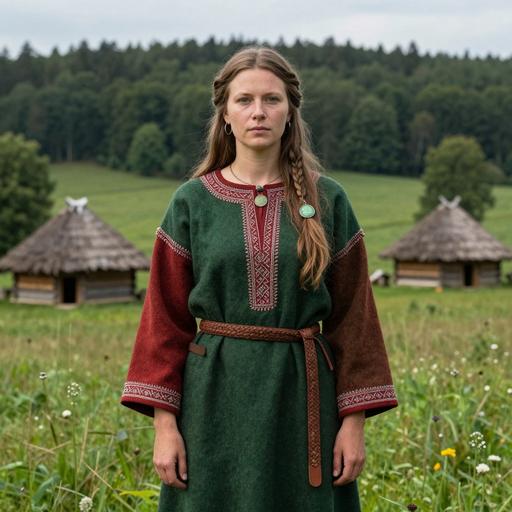
Reconstructed portrait of Norse individual, Karlsnes, Iceland (950-1,050 CE)
Norse individual, Iceland
Iceland Iceland PreChristian 950 CE - 1050 CE Norse Pagan H5 Direct
Reconstructed portrait of Celtic individual, Scotland. Orkney. Isbister, United Kingdom (2,572-2,348 BCE)
Celtic individual, United Kingdom
United Kingdom Scotland N 2572 BCE - 2348 BCE Scottish Neolithic H5 Direct
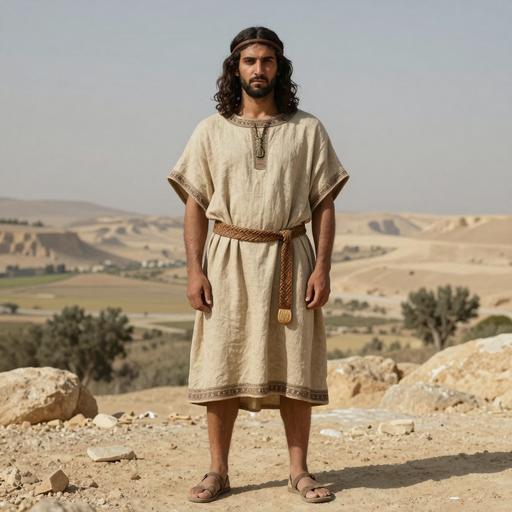
Reconstructed portrait of Anatolian Neolithic individual, Northwest Anatolia. Marmara. Barcın, Turkey (6,381-6,088 BCE)
Anatolian Neolithic individual, Turkey
Turkey Turkey N 6381 BCE - 6088 BCE Anatolian Neolithic H5 Direct
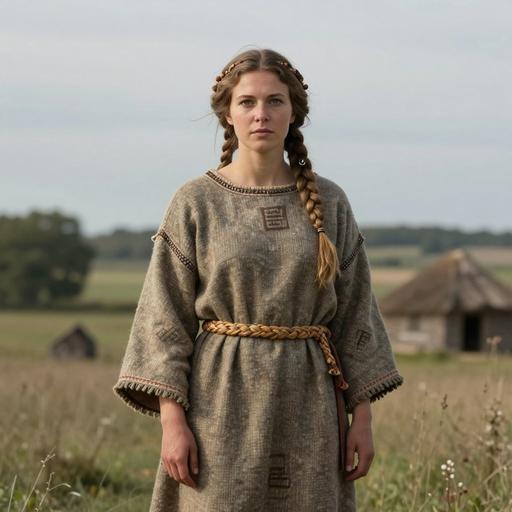
Reconstructed portrait of IA Przeworsk individual, Gaski (Kuyavian-Pomeranian Province, Inowrocław County, Gniewkowo), Poland (100-300 CE)
IA Przeworsk individual, Poland
Poland Przeworsk Culture 100-300 CE Przeworsk H5'36 Downstream
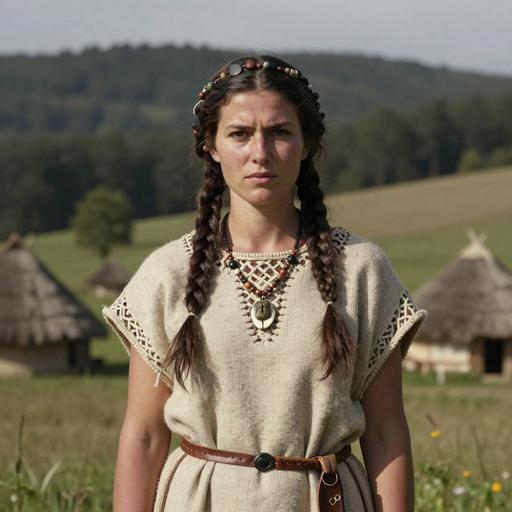
Reconstructed portrait of England LIA individual, England. Somerset. North Perrott. North Perrott Manor, United Kingdom (149-65 BCE)
England LIA individual, United Kingdom
United Kingdom England LIA 149 calBCE - 65 calCE (2035±30 BP, SUERC-94968) British Late Iron Age H5'36 Downstream
Reconstructed portrait of Hautsde France IA individual, Bucy-le-Long "la Heronnière" (Hauts-de-France Region, Aisne Department, Soissons arrondissement), France (350-300 BCE)
Hautsde France IA individual, France
France Iron Age Culture of Aisne 350-300 BCE Aisne H5a1 ? Downstream
Reconstructed portrait of England MIA individual, England. Somerset. Ham Hill, United Kingdom (387-198 BCE)
England MIA individual, United Kingdom
United Kingdom England MIA 387-198 calBCE (2226±30 BP, SUERC-73828) Middle Iron Age British H5'36 Downstream
Reconstructed portrait of Scythian individual, Slobodzeya District. Glinoe, Moldova (395-206 BCE)
Scythian individual, Moldova
Moldova Scythian Period Glinoe, Moldova 395 BCE - 206 BCE Scythian H5b8 Downstream
Reconstructed portrait of Scythian individual, Slobodzeya District. Glinoe, Moldova (395-206 BCE)
Scythian individual, Moldova
Moldova The Scythian Culture 395 BCE - 206 BCE H5b8* Downstream
Reconstructed portrait of Tuscany IA a IA b Etruscan individual, Tuscany. Grosseto. Vetulonia, Italy (750-406 BCE)
Tuscany IA a IA b Etruscan individual, Italy
Italy Etruscan Grosseto, Italy 750-406 calBCE (2433±29 BP, MAMS-40637) Etruscan H5'36 Downstream
Chapter VI

Carrier Distribution Map

Geographic distribution of 23 ancient DNA samples (direct and subclade carriers of H5)

Direct carrier Subclade carrier
Time Period Filter
All Time Periods
Showing all samples
Chapter VII

Temporal Distribution

Distribution of carriers across archaeological periods

Chapter VIII

Geographic Distribution

Distribution by country of origin (direct and subclade carriers shown by default)

Chapter IX

Country × Era Distribution

Cross-tabulation of carrier countries and archaeological periods (direct and subclade carriers shown by default)

Data

Data & Provenance

Source information and data quality

Last Updated 2026-06-14
Confidence Score 50/100
Coverage Low
Data Source

We use the latest phylotree for MTDNA haplogroup classification and data.