Menu
Currency
Ancestry
mtDNA Haplogroup • Maternal Lineage

H4A1

mtDNA Haplogroup H4A1

~6,000 years ago
Western / Southern Europe
2 subclades
Scroll to explore
Chapter I

The Story

The journey of mtDNA haplogroup H4A1

Origins and Evolution

H4A1 is a subclade of haplogroup H4 (and, per intermediate classifications, related to the H4AA intermediate node in Phylotree). Haplogroup H4 itself is a branch of haplogroup H (one of the dominant maternal lineages in Europe). H4A1 likely arose in Western or Southern Europe during the late Neolithic to early Bronze Age (several thousand years before present), though the exact timing and location remain imprecisely resolved because H4A1 is a relatively rare lineage and formal coalescence estimates depend on limited sequence data.

Ancient DNA and modern population surveys indicate that H4 and its subclades survived the Last Glacial Maximum in refugia and experienced subsequent local expansions. H4A1 appears to represent one of the more regionally restricted offshoots that gained or persisted locally during post-Neolithic demographic shifts.

Subclades

H4A1 itself is an internal branch in the H4 tree; depending on the level of resolution and sequencing, finer substructure may be recognized (for example sample-specific variants or named downstream subclades in expanded Phylotree builds). Because H4A1 is low frequency, documented downstream clades are few and often require whole-mtDNA sequencing to resolve. The immediate parent context (noted here as H4AA per the provided Phylotree fragment) connects H4A1 to other nearby H4-derived lineages and helps bridge parent and child nodes in the phylogeny.

Geographical Distribution

H4A1 is primarily observed at low frequencies across Western and Southern Europe, with occasional occurrences elsewhere due to historical migration. Populations and regions where H4 and H4A1-type lineages have been reported include Iberia (Spain, Portugal), parts of France, Italy (including Sardinia and mainland Italy), the British Isles in isolated cases, and scattered central/eastern European samples. Modern detections are sparse and typically represent a small fraction of sampled mtDNAs in each region.

Because H4A1 is rare, its geographic signal is patchy: local enrichments or single-line occurrences in archaeological samples can be informative but are not yet numerous enough to support a single-point geographic origin with high confidence.

Historical and Cultural Significance

Haplogroup H and several of its subclades are widely implicated in Europe’s post-glacial re-expansion and in demographic events of the Neolithic and later periods. H4A1 likely reflects localized maternal continuity or micro-expansion events associated with Neolithic farmer communities and subsequent Bronze Age population dynamics. It may appear in archaeological contexts connected to Mediterranean and Atlantic-facing cultural networks (for example Neolithic coastal communities, and later Bronze Age contacts), but evidence tying H4A1 specifically to any single archaeological culture remains limited.

In modern population genetics, H4A1 is useful for high-resolution maternal lineage studies, especially when whole mitogenomes are available; it can help identify regional continuity, migration, and admixture patterns that coarser haplogroup assignments would miss.

Conclusion

H4A1 is a low-frequency, regionally informative mtDNA lineage nested within haplogroup H4. It most likely arose in Western or Southern Europe in the late Neolithic–Bronze Age timeframe and today appears sporadically across European populations. Further whole-mtDNA sequencing of both modern and ancient samples is required to refine its age estimate, define downstream subclades, and better characterize its prehistoric movements and cultural associations.

Key Points

  • Origins and Evolution
  • Subclades
  • Geographical Distribution
  • Historical and Cultural Significance
  • Conclusion

Chapter II

Tree & Relationships

Phylogenetic context and subclades

Evolution Path

This haplogroup's evolutionary journey from its earliest ancestor to the present.

Steps Haplogroup Age Estimate Archaeology Era Time Passed Immediate Descendants Tested Modern Descendants Ancient Connections
1 H4A1 Current ~6,000 years ago ?? Chalcolithic 6,000 years 2 105 0
2 H4AA - - - 1 105 0
3 H4A ~8,000 years ago ?? Neolithic 8,000 years 2 174 18
4 H4 ~9,000 years ago ?? Neolithic 9,000 years 5 226 14
5 H ~25,000 years ago ?? Paleolithic 25,000 years 78 7,089 991
6 HV ~30,000 years ago ?? Paleolithic 30,000 years 14 8,468 228
7 R0 ~15,000 years ago ?? Mesolithic 15,000 years 2 8,603 4
8 R ~55,000 years ago ?? Paleolithic 55,000 years 17 17,854 57
9 NA - - - 1 17,854 0
10 N ~60,000 years ago ?? Paleolithic 60,000 years 16 20,371 13
11 L3 ~70,000 years ago ?? Paleolithic 70,000 years 7 23,542 6
12 L3'4 - - - 2 23,581 0
13 L3'4'6 - - - 2 23,584 0
14 L2'3'4'6 - - - 2 24,475 0
15 L2'3'4'5'6'7 - - - 2 24,488 0
16 L1'2'3'4'5'6'7 - - - 2 24,903 0
17 L ~160,000 years ago ?? Paleolithic 160,000 years 2 25,205 5
Chapter III

Where in the World

Geographic distribution and modern presence


Place of Origin

Western / Southern Europe

Modern Distribution

The populations where mtDNA haplogroup H4A1 is found include:

  1. Iberian populations (Spain, Portugal)
  2. Italy (mainland and Sardinia)
  3. Southern and Western France
  4. British Isles (low-frequency, isolated cases)
  5. Central and Eastern Europe (scattered occurrences)
  6. Modern diasporas in the Americas (rare, due to recent migration)
CHAPTER IV

When in Time

Your haplogroup in the context of human history

~10k years ago

Neolithic Revolution

Agriculture begins, settled communities form

~6k years ago

Haplogroup H4A1

Your mtDNA haplogroup emerged in Western / Southern Europe

Western / Southern Europe
~5k years ago

Bronze Age

Metalworking, writing, and early civilizations

~3k years ago

Iron Age

Iron tools, expanded trade networks

~2k years ago

Classical Antiquity

Greek and Roman civilizations flourish

Present

Present Day

Modern era

Your Haplogroup
Historical Era
Chapter IV-B

Linked Cultures

Ancient cultures associated with mtDNA haplogroup H4A1

Cultural Heritage

These ancient cultures have been linked to haplogroup H4A1 based on matching ancient DNA samples from archaeological excavations. The presence of this haplogroup in these cultures provides insights into the migrations and population movements of populations carrying this haplogroup.

Bulgarian EBA Gumelnița Hagios Charalambos Culture Lasinja Culture Los Millares Medieval Italian Minoan Sicilian Bronze Age Sicilian Iron Age Swiss Neolithic Tiszapolgár-Bodrogkeresztúr Unetice Viking
Culture assignments are based on archaeological context of ancient DNA samples and may represent regional associations during specific time periods.
Chapter V

Sample Catalog

20 direct carriers and 80 subclade carriers of haplogroup H4A1

50 / 50 samples
Portrait Sample Country Era Date Culture mtDNA Match
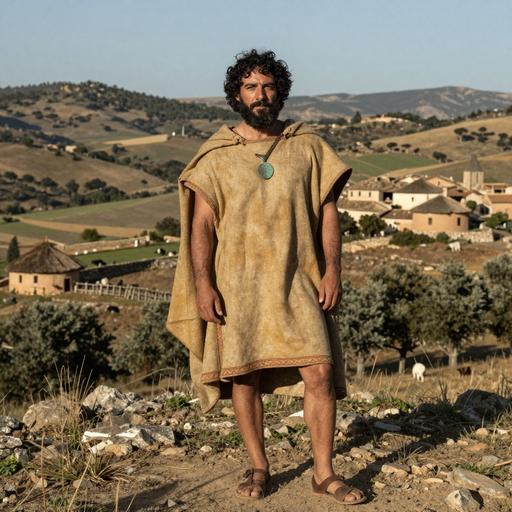
Reconstructed portrait of IA individual, Girona. Pontós. Mas Castellar, Spain (413-382 BCE)
IA individual, Spain
Spain Spain IA 413-382 calBCE (2335±20 BP, PSUAMS-9542) Iberian Iron Age H4a1 Direct
Reconstructed portrait of Avar individual, Csokorgasse (Vienna), Austria (584-816 CE)
Avar individual, Austria
Austria Austria Avar 600-800 CE Austria_Avar H4a1 Direct
Reconstructed portrait of Early Medieval individual, Barcelona. Roda de Ter. L'Esquerda, Spain (600-700 CE)
Early Medieval individual, Spain
Spain Visigothic Period Barcelona, Spain 600-700 CE Visigothic Culture H4a1 Direct
Reconstructed portrait of IA Tartessian individual, Sevilla. Alcalá del Río. La Angorrilla, Spain (700-500 BCE)
IA Tartessian individual, Spain
Spain Spain IA Tartessian 700-500 BCE Tartessian H4a1 Direct
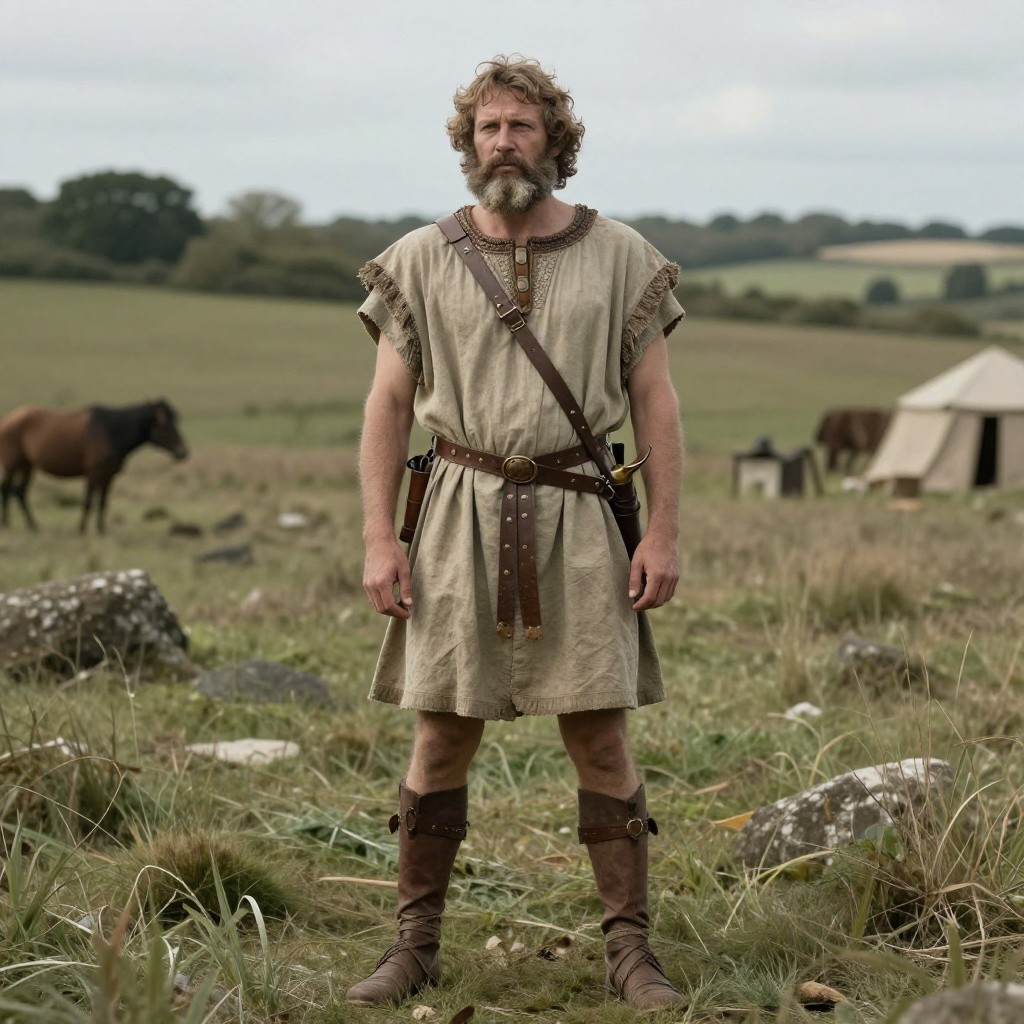
Reconstructed portrait of Norse individual, Oland, Sweden (800-1,100 CE)
Norse individual, Sweden
Sweden Sweden Viking 800 CE - 1100 CE Viking H4a1 Direct
Reconstructed portrait of Viking individual, Oland, Sweden (800-1,100 CE)
Viking individual, Sweden
Sweden The Viking Age 800 CE - 1100 CE H4a1 Direct
Reconstructed portrait of Sicily IA a IA b Sicani individual, Polizzello (Sicily, Caltanissetta), Italy (850-550 BCE)
Sicily IA a IA b Sicani individual, Italy
Italy Iron Age Sicily 850-550 BCE Sicilian Iron Age H4a1 Direct
Reconstructed portrait of Western European individual, Villa Magna, Italy (1,280-1,430 CE)
Western European individual, Italy
Italy Medieval to Early Modern Italy 1280 CE - 1430 CE Medieval Italian H4a1 Direct
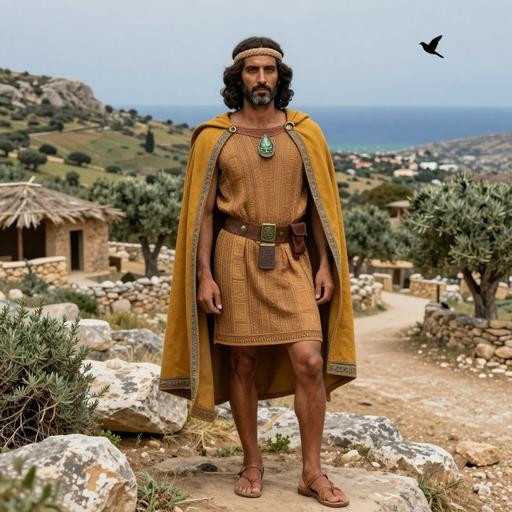
Reconstructed portrait of Crete LBA individual, Chania (Crete), Greece (1,300-1,250 BCE)
Crete LBA individual, Greece
Greece Late Minoan Culture 1300-1250 BCE Minoan H4a1 Direct
Reconstructed portrait of Crete LBA individual, Chania (Crete), Greece (1,400-1,300 BCE)
Crete LBA individual, Greece
Greece Late Minoan Culture 1400-1300 BCE Minoan H4a1 Direct
Chapter VI

Carrier Distribution Map

Geographic distribution of 100 ancient DNA samples (direct and subclade carriers of H4A1)

Direct carrier Subclade carrier
Time Period Filter
All Time Periods
Showing all samples
Chapter VII

Temporal Distribution

Distribution of carriers across archaeological periods

Chapter VIII

Geographic Distribution

Distribution by country of origin (direct and subclade carriers shown by default)

Chapter IX

Country × Era Distribution

Cross-tabulation of carrier countries and archaeological periods (direct and subclade carriers shown by default)

Data

Data & Provenance

Source information and data quality

Last Updated 2026-06-14
Confidence Score 50/100
Coverage Low
Data Source

We use the latest phylotree for MTDNA haplogroup classification and data.