Menu
Currency
Ancestry
mtDNA Haplogroup • Maternal Lineage

H1C

mtDNA Haplogroup H1C

~9,000 years ago
Iberian Peninsula / Western Europe
10 subclades
70 ancient samples
Scroll to explore
Chapter I

The Story

The journey of mtDNA haplogroup H1C

Origins and Evolution

mtDNA haplogroup H1c is a derived branch of the broader haplogroup H1, which is one of the dominant maternal lineages in Western Europe. H1 likely expanded after the Last Glacial Maximum from Iberian/Atlantic refugia; H1c appears to have arisen subsequently during the early Holocene or late Mesolithic (coalescence estimates on the order of ~8–10 kya). The subclade is defined by a set of coding‑region and control‑region mutations that reliably distinguish it from sibling H1 subclades and from basal H1.

Population genetics studies indicate that H1c shares the demographic history of other H1 branches: a post‑glacial demographic expansion in Atlantic/Western Europe followed by regional differentiation driven by local drift, founder effects, and later population movements (Neolithic farmer spread, Bronze Age transformations, and historic coastal contacts).

Subclades

H1c itself may contain downstream variation (local sublineages) recognizable in high‑resolution complete mtDNA studies, particularly in well‑sampled regions such as Iberia and Sardinia. These local subclades often show restricted geographic distributions reflecting regional persistence and founder events. Because the resolution and naming of subbranches depend on sequencing depth and phylogenetic updates, published studies sometimes split or relabel H1c sublineages; whole‑mitochondrial genomes are required to reliably resolve finer structure.

Geographical Distribution

H1c is most frequent in the western end of the European distribution of H1, with the highest concentrations in the Iberian Peninsula and Atlantic France, presence in Mediterranean islands (Sardinia, Sicily), and detectable frequencies extending into northwest Africa (Maghreb) and parts of northern and central Europe. Its distribution is consistent with a coastal/post‑glacial expansion and subsequent mobility along maritime and continental routes. Modern sampling and ancient DNA both record H1c in archaeological contexts across Iberia and western France and sporadically elsewhere in Europe and North Africa.

Historical and Cultural Significance

H1c is relevant to studies of post‑glacial recolonization of Europe, Mesolithic population continuity in Iberia, and later demographic processes (for example, the spread of Neolithic farmers, Bronze Age migrations, and historical contacts across the Mediterranean). In archaeological ancient DNA datasets, H1 and its subclades including H1c appear in Mesolithic and Neolithic contexts in western Europe and are also found in some Bell Beaker and later Bronze Age samples, although frequencies and exact roles vary by region. The occurrence of H1c in northwest Africa reflects prehistoric and historic cross‑Mediterranean gene flow, as well as older shared ancestry along the Atlantic façade.

Conclusion

As a regional subclade of H1, H1c is a useful marker for reconstructing maternal lineages tied to the Atlantic/Iberian refugial corridor and the post‑glacial demographic expansion of Western Europe. Its pattern—concentrated in western and southwestern Europe with spillover into adjacent regions—mirrors broader H1 dynamics but carries fine‑scale signals of local history, drift, and episodic migration. High‑resolution mitogenome sequencing and continued sampling of ancient DNA are the best ways to refine the phylogeny and historical interpretation of H1c.

Key Points

  • Origins and Evolution
  • Subclades
  • Geographical Distribution
  • Historical and Cultural Significance
  • Conclusion

Chapter II

Tree & Relationships

Phylogenetic context and subclades

Evolution Path

This haplogroup's evolutionary journey from its earliest ancestor to the present.

Steps Haplogroup Age Estimate Archaeology Era Time Passed Immediate Descendants Tested Modern Descendants Ancient Connections
1 H1C Current ~9,000 years ago ?? Neolithic 9,000 years 10 238 70
2 H1 ~15,000 years ago ?? Mesolithic 15,000 years 56 2,270 74
3 H ~25,000 years ago ?? Paleolithic 25,000 years 78 7,089 991
4 HV ~30,000 years ago ?? Paleolithic 30,000 years 14 8,468 228
5 R0 ~15,000 years ago ?? Mesolithic 15,000 years 2 8,603 4
6 R ~55,000 years ago ?? Paleolithic 55,000 years 17 17,854 57
7 NA - - - 1 17,854 0
8 N ~60,000 years ago ?? Paleolithic 60,000 years 16 20,371 13
9 L3 ~70,000 years ago ?? Paleolithic 70,000 years 7 23,542 6
10 L3'4 - - - 2 23,581 0
11 L3'4'6 - - - 2 23,584 0
12 L2'3'4'6 - - - 2 24,475 0
13 L2'3'4'5'6'7 - - - 2 24,488 0
14 L1'2'3'4'5'6'7 - - - 2 24,903 0
15 L ~160,000 years ago ?? Paleolithic 160,000 years 2 25,205 5
Chapter III

Where in the World

Geographic distribution and modern presence

Place of Origin

Iberian Peninsula / Western Europe

Modern Distribution

The populations where MTDNA haplogroup H1C is found include:

  1. Iberian populations (Spain, Portugal, including Basques)
  2. Western European populations (France, Britain, Ireland)
  3. Southern European populations and islands (Italy, Sardinia, Sicily)
  4. Northwest African populations (Morocco, Algeria, Berber groups)
  5. Scandinavian populations (Norway, Sweden, Denmark) at moderate to low frequencies
  6. Central and Eastern European populations at lower frequencies (e.g., Germany, Poland)
  7. Near Eastern populations (Anatolia, Levant) at low and sporadic frequencies
  8. Present sporadically in Jewish and various Mediterranean island communities
CHAPTER IV

When in Time

Your haplogroup in the context of human history

~10k years ago

Neolithic Revolution

Agriculture begins, settled communities form

~9k years ago

Haplogroup H1C

Your mtDNA haplogroup emerged in Iberian Peninsula / Western Europe

Iberian Peninsula / Western Europe
~5k years ago

Bronze Age

Metalworking, writing, and early civilizations

~3k years ago

Iron Age

Iron tools, expanded trade networks

~2k years ago

Classical Antiquity

Greek and Roman civilizations flourish

Present

Present Day

Modern era

Your Haplogroup
Historical Era
Chapter IV-B

Linked Cultures

Ancient cultures associated with mtDNA haplogroup H1C

Cultural Heritage

These ancient cultures have been linked to haplogroup H1C based on matching ancient DNA samples from archaeological excavations. The presence of this haplogroup in these cultures provides insights into the migrations and population movements of populations carrying this haplogroup.

Battle Axe Culture British Chalcolithic British Neolithic Frälsegården Hjelmars Rör Irish Middle Neolithic Scottish Neolithic
Culture assignments are based on archaeological context of ancient DNA samples and may represent regional associations during specific time periods.
Chapter V

Sample Catalog

47 direct carriers and 23 subclade carriers of haplogroup H1C

50 / 50 samples
Portrait Sample Country Era Date Culture mtDNA Match
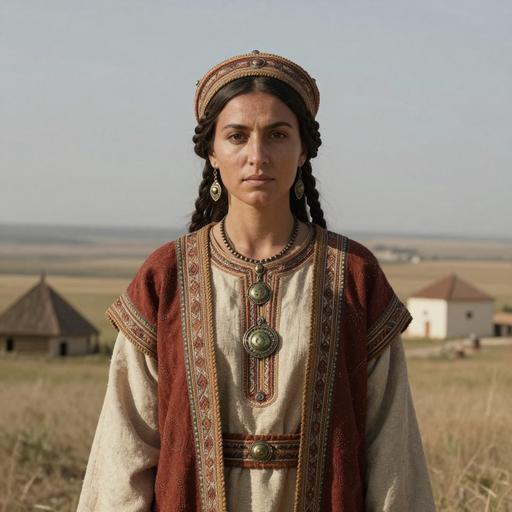
Reconstructed portrait of East Slavic individual, Komariv-1. Grave 3, Ukraine (247-404 CE)
East Slavic individual, Ukraine
Ukraine Chernyakhiv Culture, Ukraine 247 CE - 404 CE Chernyakhiv H1c Direct
Reconstructed portrait of Chernoles individual, Komariv-1. Grave 3, Ukraine (247-404 CE)
Chernoles individual, Ukraine
Ukraine The Chernoles Culture 247 CE - 404 CE H1c Direct
Reconstructed portrait of Roman Late Antiquity individual, Timacum-Minus-Slog (Zaječar District, Knjaževac Municipality, Ravna), Serbia (380-410 CE)
Roman Late Antiquity individual, Serbia
Serbia Serbia Roman 350-450 CE Roman Provincial H1c Direct
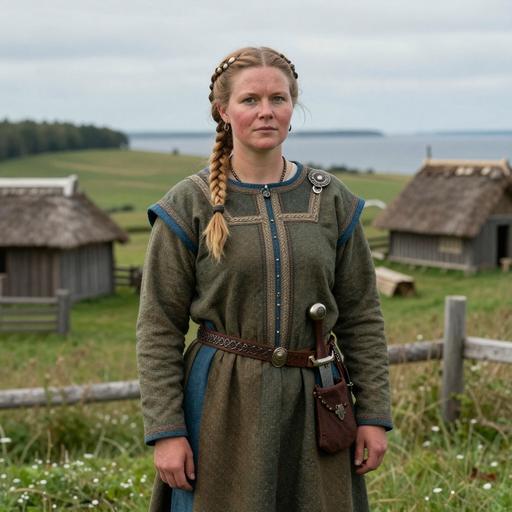
Reconstructed portrait of England MIA individual, England. Kent. East Kent Access Road, United Kingdom (400-200 BCE)
England MIA individual, United Kingdom
United Kingdom England MIA 388-206 calBCE (2243±25 BP, SUERC-132755) Middle Iron Age British H1c Direct
Reconstructed portrait of England MIA individual, England. Hampshire. Middle Wallop. Suddern Farm, United Kingdom (401-208 BCE)
England MIA individual, United Kingdom
United Kingdom England MIA 401-208 calBCE (2279±31 BP, SUERC-60688) Middle Iron Age British H1c Direct
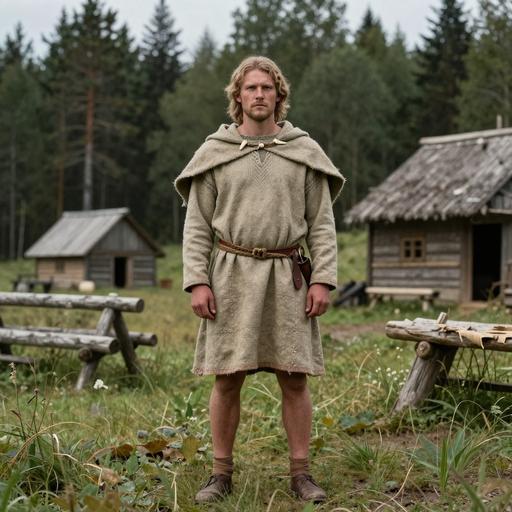
Reconstructed portrait of Baltic Finnic individual, Saare. Loona 1. outside the cist. square d/107, Estonia (465-236 BCE)
Baltic Finnic individual, Estonia
Estonia Iron Age Estonia 465 BCE - 236 BCE Estonian Iron Age H1c Direct
Reconstructed portrait of Baltic Eia individual, Saare. Loona 1. outside the cist. square d/107, Estonia (465-236 BCE)
Baltic Eia individual, Estonia
Estonia Early Iron Age Baltic 465 BCE - 236 BCE H1c Direct
Reconstructed portrait of Early Middle Avar individual, Rákóczifalva-Bagi-földek (Jász-Nagykun-Szolnok Coiunty, Szolnok), Hungary (580-720 CE)
Early Middle Avar individual, Hungary
Hungary Early Middle Avar Period 550-750 CE Avar H1c Direct
Reconstructed portrait of Avar-o Low East Asia individual, Rákóczifalva-Bagi-földek (Jász-Nagykun-Szolnok Coiunty, Szolnok), Hungary (580-804 CE)
Avar-o Low East Asia individual, Hungary
Hungary Hungary Avar 550-850 CE Avar H1c+152 Direct
Reconstructed portrait of Avar individual, Rákóczifalva-Bagi-földek (Jász-Nagykun-Szolnok Coiunty, Szolnok), Hungary (580-804 CE)
Avar individual, Hungary
Hungary Hungary Avar 550-850 CE Avar H1c+152 Direct
Chapter VI

Carrier Distribution Map

Geographic distribution of 70 ancient DNA samples (direct and subclade carriers of H1C)

Direct carrier Subclade carrier
Time Period Filter
All Time Periods
Showing all samples
Chapter VII

Temporal Distribution

Distribution of carriers across archaeological periods

Chapter VIII

Geographic Distribution

Distribution by country of origin (direct and subclade carriers shown by default)

Chapter IX

Country × Era Distribution

Cross-tabulation of carrier countries and archaeological periods (direct and subclade carriers shown by default)

Data

Data & Provenance

Source information and data quality

Last Updated 2026-02-16
Confidence Score 50/100
Coverage Low
Data Source

We use the latest phylotree for MTDNA haplogroup classification and data.