Ancient Americas Ancestry Report

Download PDF creates a visual, rasterized copy. Use Print for selectable text and better assistive-technology support.

Ancient Americas Heritage

Analyzing your genetic similarity to ancient peoples of the Americas...

Preparing your genetic-similarity report

Skip to main content
Ancient Americas DNA Analysis

Your Ancient Americas Heritage

(SSUAJF) Demo Report

Your Closest Matches Are Genetically Distant

We compared your DNA to every sample in our Ancient Americas reference panel and ranked the closest ones for you below. Your nearest matches are quite distant, which suggests your primary ancestry most likely lies in another part of the world.

Your DNA shows a genetic profile predominantly similar to South Asian reference populations. Ancient American populations have distinct genetic profiles with high Amerindian and Siberian components.

The matches, map, and timeline shown below are still real comparisons against ancient Ancient Americas individuals. They represent your closest reference points, even though the genetic distance is large.

You may find a closer fit in the Ancient Iberian Report. Explore other reports
Ancient Americas Heritage Index 53/100
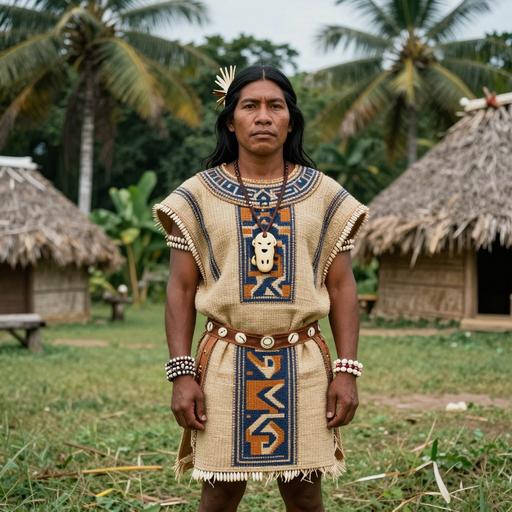
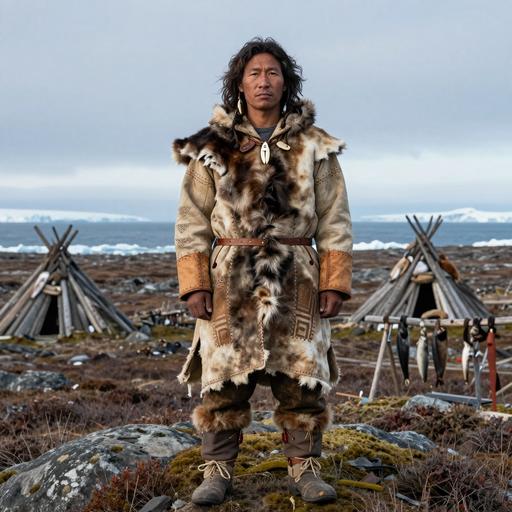
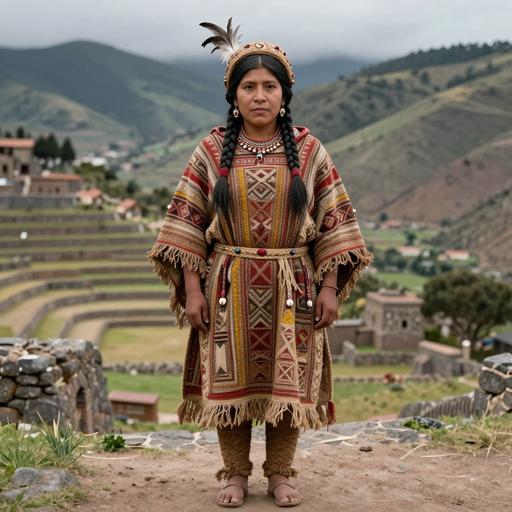
Reconstructed portrait of Dominican Republic Ceramic individual, El Soco, Dominican Republic (1,227-1,283 CE)
Closest Match
Arctic

Dominican Republic Ceramic individual, Dominican Republic

Sample ID: I13192

El Soco, Dominican Republic

Your closest genetic match from our American reference database. This individual lived approximately 799 years ago in what is now Dominican Republic. This comparison shows statistical genetic similarity to reference individuals associated with the Arctic period; it does not prove direct descent.

1227 CE - 1283 CE
Male
Full Profile
How Your 53/100 Similarity Index Was Calculated Full breakdown
Segment Matching 50% weight
100/100

Direct DNA segments shared with ancient individuals, the strongest evidence of connection.

ADMIXTURE Distance 31.25% weight
9/100

How closely your ADMIXTURE composition matches the report's reference samples.

Monte Carlo 18.75% weight
3/100

Statistical goodness-of-fit against this report's reference panel.

Top Connections

Your Closest American Reference Individuals

Beyond your #1 match, these ancient Americans share the strongest genetic connections with you.

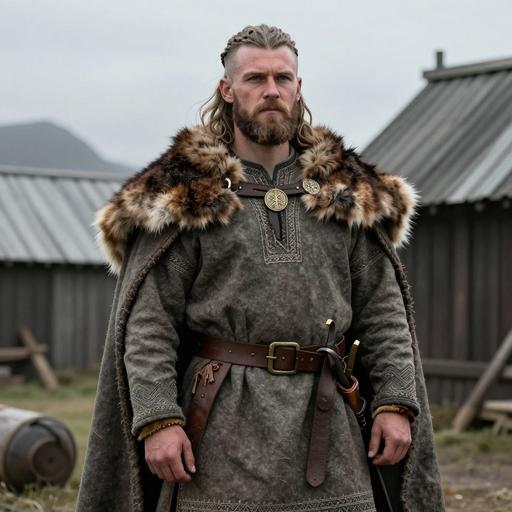
Reconstructed portrait of Norse individual, Eastern Settlement. 029a, Greenland (900-1,200 CE)
#2 Early Norse Greenland

Norse individual, Greenland

Sample ID: VK179

Greenland , Eastern Settlement. 029a

900 CE ~1,126 years ago

Quick View
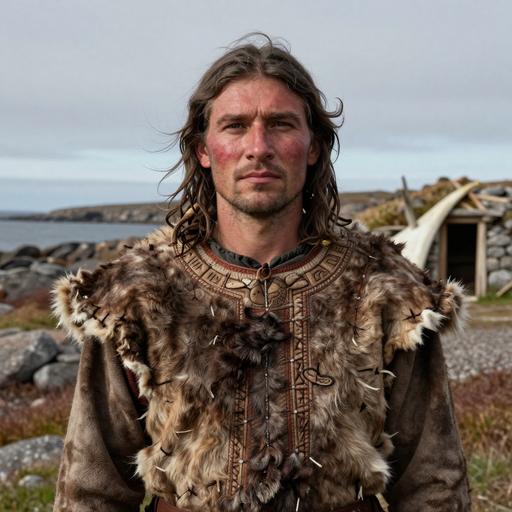
Reconstructed portrait of Arctic Cultures individual, Newfoundland. Port aux Choix, Canada (1-800 CE)
#3 Middle Dorset Culture, Canada

Arctic Cultures individual, Canada

Sample ID: MARC481

Canada , Newfoundland. Port aux Choix

1 CE ~2,025 years ago

Quick View
Reconstructed portrait of Paleo-Arctic Tradition individual, Alaska. Prince of Wales Island. On Your Knees Cave, USA (8,550-8,295 BCE)
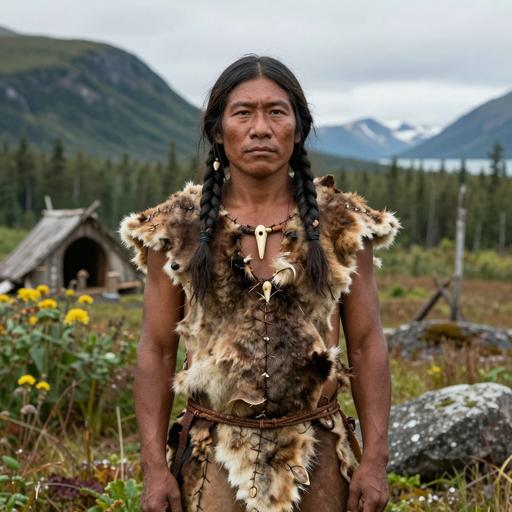
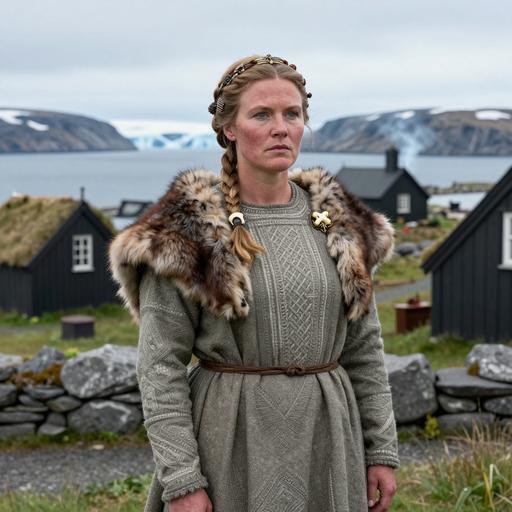
#4 Prehistoric Alaska, USA

Paleo-Arctic Tradition individual, USA

Sample ID: ShukaKaa

USA , Alaska. Prince of Wales Island. On Your Knees Cave

8550 BCE ~10,576 years ago

Quick View
Reconstructed portrait of Norse individual, Western Settlement. V051, Greenland (995-1,154 CE)
#5 Late Norse Greenland

Norse individual, Greenland

Sample ID: VK76

Greenland , Western Settlement. V051

995 CE ~1,031 years ago

Quick View
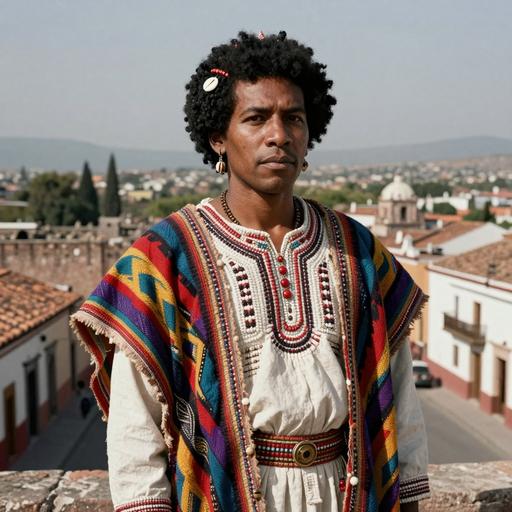
Reconstructed portrait of Early Colonial individual, San José de los Naturales Royal Hospital mass burial (Mexico City), Mexico (1,436-1,472 CE)
#6 Afro-Mexican Community of Colonial Mexico City

Early Colonial individual, Mexico

Sample ID: SJN003

Mexico , San José de los Naturales Royal Hospital mass burial (Mexico City)

1436 CE ~590 years ago

Quick View
Reconstructed portrait of Arctic Cultures individual, Victoria Island, Canada (50-340 CE)
#7 Middle Dorset Culture, Canada

Arctic Cultures individual, Canada

Sample ID: I10427

Canada , Victoria Island

50 CE ~1,976 years ago

Quick View
Geographic Origins

Where Your Ancient Matches Lived

Explore the archaeological sites across the Americas where your genetic matches were discovered.

6 locations
Legend
Your Matches

Geographic Insight: Your matches span across 4 countries and 6 distinct archaeological sites. Click on any marker to learn more about that ancient individual.

Database

Sample Explorer

Browse the 7 ancient individuals your DNA shows genetic similarity to in this region's Monte Carlo admixture fit. When identity-by-descent (IBD) data is available, the Shared Segments column shows segment evidence. Rows are sorted by strongest segment evidence first (coverage-weighted shared SNPs), then fit-only matches. Click any row for details.

7 matched samples Sorted by strongest segment evidence
Rank Sample Location Era Date Haplogroups Shared Segments
#1
Reconstructed portrait of Dominican Republic Ceramic individual, El Soco, Dominican Republic (1,227-1,283 CE)
Dominican Republic Ceramic individual, Dominican Republic Sample ID: I13192 Taino
Dominican Republic El Soco Ceramic Period El Soco, Dominican Republic 1227 CE ~799 yrs ago D1 Q-M3 6 segs · 23.5 cM
#2
Reconstructed portrait of Norse individual, Eastern Settlement. 029a, Greenland (900-1,200 CE)
Norse individual, Greenland Sample ID: VK179 Norse
Greenland Eastern Settlement. 029a Early Norse Greenland 900 CE ~1,126 yrs ago K1a3 I1 3 segs · 13.2 cM
#3
Reconstructed portrait of Arctic Cultures individual, Victoria Island, Canada (50-340 CE)
Arctic Cultures individual, Canada Sample ID: I10427 Arctic Cultures
Canada Victoria Island Middle Dorset Culture, Canada 50 CE ~1,976 yrs ago D2a1 Q-B143 2 segs · 42.5 cM Low coverage
Fit
Reconstructed portrait of Arctic Cultures individual, Newfoundland. Port aux Choix, Canada (1-800 CE)
Arctic Cultures individual, Canada Sample ID: MARC481 Arctic Cultures
Canada Newfoundland. Port aux Choix Middle Dorset Culture, Canada 1 CE ~2,025 yrs ago F-M89 Fit only
Fit
Reconstructed portrait of Paleo-Arctic Tradition individual, Alaska. Prince of Wales Island. On Your Knees Cave, USA (8,550-8,295 BCE)
Paleo-Arctic Tradition individual, USA Sample ID: ShukaKaa Paleo-Arctic Tradition
USA Alaska. Prince of Wales Island. On Your Knees Cave Prehistoric Alaska, USA 8550 BCE ~10,576 yrs ago D4h3a Q-L53 Fit only
Fit
Reconstructed portrait of Early Colonial individual, San José de los Naturales Royal Hospital mass burial (Mexico City), Mexico (1,436-1,472 CE)
Early Colonial individual, Mexico Sample ID: SJN003 Spanish Colonial
Mexico San José de los Naturales Royal Hospital mass burial (Mexico City) Afro-Mexican Community of Colonial Mexico City 1436 CE ~590 yrs ago L3e1a1a E-CTS8030 Fit only
Fit
Reconstructed portrait of Norse individual, Western Settlement. V051, Greenland (995-1,154 CE)
Norse individual, Greenland Sample ID: VK76 Norse
Greenland Western Settlement. V051 Late Norse Greenland 995 CE ~1,031 yrs ago U4a1 Fit only
Archaeological Cultures

Your Connection to Ancient American Cultures

Explore the major archaeological cultures of the Americas and discover which ones your DNA connects you to most strongly.

Arctic Paleo-Eskimo and Thule Traditions

2500 BCE-1500 CE

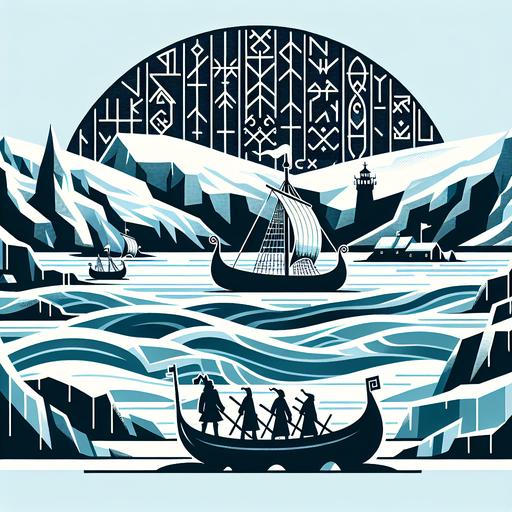
Successive Arctic populations, including the Saqqaq, Dorset, and later Thule cultures, adapted to the circumpolar environment of Alaska, Arctic Canada, and Greenland, developing specialized maritime hunting technologies ancestral to modern Inuit communities.

Cultural Match 34.3/100
2 matches

Your score shows moderate statistical similarity to reference samples associated with this culture.

Culture assignments are based on the archaeological context and era classifications of your matched ancient DNA samples. These connections reflect genetic similarities to populations associated with specific archaeological cultures in the Americas.

Genetic Continuity

Your Ancestral Story

Understanding what your genetic connections reveal about your American ancestry.

Your strongest regional connections fall within historical connections.

0.0 %

Early Foundations

Paleoindian & Archaic

16,000 BCE - 2,000 BCE

This group combines fit-weighted genetic-similarity scores for the relevant cultural periods.

0.0 %

Formative Transformations

Formative & Caribbean Ceramic & Classic

2,000 BCE - 1,500 CE

This group combines fit-weighted genetic-similarity scores for the relevant cultural periods.

Strongest
2.7 %

Historical Connections

Post-Classic & Andean & Woodland & Arctic & Colonial

4,000 BCE - 1,900 CE

This group combines fit-weighted genetic-similarity scores for the relevant cultural periods.

What This Means

Your genetic profile tells a story of continuity and change. While some populations maintained genetic continuity over thousands of years, migrations and cultural exchanges brought new genetic signatures that shaped the modern American gene pool. Your results reflect this rich tapestry of population movements and interactions.

Cultural Periods

Your American Timeline

Your genetic connections to 10 major periods of American history, from prehistoric to medieval.

Your American Ancient Matches Through Time

16,000 BCE — 1,900 CE | 7 ancient connections across 17+ millennia

Paleoindian 0.0/100
Archaic 0.0/100
Formative 0.0/100
Caribbean Ceramic 0.0/100
Classic 0.0/100
Post-Classic 0.0/100
Andean 0.0/100
Woodland 0.4/100
Arctic 2.3/100
Colonial 0.1/100
16,000 BCE
11,525 BCE
7,050 BCE
2,575 BCE
1,900 CE
Reconstructed portrait of Paleo-Arctic Tradition individual, Alaska. Prince of Wales Island. On Your Knees Cave, USA (8,550-8,295 BCE)
Paleo-Arctic Tradi...
Paleo-Arctic Tradition individual, USA 8550 BCE Prehistoric Alaska, USA
Reconstructed portrait of Paleo-Arctic Tradition individual, Alaska. Prince of Wales Island. On Your Knees Cave, USA (8,550-8,295 BCE)
Paleo-Arctic Tradition individual, USA 8550 BCE Prehistoric Alaska, USA
Reconstructed portrait of Arctic Cultures individual, Newfoundland. Port aux Choix, Canada (1-800 CE)
Arctic Cultures in...
Arctic Cultures individual, Canada 1 CE Middle Dorset Culture, Canada
Reconstructed portrait of Arctic Cultures individual, Newfoundland. Port aux Choix, Canada (1-800 CE)
Arctic Cultures individual, Canada 1 CE Middle Dorset Culture, Canada
Reconstructed portrait of Arctic Cultures individual, Victoria Island, Canada (50-340 CE)
Arctic Cultures in...
Arctic Cultures individual, Canada 50 CE Middle Dorset Culture, Canada
Reconstructed portrait of Arctic Cultures individual, Victoria Island, Canada (50-340 CE)
Arctic Cultures individual, Canada 50 CE Middle Dorset Culture, Canada
Reconstructed portrait of Norse individual, Eastern Settlement. 029a, Greenland (900-1,200 CE)
Norse individual, ...
Norse individual, Greenland 900 CE Early Norse Greenland
Reconstructed portrait of Norse individual, Eastern Settlement. 029a, Greenland (900-1,200 CE)
Norse individual, Greenland 900 CE Early Norse Greenland
Reconstructed portrait of Norse individual, Western Settlement. V051, Greenland (995-1,154 CE)
Norse individual, ...
Norse individual, Greenland 995 CE Late Norse Greenland
Reconstructed portrait of Norse individual, Western Settlement. V051, Greenland (995-1,154 CE)
Norse individual, Greenland 995 CE Late Norse Greenland
Reconstructed portrait of Dominican Republic Ceramic individual, El Soco, Dominican Republic (1,227-1,283 CE)
Dominican Republic...
Dominican Republic Ceramic individual, Dominican Republic 1227 CE Ceramic Period El Soco, Dominican Republic
Reconstructed portrait of Dominican Republic Ceramic individual, El Soco, Dominican Republic (1,227-1,283 CE)
Dominican Republic Ceramic individual, Dominican Republic 1227 CE Ceramic Period El Soco, Dominican Republic
Reconstructed portrait of Early Colonial individual, San José de los Naturales Royal Hospital mass burial (Mexico City), Mexico (1,436-1,472 CE)
Early Colonial ind...
Early Colonial individual, Mexico 1436 CE Afro-Mexican Community of Colonial Mexico City
Reconstructed portrait of Early Colonial individual, San José de los Naturales Royal Hospital mass burial (Mexico City), Mexico (1,436-1,472 CE)
Early Colonial individual, Mexico 1436 CE Afro-Mexican Community of Colonial Mexico City
Arctic 2.3/100 affinity
Woodland 0.4/100 affinity
Colonial 0.1/100 affinity
Paleoindian 0.0/100 affinity
Archaic 0.0/100 affinity
Formative 0.0/100 affinity
Caribbean Ceramic 0.0/100 affinity
Classic 0.0/100 affinity
Post-Classic 0.0/100 affinity
Andean 0.0/100 affinity
Through the Ages

Your American Journey Through Time

Each era below represents a chapter of american history

2 connections

Canada MDorset

Arctic

Middle Dorset communities in Arctic Canada lived through a maritime-focused seasonal cycle, producing small, finely made stone tools and organizing dwellings and activities suited to cold winters. The 0–800 CE period captures a stage within the broader Dorset sequence showing regional variation in how groups exploited coastal environments.

2 Samples
1 Country
~2,025 Years Ago
0 CE - 800 CE Period
Genetic Signatures
F-M89 1 Q-B143 1 D2a1 1
Regions Represented
Canada (2)
1 connection

Ceramic Period El Soco, Dominican Republic

Caribbean Ceramic

Region & Environment

El Soco pertains to the Caribbean setting of Hispaniola, within the Dominican Republic. Communities operated in landscapes combining coastal access with inland zones, enabling both marine resource use and agricultural activities.

1 Sample
1 Country
~799 Years Ago
600 CE - 1,500 CE Period
Genetic Signatures
Q-M3 1 D1 1
Regions Represented
Dominican Republic (1)
1 connection

Greenland EarlyNorse

Arctic

overview

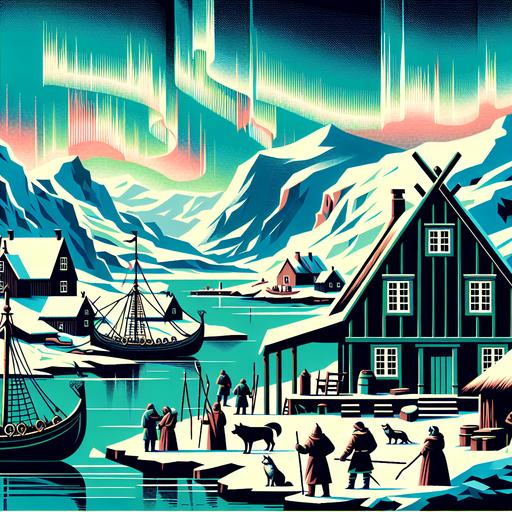
In the centuries before sustained European contact in the North Atlantic, Greenland experienced a distinctive phase when Norse mariners and settlers established communities in the west and (later) the east. For the “Early Norse” period, the emphasis lies on settlement formation, agriculture in suitable microclimates, and the logistical ties to Iceland and Norway.

1 Sample
1 Country
~1,126 Years Ago
985 CE - 1,450 CE Period
Genetic Signatures
I1 1 K1a3 1
Regions Represented
Greenland (1)
1 connection

Prehistoric Alaska, USA

Woodland

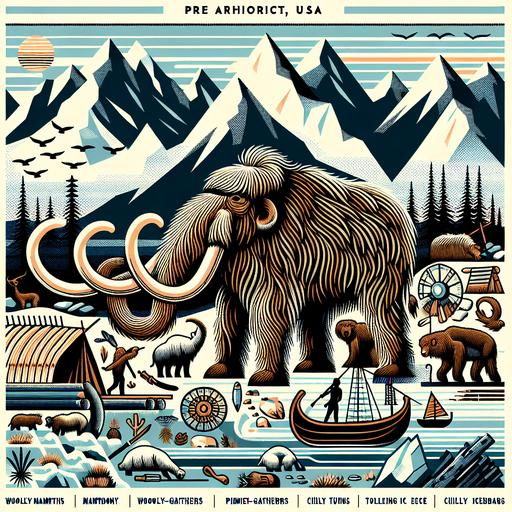
The Paleo-Arctic Tradition represents one of the earliest known cultural periods in the prehistoric timeline of Alaska, dating approximately from around 10,000 to 6,000 years ago. This era is particularly significant as it marks the occupation of Alaska by some of the first human inhabitants who arrived via the Bering Land Bridge, using what is now the Bering Strait during the late Pleistocene epoch when sea levels were much lower.

1 Sample
1 Country
~10,576 Years Ago
14,000 BCE - 8,000 BCE Period
Genetic Signatures
Q-L53 1 D4h3a 1
Regions Represented
USA (1)
1 connection

Greenland LateNorse

Arctic

overview

During the Late Norse period, Norse communities remained present in Greenland even as the practical foundations of settlement became harder to sustain. Archaeology and historical context together highlight ongoing use of fjord resources and farm infrastructure, alongside evidence consistent with shifting demographics and changing patterns of access to supplies.

1 Sample
1 Country
~1,031 Years Ago
1,200 CE - 1,450 CE Period
Genetic Signatures
U4a1 1
Regions Represented
Greenland (1)
1 connection

Afro-Mexican Community of Colonial Mexico City

Colonial

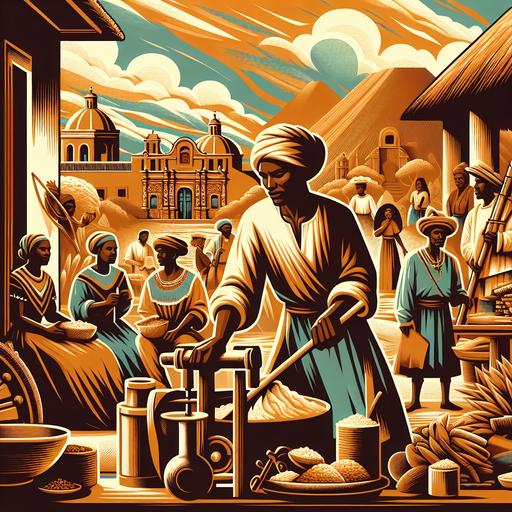
The Afro-Mexican community in colonial Mexico City represented a unique and multifaceted culture shaped by various forces during the era of Spanish colonial rule. This community emerged as a distinct cultural and social entity due to the transatlantic slave trade, colonial policies, and the interactions between diverse ethnic groups. Here is an extensive and detailed description of the Afro-Mexican community of colonial Mexico City:

1 Sample
1 Country
~590 Years Ago
1,500 CE - 1,800 CE Period
Genetic Signatures
E-CTS8030 1 L3e1a1a 1
Regions Represented
Mexico (1)

"The Americas hold many distinct histories, shaped by migrations, local adaptation, and great cultural diversity."

— Ancient Americas
Era Analysis

Your Era Profile

A visual snapshot of fit-weighted genetic similarity to reference samples from different periods of the Americas. The further the point from the center, the higher the affinity score within this report.

Your Dominant Era Arctic 2.3/100 affinity
Arctic 2.3/100

Arctic and sub-Arctic population histories.

Woodland 0.4/100

Eastern North American Woodland traditions.

Colonial 0.1/100

Population history from European contact and colonization.

Paleoindian 0.0/100

The earliest peopling of the Americas.

Archaic 0.0/100

Diverse post-glacial hunter-gatherer communities.

Formative 0.0/100

Early village and agricultural societies.

Caribbean Ceramic 0.0/100

Taino, Saladoid, and related Arawak-speaking seafaring cultures of the Caribbean islands.

Classic 0.0/100

Classic-period urban civilizations.

Post-Classic 0.0/100

Late pre-contact states and societies.

Andean 0.0/100

Andean highland population histories.

Understanding Your Era Profile

Your dominant connection to the Arctic suggests that a significant portion of your American ancestry traces back to populations who lived during this transformative period of American history. This doesn't mean your ancient matches were exclusively from this era, rather, it indicates where the strongest genetic signals appear in your connection to ancient American populations.

Genetic Analysis

Your Position in American Genetic Space

Explore a reference-fixed ADMIXTURE projection. The reference map stays identical for every kit using the same report version.

PCA reduces the N-dimensional ADMIXTURE reference panel to selected axes in a shared, reference-fixed ADMIXTURE PCA space. The chart currently shows the selected components. Variance percentages are global to that shared model and are not re-fit per report. Distance and filtering use the original N-dimensional ADMIXTURE values. Your kit is the gold diamond. This is not a Global25/Vahaduo plot.

Closest references in full ADMIXTURE space

This table is the non-visual equivalent of the chart and uses full-dimensional distance rather than apparent 2D spacing.

ReferencePeriodPlace/dateDistance

Composite Score Breakdown

Your Ancient Americas Similarity Index (53/100) is calculated from three weighted components, with segment-level matches carrying the most weight because they are the strongest genetic evidence:

Segment Matching 50%
100/100

Direct DNA segments (identity-by-descent) shared with ancient American individuals, the strongest evidence of a genetic connection.

ADMIXTURE Distance 31.25%
9/100

Euclidean genetic distance between your ADMIXTURE composition and American reference samples.

Monte Carlo 18.75%
3/100

Goodness-of-fit for stochastic modeling against the American reference panel.

Shared DNA Segments

You share DNA segments with 408 ancient American individuals, totalling 7,748.2 cM across 961 segments. These shared segments are the strongest evidence in your Ancient Americas Similarity Index. Segment length is most reliable when backed by dense SNP coverage; matches flagged Low coverage below come from ancient samples with sparse genotyping, so their shared-cM value is less certain even when it looks large.

Reconstructed portrait of Dominican Republic Ceramic individual, El Soco, Dominican Republic (1,227-1,283 CE) 23.5 cM
Dominican Republic Ceramic individual, Dominican Republic

Sample ID: I13192

Dominican Republic 6 segments · 64.8 SNPs/cM
Reconstructed portrait of Dominican Republic Ceramic individual, La Caleta, Dominican Republic (1,021-1,154 CE) 22.9 cM
Dominican Republic Ceramic individual, Dominican Republic

Sample ID: I15672

Dominican Republic 6 segments · 65.5 SNPs/cM
Reconstructed portrait of Dominican Republic Dynasty II Late Ceramic individual, La Caleta, Dominican Republic (1,250-1,400 CE) 27.2 cM
Dominican Republic Dynasty II Late Ceramic individual, Dominican Republic

Sample ID: I15674

Dominican Republic 6 segments · 53.5 SNPs/cM
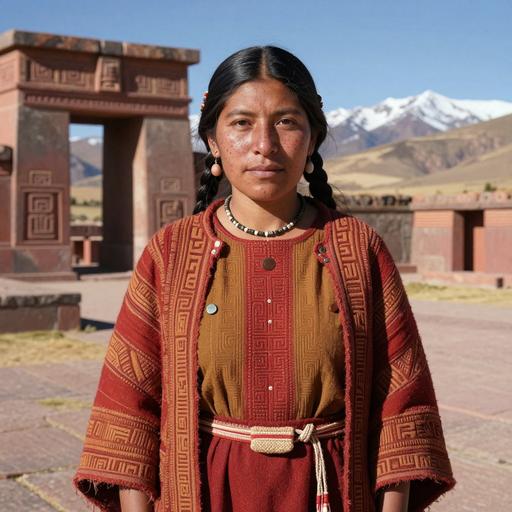
Reconstructed portrait of Andean individual, Cuncaicha. Highlands, Peru (2,300-2,030 BCE) 25.6 cM
Andean individual, Peru

Sample ID: Cuncaicha15-03

Peru 6 segments · 56.4 SNPs/cM
Reconstructed portrait of Ceramic individual, Las Locas, Venezuela (450-150 BCE) 28.8 cM
Ceramic individual, Venezuela

Sample ID: I17896

Venezuela 6 segments · 49.6 SNPs/cM
Reconstructed portrait of Andean Civilizations individual, Huayuncalla. Laramate. Highlands, Peru (1,040-1,210 CE) 24.8 cM
Andean Civilizations individual, Peru

Sample ID: I2551

Peru 6 segments · 56.4 SNPs/cM
Reconstructed portrait of Los Rieles individual, Coquimbo. Los Vilos. Los Rieles, Chile (3,360-2,930 BCE) 20.4 cM
Los Rieles individual, Chile

Sample ID: I1753

Chile 6 segments · 66.5 SNPs/cM
Reconstructed portrait of Andean Civilizations individual, Cueva Yacotogia. Laramate. Highlands, Peru (790-990 CE) 24.5 cM
Andean Civilizations individual, Peru

Sample ID: I1485

Peru 6 segments · 52.6 SNPs/cM
Reconstructed portrait of Pre Ceramic individual, Matanzas City. Canimar Abajo, Cuba (1,215-1,271 CE) 29.0 cM
Pre Ceramic individual, Cuba

Sample ID: CAO028

Cuba 6 segments · 46.8 SNPs/cM
Reconstructed portrait of LIP Chimu individual, Chinchawas, Peru (1,100-1,400 CE) 24.3 cM
LIP Chimu individual, Peru

Sample ID: I2251

Peru 5 segments · 51.0 SNPs/cM
Reconstructed portrait of Cullcunche Tiwanaku individual, Cullcunche, Peru (771-986 CE) 26.3 cM
Cullcunche Tiwanaku individual, Peru

Sample ID: CO001

Peru 6 segments · 48.2 SNPs/cM
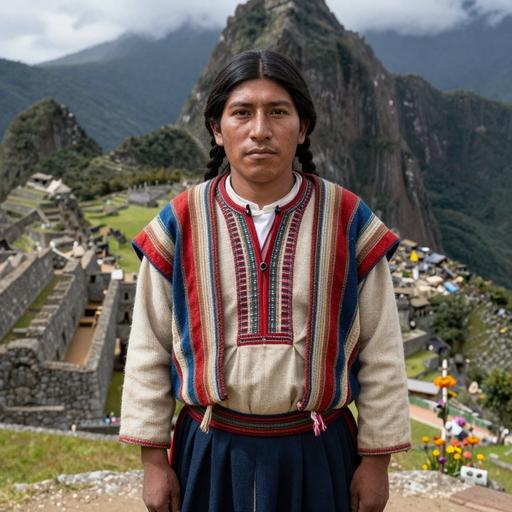
Reconstructed portrait of LIP individual, Cusco. San Sebastián. Machu Piccu, Peru (1,285-1,395 CE) 21.4 cM
LIP individual, Peru

Sample ID: I1744

Peru 5 segments · 56.3 SNPs/cM
Haplogroup Evolution

Haplogroup Distribution Across American History

Explore how Y-DNA and mtDNA haplogroups changed across different periods of American history.

0
Total Samples
0
Cultural Periods
0
Unique Haplogroups

These distributions show the frequency of Y-DNA and mtDNA haplogroups among all ancient American samples from each cultural period. Haplogroup frequencies changed over time due to migrations, population movements, and genetic drift.

AI Analysis

Your Personal Guide

Understanding ancient DNA results can be complex. Our AI assistant helps you make sense of your connections, explaining what your results mean and placing them in historical context.

AI ASSISTANT by DNAGENICS

Enabled until 2027-09-15

This AI analysis is limited to your Ancient Americas genetic-similarity results. AI output is inferential and is not proof of ancestry or direct descent.

Try these questions:

Learn More

Understanding Your Results

This report uses a three-component genetic-similarity scoring system:

  • Segment Matching (50%): coverage-aware IBD evidence shared with reference individuals.
  • ADMIXTURE Distance (31.25%): Euclidean distance in the original 15-dimensional ADMIXTURE space.
  • Monte Carlo Fit (18.75%): goodness-of-fit against this report's selected reference panel.

The PCA is fitted once from reference samples only. Your kit is projected afterward, so it cannot move the map. The selected two axes omit some variation; use the full-space distance table for nearest-reference comparisons.

What does the Ancient Americas Heritage Index mean?

The Ancient Americas Heritage Index (0-100) represents your overall genetic similarity to ancient American populations. Higher scores indicate closer genetic proximity.

Why don't my cultural-period scores add up to 100?

They are fit-weighted affinity scores, not ancestry percentages. Each conditional period share is multiplied by the overall Monte Carlo fit, so the period scores add up to that model-fit score.

Can I compare this chart with Global25 or another regional report?

No. This is a fixed ADMIXTURE projection for this report's reference panel. You can compare kits within the same report and projection version, but not coordinates across regions or with Vahaduo/Global25.

What counts as a matched sample in Sample Explorer?

A matched sample is a reference individual included in your regional Monte Carlo admixture fit (statistical genetic similarity to this report's panel). When identity-by-descent data is available, Shared Segments shows segment evidence. The table is sorted by strongest segment evidence first (coverage-weighted shared SNPs); fit-only matches without segment data follow afterward.

Exploring Demo Data This is a live preview using sample data. Unlock your full report with your own results.
Demo Mode
Use code for 35% off Expires Sep 16