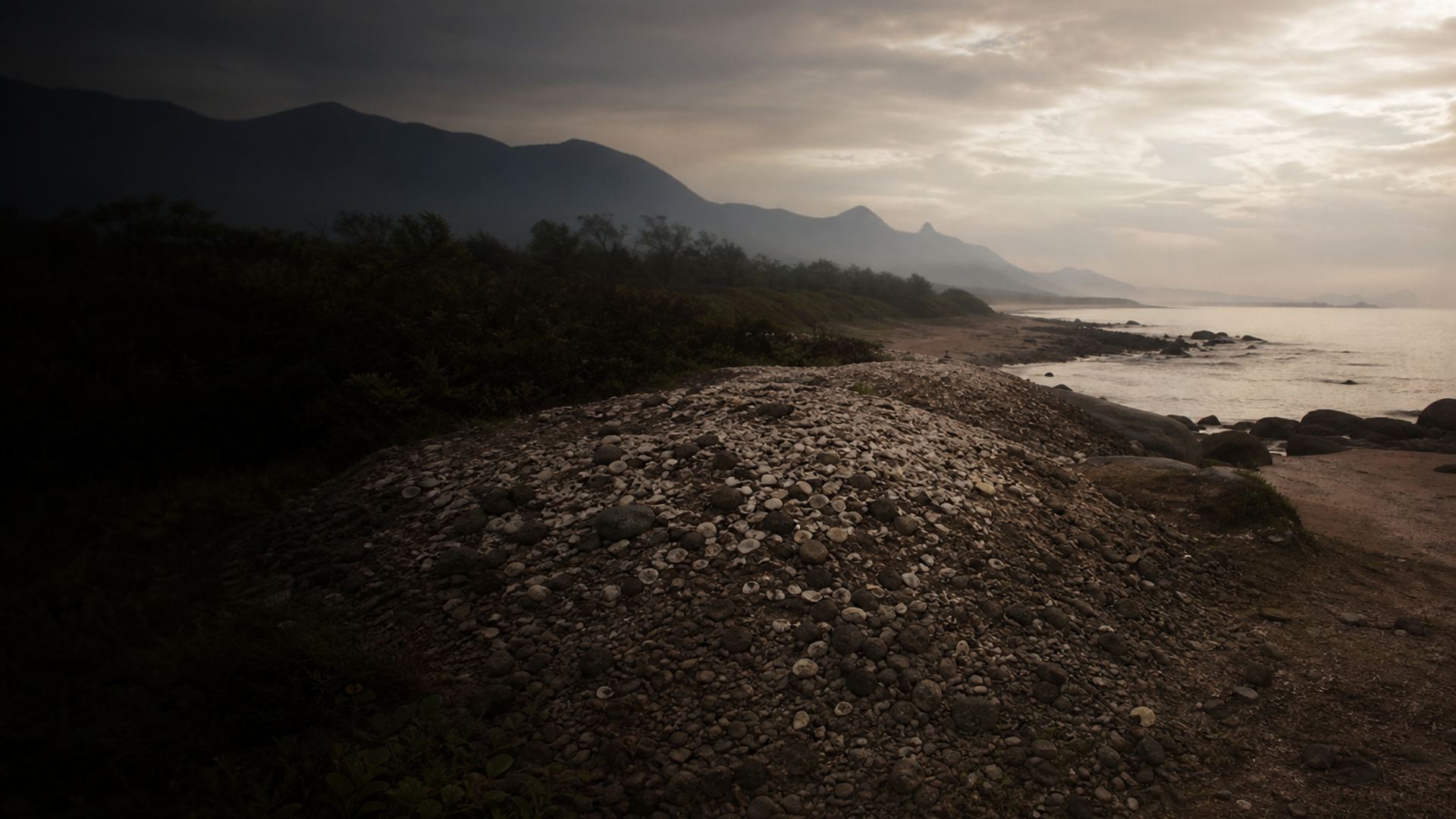
The material world of Capelinha can be imagined through the layered shells and artifacts recovered from the mound. Archaeological evidence indicates diets rich in mollusks, fish and estuarine fauna, with seasonal pulses of productivity likely driving occupation intensity. Shell middens functioned as refuse, habitation platforms, and potentially ceremonial places—accumulating the detritus of everyday life into monumental, visible features along the shore.
Organic preservation in sambaquis can capture craft debris, charred plant remains, and occasional human burials. From these, we infer a finely tuned knowledge of coastal seasons, navigation of inshore waters, and the use of stone and bone tools adapted for fish processing and shell exploitation. Social life at this time was probably organized in small, mobile kin groups that aggregated periodically. Exchange of raw materials and stylistic traits with nearby inland groups such as those linked to Lagoa Santa is plausible but not yet firmly demonstrated for Capelinha.
Because only one genome is available, social or kinship structures deduced from genetics are speculative. Archaeology remains the primary lens for reconstructing daily habits, while genetics offers a complementary, if nascent, line of evidence.