Urban and Architectural Developments
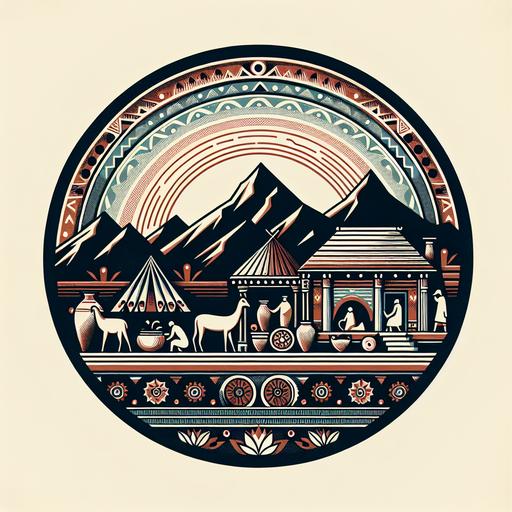
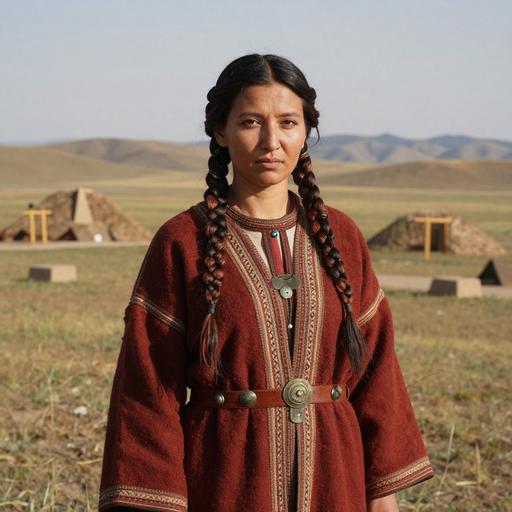
Gonur Tepe, often considered the capital of BMAC, showcases sophisticated urban planning with a complex layout of fortified structures, residential areas, and religious buildings. The city was enclosed by substantial defense walls and possessed a highly organized network of streets and drainage systems. Central to the city was a large fortified palace, the monumental architecture of which indicates both centralized political power and a complex social hierarchy.
Religious and ceremonial architecture at Gonur is particularly noteworthy. Large temple complexes and Zoroastrian-like fire altars suggest ritualistic practices that might have centered around fire worship or early forms of Zoroastrianism. The presence of what are presumed sanctuaries and temples indicates a spiritual or religious elite playing a significant role in the daily life and governance of the city.
Socio-Economic Structure
The economy of Gonur and the wider BMAC was supported by a mixture of agriculture, animal husbandry, and trade. Archaeological findings reveal sophisticated systems of irrigation agriculture, which allowed for the cultivation of various crops, possibly including barley, wheat, and grapes. This agricultural base would have supported a substantial urban population and facilitated economic stability and growth.
Judging by the diversity and richness of artifacts discovered, including intricate pottery, jewelry, and metalwork, Gonur was engaged in extensive trade networks. These trade connections possibly spanned across the Iranian plateau to the Indus Valley civilization, highlighting Gonur's pivotal role as a trading hub in Bronze Age Central Asia.
Cultural and Artistic Achievements
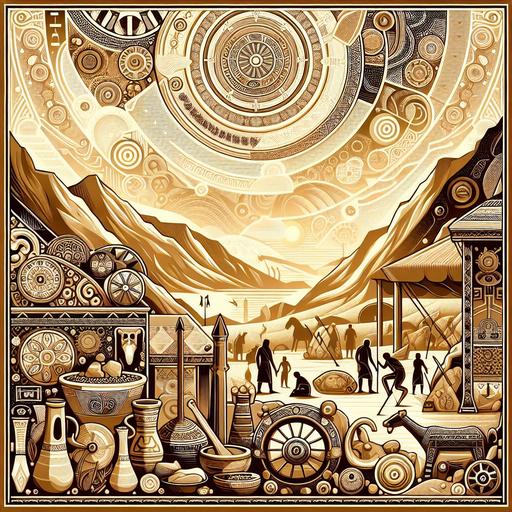
The material culture of Gonur is characterized by an extraordinary level of craftsmanship. Pottery, often featuring distinctive geometric designs and complex motifs, demonstrates both local innovation and external influences. The use of semi-precious stones, gold, and silver in personal adornments reflects both wealth and artistic sophistication.
Additionally, the discovery of seals and amulets, often depicting mythological creatures and deities, provides evidence of a rich symbolic culture that might hint at cosmological beliefs or social organization. The art and artifacts of Gonur indicate a civilization with a complex spiritual life and aesthetic sensibilities.
Connections and Influence
The BMAC, with Gonur as one of its cornerstones, represents a critical junction in early human civilizations. Its connections with neighboring cultures, such as those in Mesopotamia and the Indus Valley, suggest a high degree of cultural interchange, reflected in shared technologies and artistic motifs.
The decline of Gonur and the BMAC remains somewhat enigmatic, attributed to climate changes, shifts in trade routes, or the incursions of new peoples. However, its legacy is evident in the influence it exerted on successor cultures and its position within the broader narrative of Bronze Age civilizations.
In conclusion, the Bronze Age Gonur culture of the Bactria-Margiana Archaeological Complex represents a key cultural, economic, and architectural milestone in Central Asian history. It illustrates the complexity and connectivity of early human civilizations and the remarkable achievements of societies often situated on the peripheries of ancient urban development narratives.